
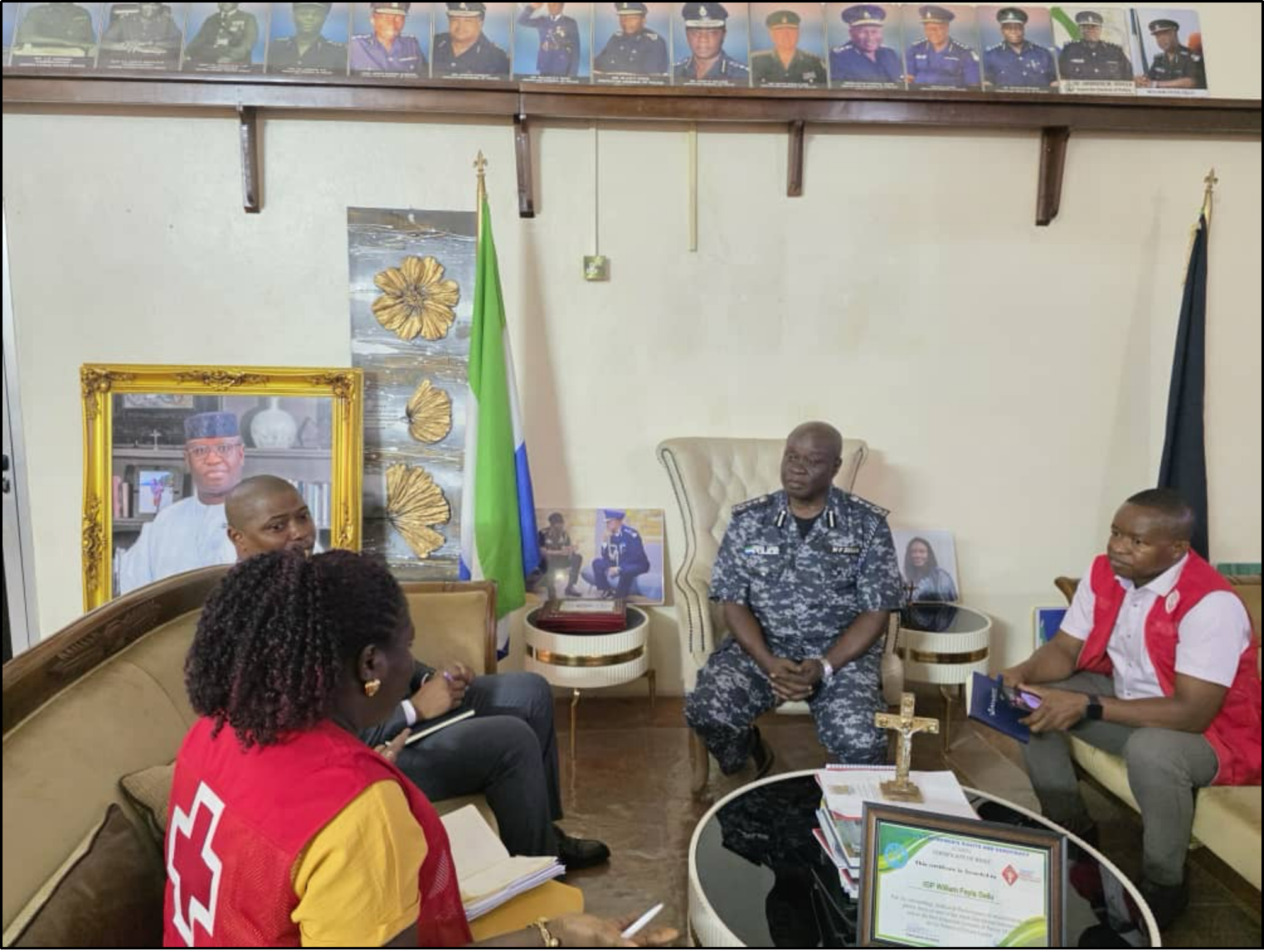
The Sierra Leone Red Cross Society (SLRCS) has increased its efforts to improve emergency care for victims of traffic accidents by inviting Inspector General of Police (IGP) William Fayia Sellu to a strategic meeting aimed at strengthening early response and coordination along the country’s major highways.
On Tuesday, senior SLRCS officials met with the IGP to discuss how the humanitarian organisation and the Sierra Leone Police (SLP) can collaborate more closely to provide timely life-saving assistance at crash scenes. The meeting is part of a larger SLRCS strategy to reduce fatalities and long-term injuries in road traffic accidents by implementing faster, more coordinated interventions.
Mr Kpawuru E.T. Sandy, Chief Executive Officer of the SLRCS, addressed the meeting and reaffirmed the Society’s statutory mandate as an auxiliary to government under a 1962 Parliament Act. He praised IGP Sellu for his leadership in maintaining peace and security and emphasised the Red Cross’s long-standing role in assisting with national emergency and disaster response initiatives.
Mr Sandy revealed that the SLRCS has developed a new road crash response strategy that will make use of its ambulance and mobile clinic fleet. “We plan to ensure that wherever a road traffic accident occurs, a Red Cross team is on the scene within 30 to 45 minutes to provide immediate assistance to victims,” he said. To achieve this goal, the Society plans to station ambulances in strategic locations along major transportation corridors such as Masiaka, Mile 91, and Bo, as well as mobilise trained volunteers to provide first aid and other critical lifesaving interventions.
The CEO stated that SLRCS has already engaged critical stakeholders, including the Ministry of Health and the Road Safety Authority (RSA), and emphasised that police participation is critical to the initiative’s successful implementation. He urged the Red Cross and the police to resume joint training programs to increase frontline capacity, particularly in protecting and assisting vulnerable groups affected by crashes.
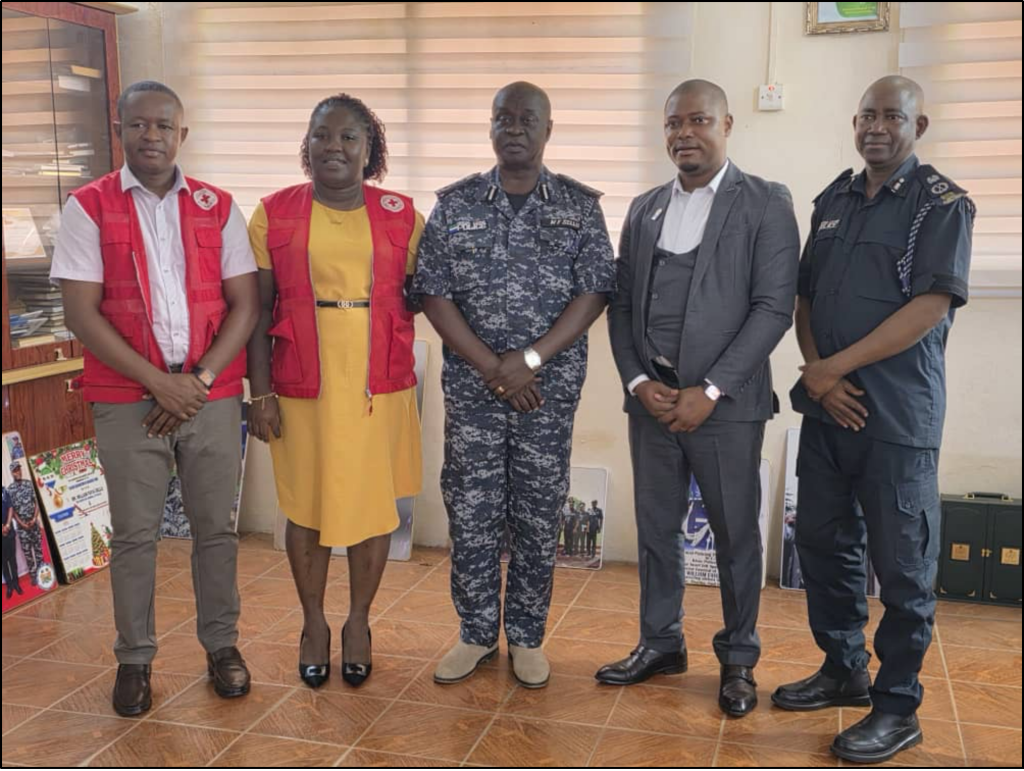
Mr Sandy also cited the Society’s constitutional ties to the presidency, pointing out that His Excellency President Julius Maada Bio is the SLRCS’s Chief Patron. He urged IGP Sellu to accept a patron membership to further support the President’s development agenda and strengthen institutional collaboration.
IGP Sellu praised the initiative as timely and commendable, and reaffirmed the police force’s commitment to partnership and collaboration in improving public safety. He acknowledged that the SLP’s current emergency response coverage is insufficient, citing the presence of a single police ambulance at the Mile 38 checkpoint on the Masiaka-Freetown highway as inadequate for national needs. The IGP emphasised the importance of increasing ambulance deployment and emergency coverage on major routes.
Furthermore, IGP Sellu urged that road crash response training be included in police recruit instruction at the Sierra Leone Peacekeeping and Law Enforcement Academy in Samu, Kambia District, to ensure that graduating officers are prepared to respond effectively in the event of an on-road emergency.
The meeting is an important step toward creating a more coordinated national emergency response system. By combining the SLRCS’s medical resources and trained volunteers with the Sierra Leone Police’s operational reach and authority, both organisations hope to shorten response times, improve on-scene care, and reduce the human toll of traffic accidents. Stakeholders must now translate commitments into operational protocols, joint training schedules, and deployment plans that will keep Sierra Leone’s road users within reach of the 30-45 minute response promise.
