
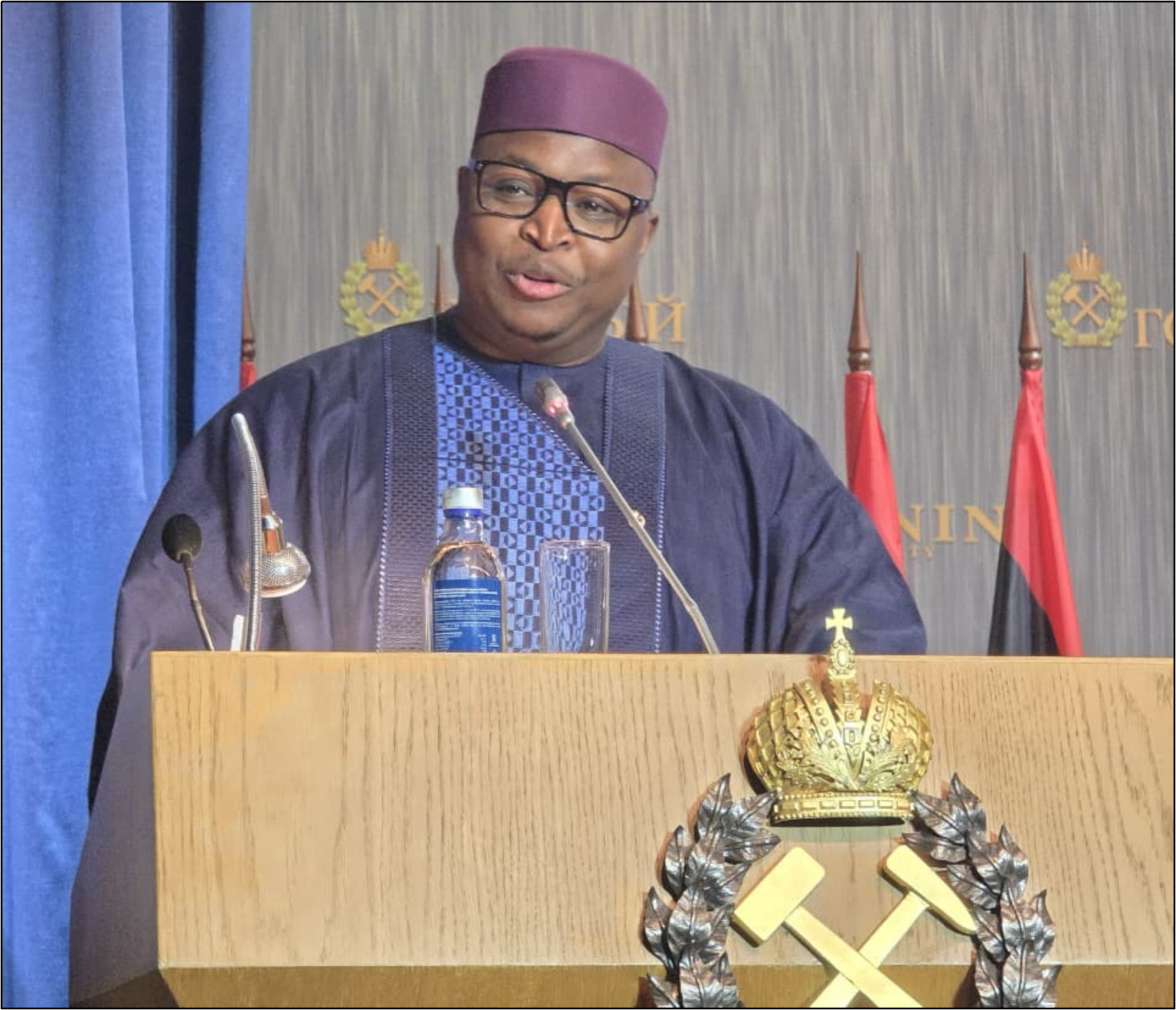
Sierra Leone Presidential Adviser Alhaji Timothy Musa Kabba has advocated stronger Africa-Russia partnerships, saying cooperation built on trust, mutual respect, and common interests could help African countries unlock the value of their natural resources and accelerate development.
Kabba made the comments during a panel discussion at the Second Russian-African Raw Materials Dialogue, held at the Empress Catherine II Saint Petersburg Mining University. High-level Russian and African officials attended the event, including Tatyana Dovgalenko, director of the Department for Partnership with Africa at Russia’s Ministry of Foreign Affairs.
The Sierra Leonean delegation included Ambassador of Sierra Leone to Russia Mohamed Yongawo; Deputy Minister of Technical and Higher Education Sarjoh Aziz Kamara; Deputy Vice-Chancellor of Eastern Technical University Dr Lawrence Sao Babawo; and Dr Solomon Augustine Tucker of Fourah Bay College, University of Sierra Leone.
Kabba spoke from experience, saying his life was an example of the opportunities that can arise from Africa-Russia cooperation. He said he was forced to join a fighting faction when he was 12 years old during Sierra Leone’s civil war. Later on, he was allowed to study in Russia, a turning point in his education and career.
Kabba said that after his studies, he worked for the Russian energy company Lukoil Overseas. He spent more than eight years working as a petroleum engineer in Central Asia, the Middle East and West Africa. His work experience would later lead him into public service in Sierra Leone.
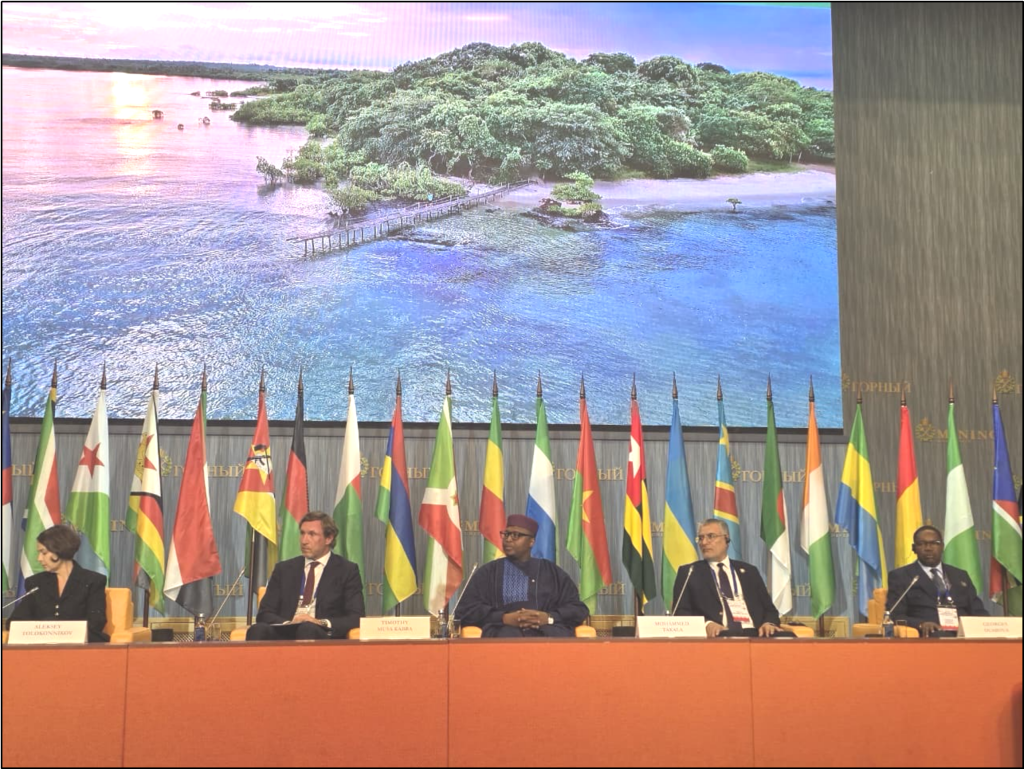
He served as head of the country’s petroleum agency, Minister of Mines and Mineral Resources, and Minister of Foreign Affairs and International Cooperation. He said: “My path has shown how education and exchange of skilled workers can link people and institutions in different countries.
Kabba also spoke about the wider economic challenges Africa faces, arguing that the continent has often paid the price for the world’s technological and economic shifts without getting a fair share of the gains.
“We must, as Africans, look for partnerships that are dependable, founded on trust, mutual respect and common interests,” he said.
He said a persistent paradox separated Africa’s abundant natural wealth from the poverty of so many of its people. He believes the continent’s resources have not yet translated into broad-based prosperity, making it critical for African governments to secure partnerships that will support long-term development and deliver concrete benefits to their citizens.
Kabba said shifts in the global order have provided fresh opportunities for African countries to diversify their international relations. In a more multipolar world, he said, countries should be able to work with more partners, and he described Russia as ready to be part of that process.
Reflecting on historical ties, Kabba said Russia was not part of the colonial division of Africa, which gave its current activity on the continent a different historical context. He said practical priorities, including education, technology transfer and investment, should shape future cooperation.
He also urged African countries to build their own systems to ensure partnerships deliver sustainable results. This means tackling corruption and excessive bureaucracy while enhancing institutional capacity and supporting skills development to create an enabling environment, he said.
Kabba concluded that stronger cooperation between African and Russian institutions, along with technology sharing and investment in people, could help ensure that Africa’s natural resources contribute more directly to the well-being of its citizens.
