
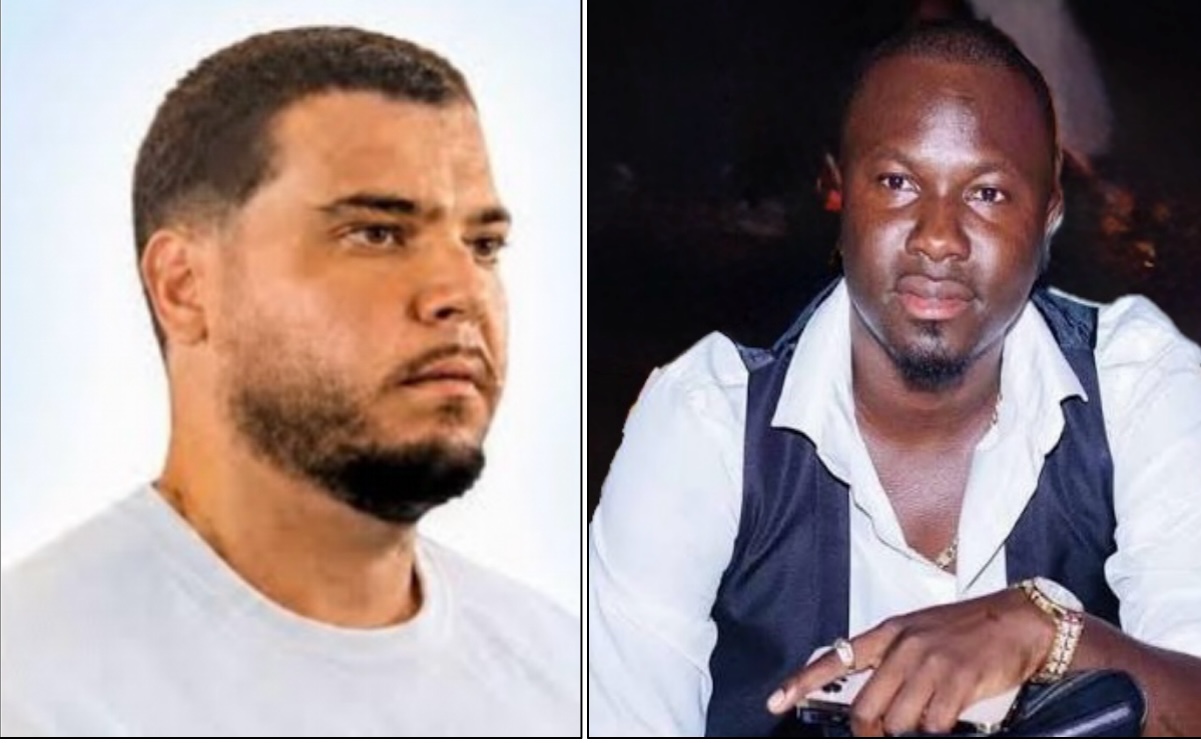
Jos Leijdekkers and Allan JallohAccording to The Economist Magazine, a source in Freetown blamed Jos Leijdekker for the abduction and death of Allan Jalloh, a young man kidnapped in broad daylight in Freetown. Wurie Jalloh told The Economist about his brother Allan, a 40-year-old, who went missing in Freetown. In October 2025, Allan, Wurie, and two companions, including a well-known footballer from Cyprus, booked rooms at the Pearl Hotel, according to The Economist.
On a Saturday afternoon, the four men drove to a nearby grocery store to buy beer. When they realised they didn’t have any cash, Wurie offered to return to the hotel and get some. He said he’d only be gone a few minutes. When he returned, the blue Ford they had arrived in was sitting with three doors open and no one inside.
A fruit seller in the parking lot told Wurie what they had missed: a black SUV had pulled up, and three men in balaclavas, one white and two black, had emerged.
The white man fired a silenced pistol into the Ford’s tyre, forcing the three men into his vehicle, and drove away. An hour later, Wurie says Allan called to tell him that someone was coming to the Pearl Hotel with his ID and bank card, and that he needed to withdraw $28,000 and give the men $4,000 each.
According to Wurie, the men pushed the cards through a cracked window of a black SUV, and he withdrew and handed over the money. That night, Allan’s phone was turned off and has never been turned back on. According to the magazine, what followed was frantic and fruitless. He took to social media, contacted journalists, and reported the abduction to the police.
He claims officers asked him for $400 to purchase fuel for a search and then did nothing. He initially hoped that his brother had been kidnapped by mistake; however, a month into the search, he claims he was led into a police coatroom and informed that “this was ordered from higher up.” “My brother was murdered,” Wurie explained.
According to The Economist, a government source provided a sharply different and darker account.
Speaking on the condition of anonymity, the source described Allan as a petty criminal who had become involved in the cocaine underworld, rather than an innocent victim. According to the source, Allan spent 13 years in Sweden working in airports and learning how to move contraband before returning to Freetown and transitioning from petty scams to drug trafficking to pay off mounting debts.
According to the source, Allan and a group of small-time traffickers started stealing from larger consignments in warehouses along the Peninsula Highway. The allegation is that they entered warehouses at night, removed portions of cocaine from packages, sometimes replacing them with flour, and smuggled the stolen product out in secondhand car parts and rented boats bound for neighbouring West African states. According to the source, one major shipment, reportedly destined for the Middle East, tested positive for flour upon arrival, prompting a ruthless retaliation.
According to the source, within weeks, Leijdekkers’ warehouses were targeted, and his contacts in Sierra Leone’s security forces were tracked down and turned into members of Allan’s gang. According to the source, authorities identified 22 men during the sweep in Freetown. According to Wurie, two masked men searched Allan’s liquor shop on the afternoon he vanished; one was a police sergeant, and the other was a member of the military police. “Jos Leijdekkers has Sierra Leone wrapped around his finger,” the source told me, before abruptly cutting off contact six days later when they returned to find their car smashed, implying intimidation.
Wurie claims his brother was abducted and killed, while a government source claims a criminal tit-for-tat resulted in retribution. However, both accounts are unverified. No independent investigation has been made public that conclusively confirms either version. Authorities have not provided documentation to back up the government source’s claims, and Wurie says his repeated requests for an official investigation were met with indifference or obstruction.
Whether Allan Jalloh was the victim of a mistaken abduction, the target of criminal retribution, or something in between, his family has the same outcome: a man gone without explanation, a phone that never rings again, and a void filled with suspicion and grief. In Freetown, where power and profit can protect some while exposing others, Allan’s disappearance has become a cautionary tale, raising difficult questions about violence, impunity, and the limits of protection in a city where even relatives of the powerful are out of options and answers.
