
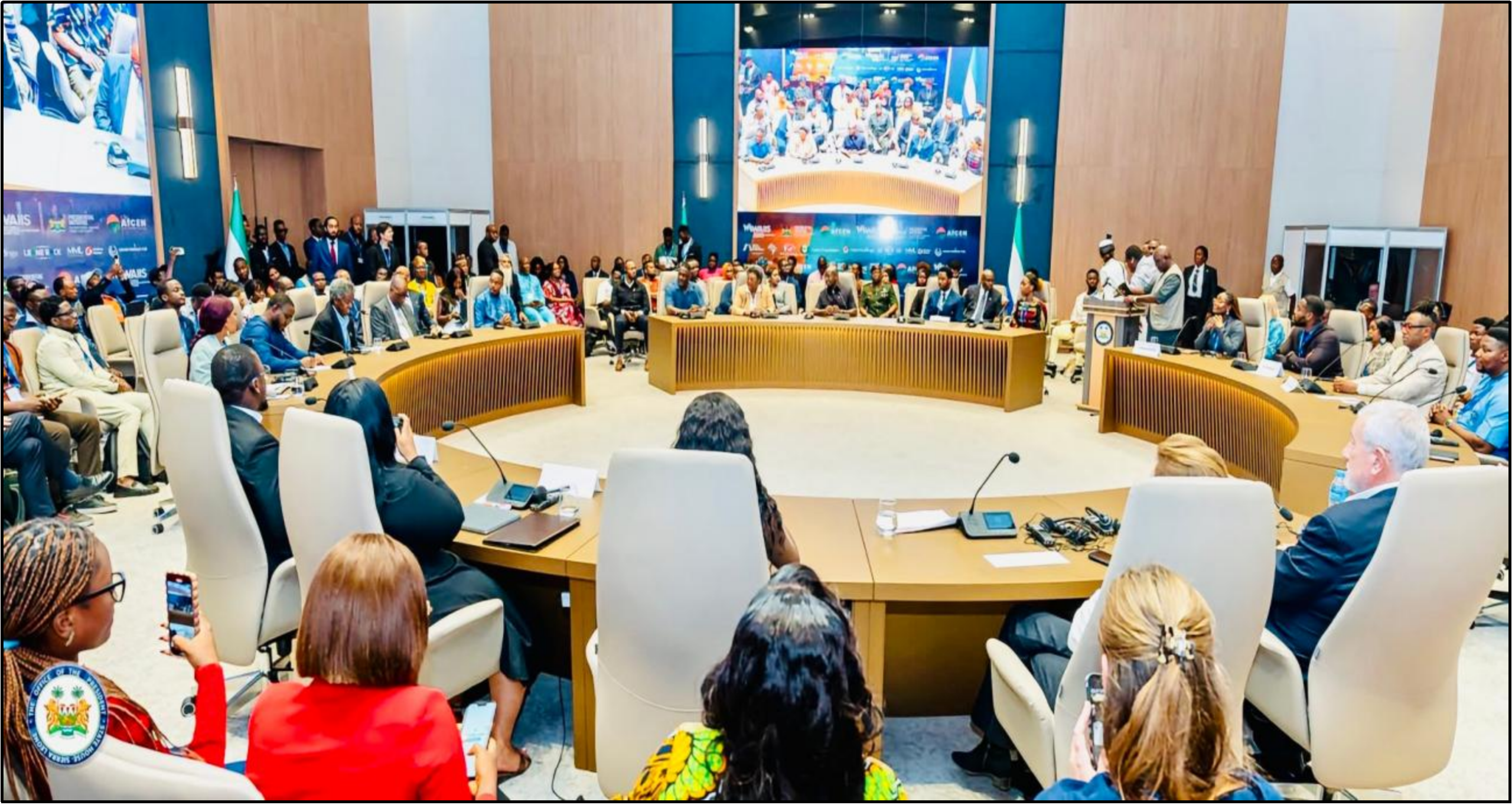
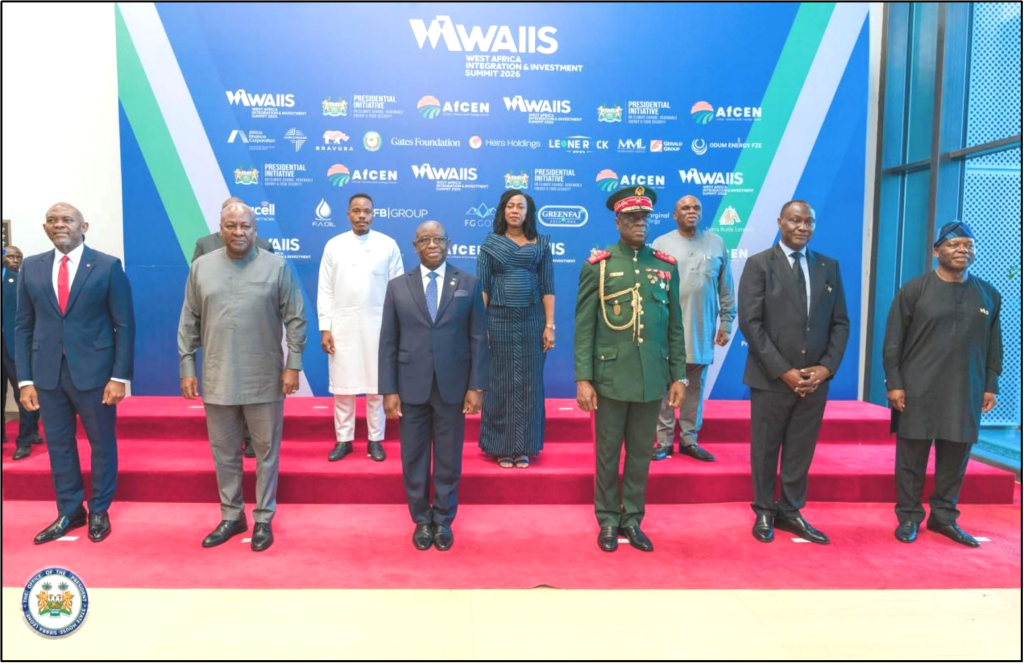
Four agreements were signed and three regional initiatives launched on the second day of the inaugural West Africa Integration and Investment Summit (WAIIS) 2026, which aims to promote transport, energy, agriculture and economic integration in West Africa.
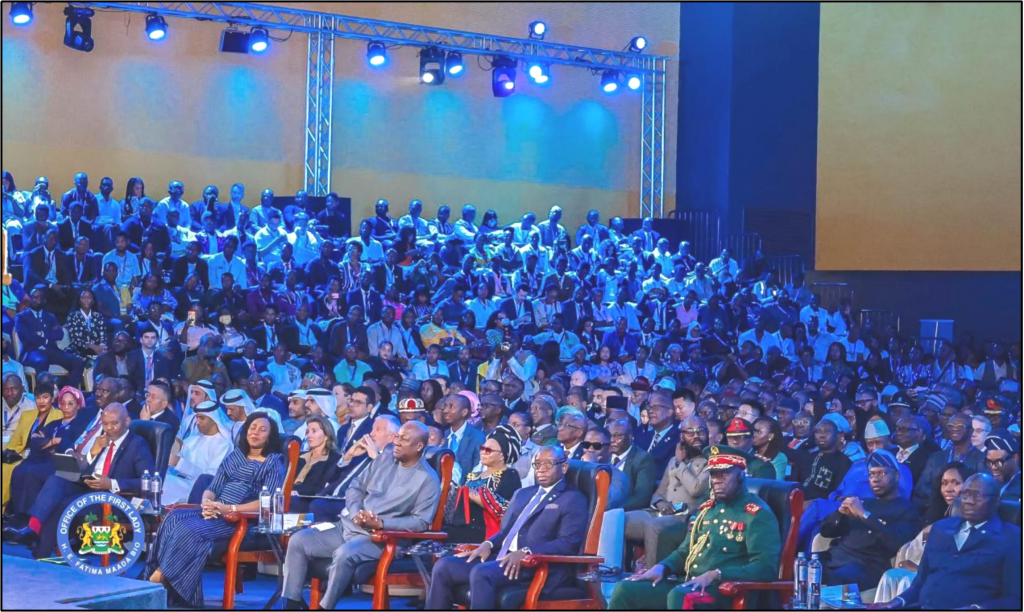
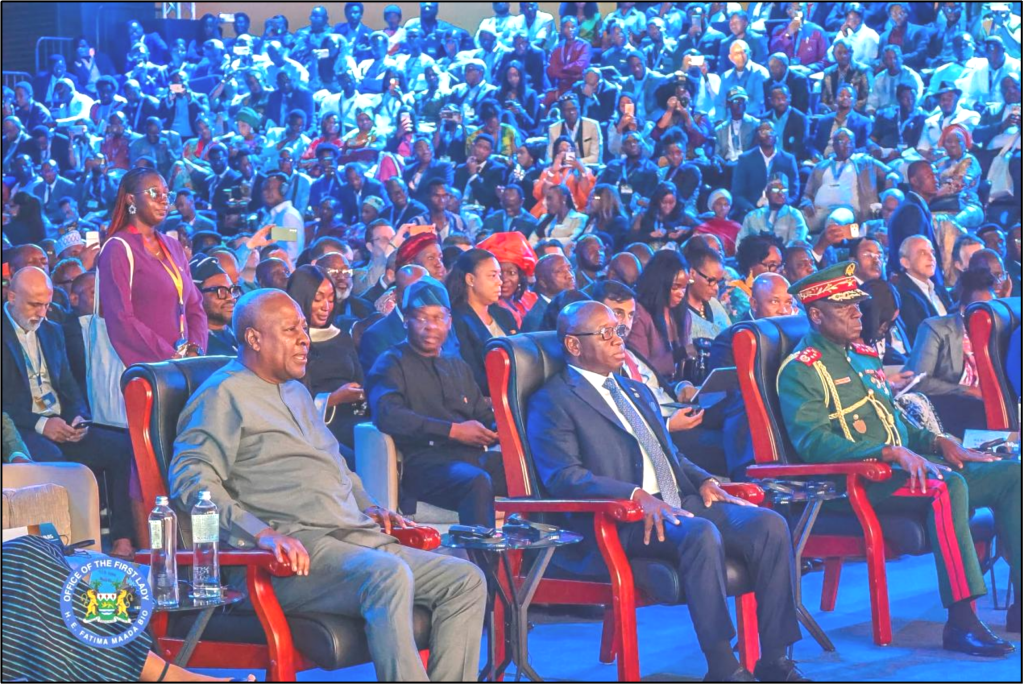
The summit was held from 16 to 18 November at the Julius Maada Bio International Conference Centre in Lungi, bringing together government representatives, regional institutions, development partners, and private sector organisations.
On November 17, it reported the first results, including plans for a deep-water port and railroad in Sierra Leone, a coastal shipping service, electricity transmission lines for mining operations, and a major urban development project.
The three announcements and launches included a cross-border industrial corridor, a national agricultural program backed by the World Bank and a regional facility to mobilise $1 billion for agriculture and rice production.
Taken together, the seven outcomes suggest attempts to link infrastructure investment to trade, energy access and food production.
Many are still in the planning, development, or resource mobilisation phase; the agreements and announcements do not, in themselves, demonstrate that all proposed funding has been secured.
The largest infrastructure proposals are a deep-water port planned for Banana Island, a logistics hub at Kent and a railroad connecting the facilities to Sierra Leone’s mining regions. Dangote Industries and Afreximbank have signed a memorandum of understanding with Gento Group of Companies to develop the project.
The WAIIS Secretariat will co-ordinate the initiative. The project sponsor values the port at some US$2.7 billion. The MoU provides for cooperation on broader port, logistics and rail plans, but the estimate is not described as secured financing.
A second MoU seeks to promote coastal cabotage shipping. Sierra Leone’s Ministry of Planning and Economic Development has inked agreements with Ploutus Holding LLC and NZOIA Corporation to plan and pilot a regular service from Freetown along the West African coast. The agreements were signed at the AfCFTA Secretariat.
The service aims to provide an alternative way to transport cargo between West African countries. Much of the region’s freight to neighbouring countries is currently transported by road, which is slow and expensive. The parties have not suggested any funding amount for the initiative.
Energy infrastructure was also on the agenda. Sierra Leone’s Ministry of Energy and Ministry of Mines and Mineral Resources have signed a memorandum of understanding with Africa Finance Corporation (AFC) and LeoneVolt, the engineering, procurement and construction developer, to develop transmission lines along the Northern Transmission Corridor.
The proposed lines will supply reliable grid electricity to mining operations in northern Sierra Leone. The partners did not release the cost or timetable for the project, but they could also help boost demand for new power generation.
Fourth, a proposed road upgrade and development program. Pavi Fort-AL Associates Group has signed a pact to develop the Three Cities Development Project Initiative and to upgrade and toll the Ring Road and its appendages. No figure was mentioned regarding the investment.
In addition to the four signings, summit participants announced the prioritisation of the Mano River Union Strategic Economic and Industrial Corridor. The ECOWAS Commission, the Secretariat of the Mano River Union, the United Nations Industrial Development Organisation (UNIDO), and the WAIIS Secretariat have committed to working closely together to advance the Union’s vision for the corridor.
The program merges five priority projects, totalling around US$600 million, into one investment program covering Côte d’Ivoire, Guinea, Liberia and Sierra Leone. The four countries are home to almost 60 million people. The proposed projects are in renewable energy, electricity transmission, port logistics, agro-processing, and a digital customs system. The announcement frames the corridor as a regional program, not a standalone infrastructure project.
Two of the three launches were agriculture-related. The Government of Sierra Leone, through the Ministry of Agriculture and Food Security, and the World Bank launched the Sierra Leone AgriConnect Compact. The Compact, which runs from 2026 to 2030, is intended to bring together government and partner support behind a common plan under the Feed Salone initiative.
The program focuses on rice, maize, onion and cocoa value chains. The World Bank is supporting the Compact with a $40 million grant. “With the launch, AgriConnect becomes the coordinating framework for agricultural support, and the grant is aimed at priorities within the plan.
The third launch, the Agribusiness and Rice Sovereignty Facility, is more regionally focused. It was launched by the ECOWAS Commission, the Ministry of Agriculture and Food Security, Sierra Leone, the ECOWAS Bank for Investment and Development (EBID), the WAIIS Secretariat, GIZ and AfricaRice. The facility will mobilise US$1 billion for agriculture in West Africa.
$500 million of the target will be set aside for a Rice Window. The rest will be channelled to other agricultural value chains, such as cocoa and cashew. The facility is reportedly intended to support production and processing in the region, in response to West Africa’s reliance on imported rice. The US$1 billion is a mobilisation target and is not reported as mobilised.
The range of outcomes reflects WAIIS’s focus on projects that connect national priorities with cross-border trade and investment. The proposals for a port, railroad, and cabotage are in transport and logistics; the transmission corridor is in energy supply to mining; and the Mano River program is a portfolio of projects in four countries. The two agriculture initiatives focus on implementing Sierra Leone’s national compact and mobilising investment across the wider region.
The deals and launches involve public institutions, regional bodies, development partners, and private companies. That mix will be crucial to move from summit announcements to detailed planning, financing and implementation. The disclosed figures currently include the estimated value of the sponsor’s Banana Island port, the estimated value of five priority projects in the Mano River corridor, the World Bank grant anchoring AgriConnect, and the mobilisation target for the regional facility.
WAIIS 2026 has unveiled its first set of results with ambitious infrastructure and investment plans for Sierra Leone and its neighbours. The real test will be how signatories and partners turn the agreements and launches into projects that can be financed, delivered and used by communities and businesses across West Africa.
