
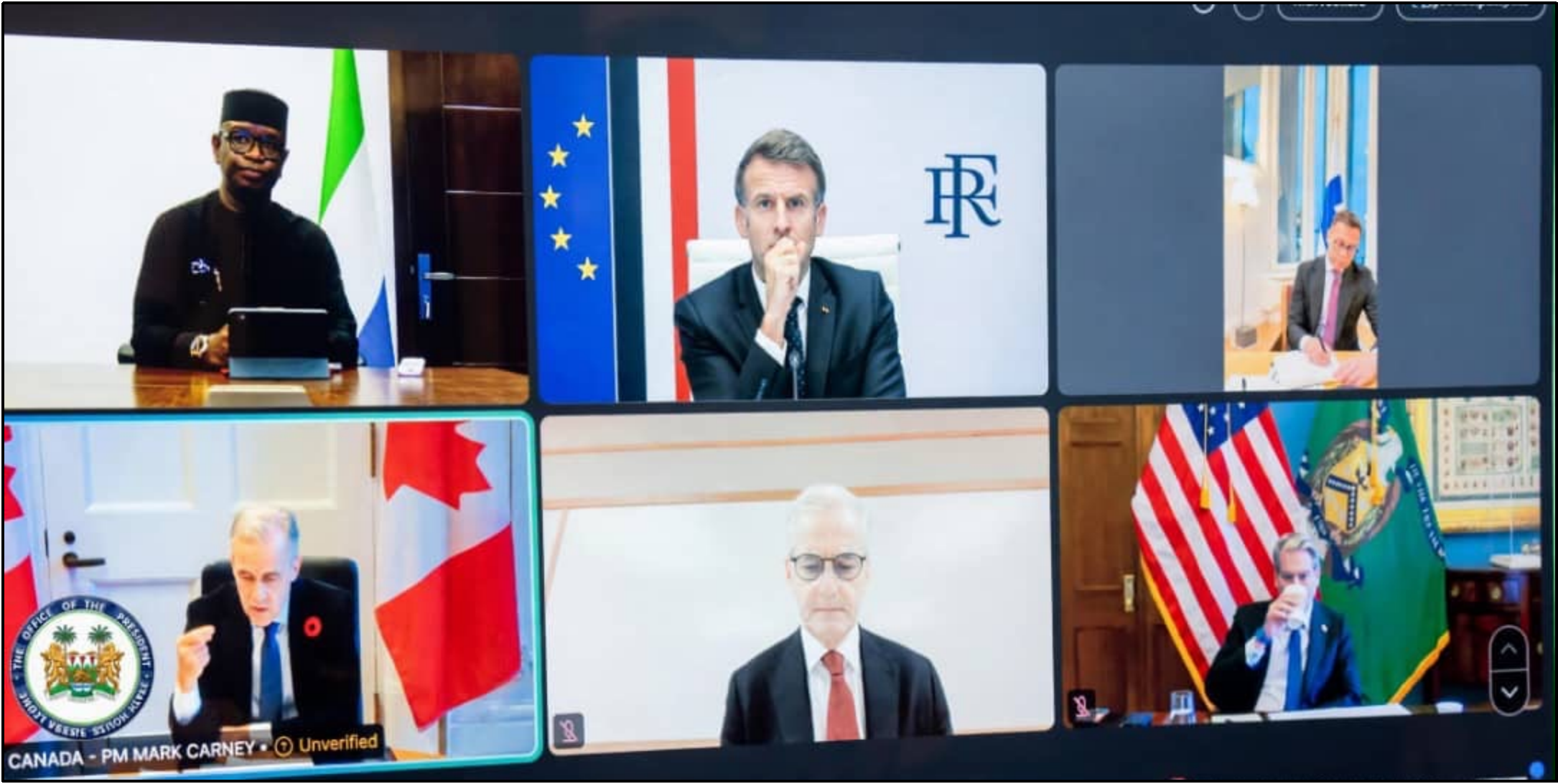
November, 2026 — President Julius Maada Bio has called for greater international cooperation to ensure the safe, responsible development and deployment of frontier artificial intelligence systems, and urged African countries and other developing nations to help set the rules governing the technology actively.
Artificial intelligence must be guided, monitored and controlled by humans, President Bio said at a high-level virtual meeting on strengthening international cooperation on the security of frontier models, hosted by French President Emmanuel Macron. “As capabilities advance, the possible advantages of advanced AI must be balanced against robust safeguards, he warned.
“Sierra Leone supports pragmatic international action to reduce the risks posed by frontier AI models,” the President said. He recalled the country’s support for the Call for Control of Frontier AI Models at the AI Middle Powers Roundtable at the United Nations General Assembly in September. The roundtable was co-chaired by Kenya and Finland, and was launched by Finland and Norway.
“The virtual meeting is an opportunity to go beyond the common commitments and take concrete action,” said President Bio. “We need governments to work together to improve the systems for evaluating advanced models, to identify emerging threats and to respond to serious incidents,” he said.
He also spoke about Sierra Leone’s initiative to develop a national framework for AI governance. Sierra Leone has finalised its National AI Readiness Assessment, which will inform the country’s first National AI Strategy.
The assessment will help the government to consider how standard artificial intelligence may benefit sectors such as agriculture, health care, education and public service delivery. President Bio said this work needs investment in digital infrastructure and greater regional co-operation.
He cited partnerships with the Economic Community of West African States (ECOWAS), including a proposed Regional Data Embassy Framework. He said the framework is intended to “increase access to shared infrastructure while protecting national jurisdiction and data sovereignty”.
President Bio said: “As we go forward with these efforts, we recognise the importance of building safety, security and accountability into our strategy from the outset. “Responsible governance will be crucial to guarantee that the opportunities of AI are pursued without losing sight of the risks,” he said.
President Bio addressed the international dimension of frontier AI security, calling for common and credible standards for assessing the safety and security of advanced AI models. He also stressed the importance of clear responsibilities and accountability for the organisations that develop and deploy them.
“The countries should work out effective international mechanisms for reporting serious AI-related incidents and sharing information about emerging threats,” said the President. “Independent evaluation, transparency, effective oversight and coordinated responses would be critical,” he said, adding that increasingly capable artificial intelligence systems could have consequences far beyond the borders of any single country.
“No country can meet these challenges alone. “Sovereignty is not to do everything yourself. It is to decide the terms on which we work together,” said President Bio.
He said international cooperation must respect national sovereignty but also ensure developing countries are not left out of talks on global AI rules. “It’s unfair to expect African states to adhere to standards developed elsewhere,” he said. They need to be at the heart of developing those standards and the governance arrangements behind them.
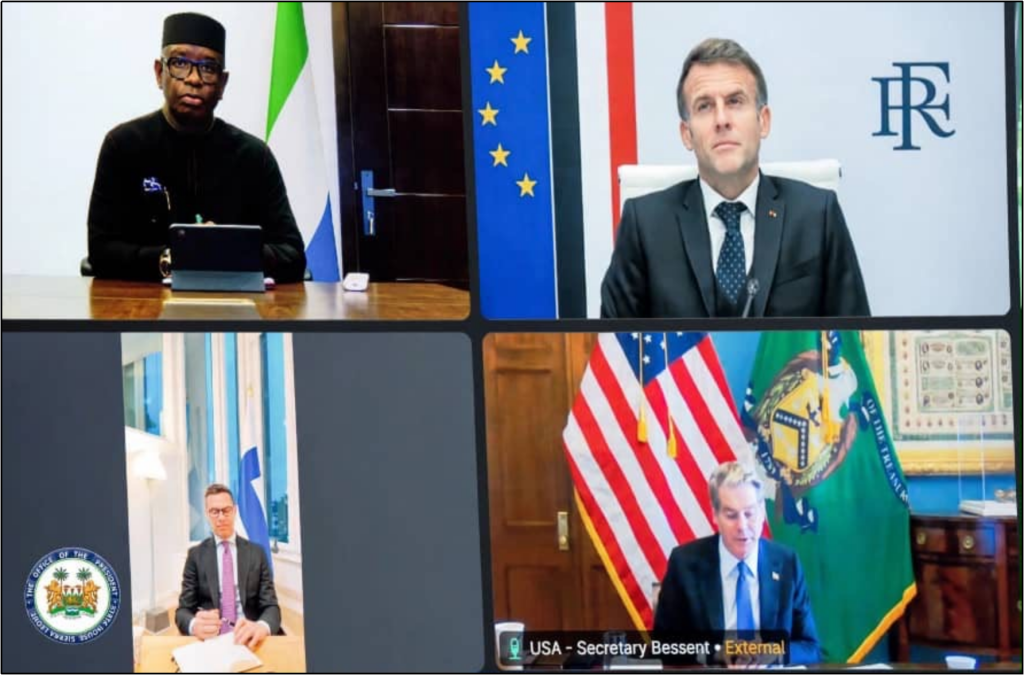
President Bio has also called for more investment in scientific expertise, institutional capacity and evaluation tools in developing countries. Such resources, he said, would help governments assess advanced artificial intelligence systems operating in their jurisdictions and enable them to engage more effectively in international discussions and decisions.
The President welcomed the proposed Paris Declaration, with its focus on common standards for evaluation, clear accountability, and cooperation in reporting serious incidents involving AI. He urged that the commitments in the declaration be supported by concrete measures such as effective evaluation mechanisms, timely information sharing, and building up national and regional capacities.
His comments underscored Sierra Leone’s declared position that AI governance must balance cooperation with respect for nations’ capacity to form global partnerships. While global cooperation could help governments manage cross-border risks, inclusive governance would be needed to ensure that developing countries could participate in decisions that affect them, President Bio said.
To summarise, he said Sierra Leone stands ready to partner with international partners to ensure the promise of artificial intelligence is fulfilled without putting human safety, national sovereignty and human control at risk.
Attending the virtual meeting were world leaders and senior government representatives, including UK Prime Minister Andy Burnham MP, Canadian Prime Minister Mark Carney, Japanese Prime Minister Sanae Takaichi, Norwegian Prime Minister Jonas Gahr Støre, Netherlands Prime Minister Rob Jetten, Finnish President Alexander Stubb, US Secretary of the Treasury Scott Bessent, and Crown Prince and Prime Minister of Bahrain Salman bin Hamad Al Kh.
Attendees included senior executives from technology companies such as Microsoft President Brad Smith, OpenAI chief executive Sam Altman and Mistral AI chief executive Arthur Mensch. The meeting report noted that their involvement highlighted the need for government-industry collaboration in discussions about AI safety, security and responsible growth.
