
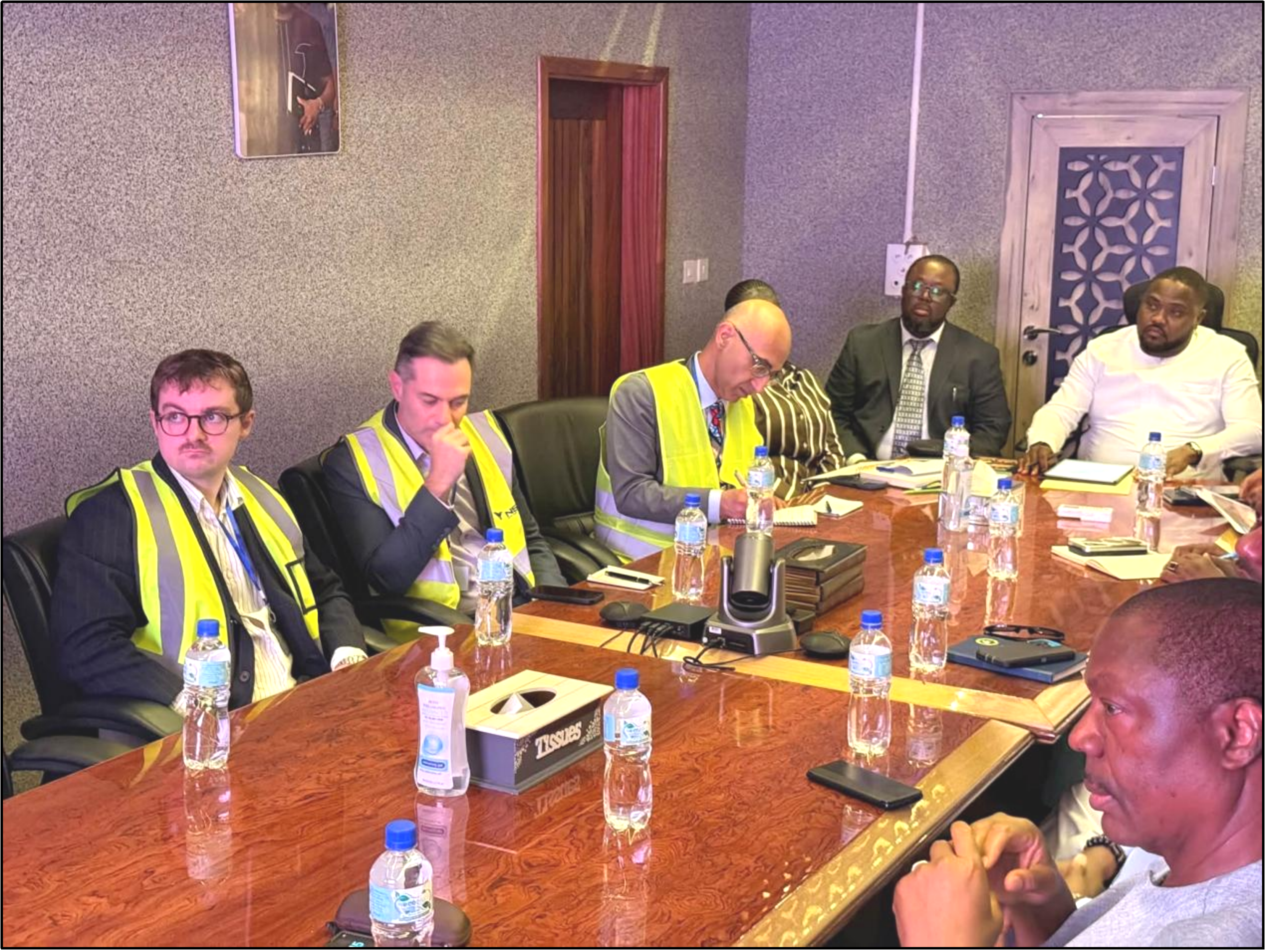
The British High Commission in Freetown and the Nectar Sierra Leone Bulk Terminal (NSBT) engaged with the leadership of the Sierra Leone Ports and Harbors Authority (SLPHA) to explore potential investment, project support and opportunities for closer collaboration in the country’s port sector.
The engagement was held on Thursday, November 12, 2026 and concentrated on how investment and collaboration can assist in enhancing port operations and supporting infrastructure development. NSBT is a concessionaire of SLPHA.
The meeting was attended by the British High Commission’s Deputy High Commissioner Mehdi Hussain and Economic Adviser Tyler Reddin, NSBT General Manager Siamba Kamara and other participants. Director General Yankuba Askia Bio led the SLPHA delegation.
Occupancy and encroachment on port land were among the key issues raised in the discussions. Mr. Hussain asked about the effects of squatter settlements and unauthorized use of the Authority’s property on its operations and plans for development.
The discussion was preceded by a presentation by SLPHA Director of Research and Planning Abu Bakarr Kamara, Esq. who highlighted the challenges of people occupying port owned land. They were told that the government is working round the clock to address the situation and to remove all unauthorized occupants especially those on land with no legitimate business in the port.
The meeting also acknowledged that finding a solution would raise hard questions, including demands for resettlement. Participants acknowledged the need for a right-sized solution to the occupation of port property while also taking into account the challenges of relocation.
Another important topic of discussion was investment prospects. “There is a need to create awareness of opportunities in the port sector in Sierra Leone, while port infrastructure and related projects are gaining ground in the United Kingdom”, said Mark Smithson. He said increased investment could result in positive economic development.
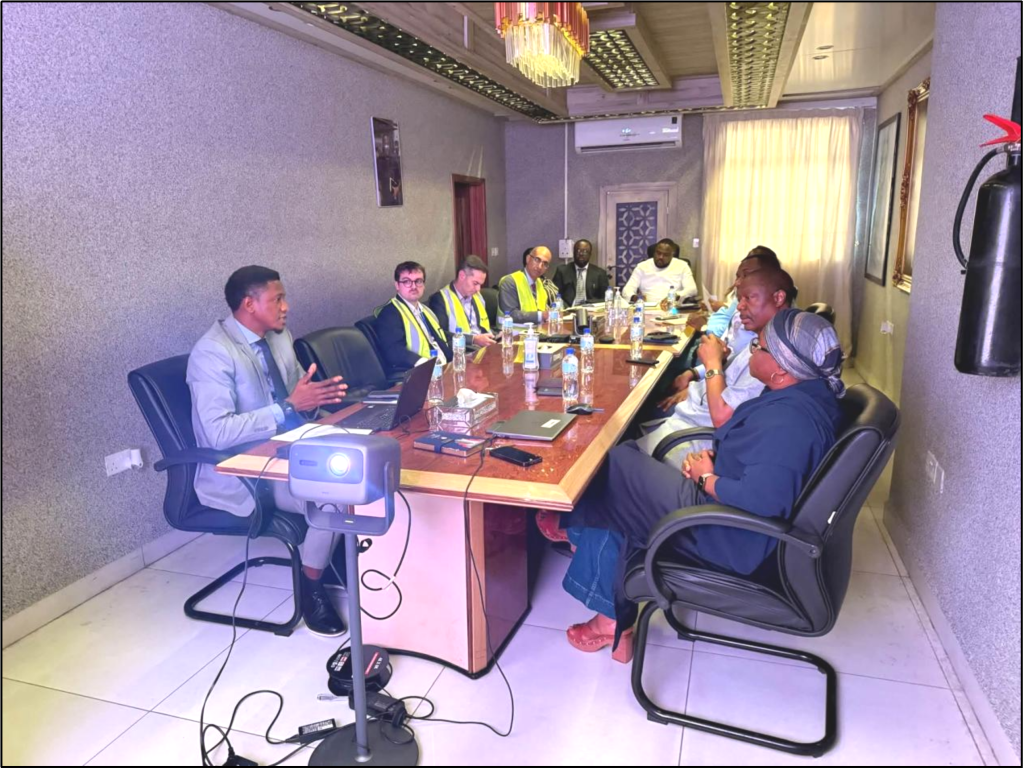
Smithson said his country’s recent investment in Lagos Port in Nigeria, where he lives, reflects regional interest in port development. He also urged the SLPHA to develop a list of priority projects for investment support. He said the list would help future discussions and collaboration.
Kamara gave an overview of NSBT’s work and impact on port operations. She explained how the company operates and described the port’s infrastructure, which includes three berths, one of which was recently built. “It was all about how the concessionaires can help improve the operational capacity and infrastructure of the port,” the presentation said.
In his address, Bio spoke on the Authority’s main operational concerns, particularly the effects of port land encroachment. “Unauthorised occupation may interfere with port operations, reduce efficiency and ultimately impact revenue generation,” he said.
Bio also touched upon the role of SLPHA in the existing landlord-port model. He said the Authority provides the enabling environment and infrastructure that the concessionaires and other port stakeholders need to operate. The model places the SLPHA in a key role to support the sector while working with private operators responsible for specific services and facilities.
The Director General also spoke on the Authority’s contribution to national development through dividends paid to the government of Sierra Leone. He once again stressed the strategic importance of the country’s ports as centres of international trade and as significant drivers of economic activity.
The engagement was an opportunity for the British High Commission, NSBT and SLPHA to discuss issues around investment, infrastructure development and institutional cooperation. It also highlighted operational issues that could affect the port’s effectiveness, such as the occupation of port property.
Participants were keen to identify projects that could attract more investment and facilitate cross-sector collaboration. Discussions emphasised the potential for targeted support to improve port infrastructure and efficiency, and the importance of addressing land issues to ensure the capacity of Sierra Leone’s ports to support trade and long-term economic growth.
