
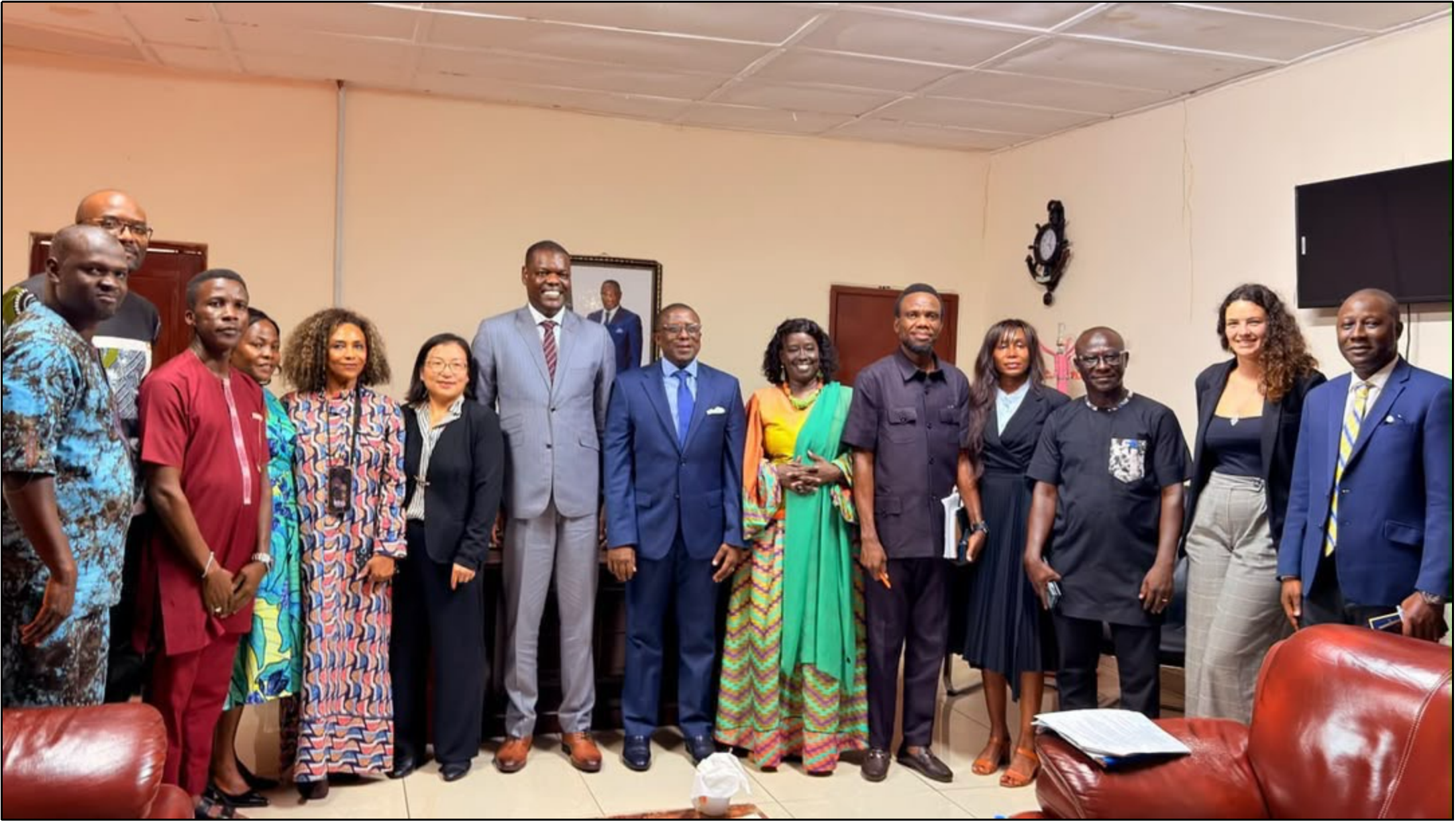
The Ministry of Employment, Labour and Social Security (MELSS) and the United Nations Economic Commission for Africa (ECA) discussed ways to expand health insurance and social protection for workers in Sierra Leone, with a particular focus on the informal sector.
The discussion focused on gaps in workers’ health coverage and opportunities to build a more sustainable health financing system. The figures presented at the meeting showed that informal sector workers make up more than 80 per cent of the country’s workforce, leaving many workers outside formal insurance and social security arrangements. Aboubakri Dias, Chief of Staff in the Office of the Executive Secretary and head of the ECA delegation, said the Commission was working with the government to treat health financing as an economic priority, not just a social sector responsibility.
Dias said falling support from international development partners has exposed weaknesses in health financing across African countries. He said families often pay a big part of the cost of healthcare, causing financial strain and increasing the risk that illness could push families into poverty. He outlined the ECA’s Sustainable Health Financing Initiative, which aims to help governments integrate health priorities into their macroeconomic and fiscal planning. The initiative also supports efforts to mobilise domestic resources, improve data systems and explore new financing options.
The measures discussed included targeted levies, more efficient public spending and debt-swap arrangements. Dias also highlighted the potential for regional cooperation to facilitate access to health care and the movement of health professionals. He said the African Continental Free Trade Area (AfCFTA) could provide opportunities to facilitate cross-border access to health care and promote recognition of health workers’ professional qualifications in African countries.
Minister of Employment, Labour and Social Security Hon. Umaru Napoleon Koroma, Esq., said extending health insurance and social protection to workers in both formal and informal sectors is urgent. He highlighted the dangers confronting employees working in hazardous sectors such as mining, who stand a chance of developing occupational health issues and sustaining work-related injuries.
Koroma referred to the ongoing development of the National Health Sector Strategy Plan 2026-2030 and efforts to develop an institutional framework for universal health coverage. He said efforts should be supported by arrangements that make protection available to workers in different sectors. The Minister also highlighted informal workers such as commercial bike riders. They face risks such as road accidents and unemployment and often have limited access to formal insurance schemes.
He said that solutions that reflect the nature of informal employment will be needed to extend social protection to these workers. Director, Social Protection: ‘A significant part of the workforce is not covered adequately under existing social security measures,’ said Duraman Songo. He emphasised that social protection should extend beyond formal employment and called for better coordination between government institutions. Songo also emphasised the value of information sharing and inclusive consultations.
These would help ensure that policies and institutional arrangements reflect workers’ circumstances and respond to their needs, he said. Reliable data was critical to monitoring labour and social protection policies, said Pamela Kakande, Statistician at the ECA. Better information, she said, could help the government monitor implementation, identify gaps in coverage and design evidence-based measures, including interventions to strengthen occupational health and safety. Participants also discussed institutional arrangements for the proposed universal health coverage agency and the need to improve coordination between the Ministries of Employment, Labour and Social Security and Health.
The discussion included ways to support sustainable financing through employer contributions and other domestic resources.
The engagement forms part of the ECA’s continuous consultations with government institutions and other stakeholders since October 2023. The discussions aim to explore practical ways to improve health financing, extend protection to workers, and move toward universal health coverage in Sierra Leone.
