
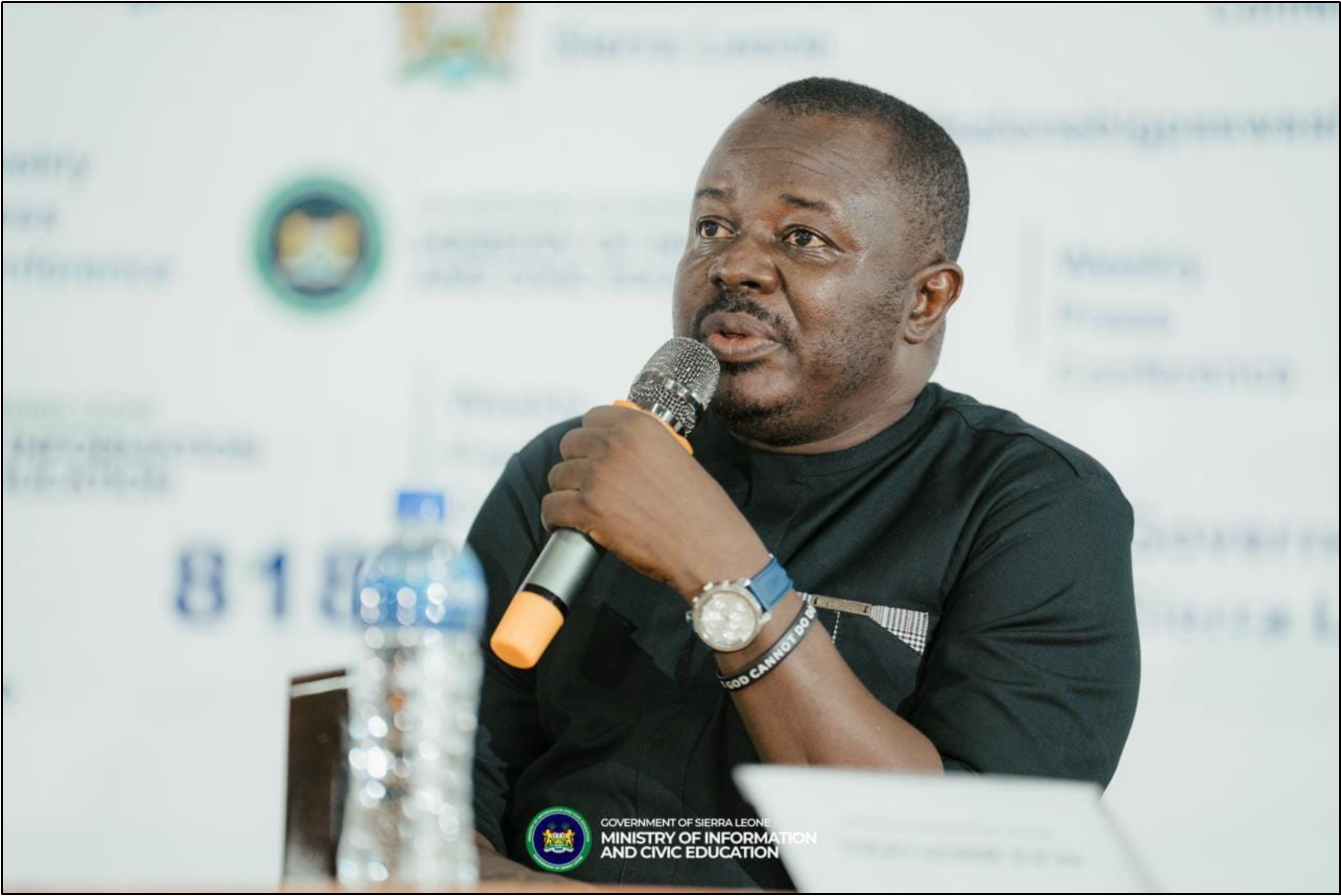
Alex BhonaphaBy Kadiatu Bash Kamara
The Director of the Decentralisation Secretariat, Alex Bhonapha, has called for long-term financing, increased local revenue generation, and effective partnerships to support local governance in Sierra Leone. He made the remarks at the Weekly Press Briefing, hosted by Mohamed Jaward Nyallay, Strategic Communications Adviser, on Tuesday, October 13, 2026, at the Miatta Civic Centre.
The briefing covered the rationale for redistricting, the creation of new localities, and the potential benefits and opportunities of the process. Discussions focused on how changes to administrative structures could increase efficiency and bring government and development services closer to communities. To achieve those aims, Bhonapha said, it would not be enough to draw new lines on the map. Local councils would need a constant flow of cash, strong institutions and good preparation for their jobs.
“Councils need stable streams of income to pay for administration and development projects in their areas,” he said. One key source, he said, is locally collected revenue generated internally through locally administered streams such as property taxes and licenses. As councils improve how they collect and manage these revenues, they can better fund vital activities and respond to residents’ needs.
Bhonapha did note, however, that locally generated income is only part of the funding needed to sustain local government. Councils have more resources with government grants and assistance from development partners. He believes a combination of these funding sources can allow local governments to meet operational needs, implement development projects, and improve community services.
The Director also recognised the role of international development partners in decentralisation and local development. He discussed institutional support, including from the European Union, for development projects with local councils. Such partnerships can offer resources and technical assistance to complement government efforts. They can also help councils to strengthen their capacity to plan and deliver projects that respond to local priorities.
“Availability of funds does not always ensure effective development at the local level,” he stressed. Resources have to be supported by effective planning, co-ordination and financial management. As administrative structures grow, councils need to be ready to take on new responsibilities and to target funds to identified priorities. He said this makes it crucial to build institutional capacity, improve financial management, and ensure local governments have the personnel and systems they need to function effectively.
Bhonapha said practical planning for administering new localities is necessary. But boundaries are only part of the picture. They also have to consider where administrative centres will be, what facilities will be required and what systems will be used to support local government operations. These arrangements are crucial to ensure new structures can deliver for communities, rather than simply being administrative boxes.
Preparing administrative centres and councils for their work will therefore be integral to any expansion of local governance. Local governments must be given adequate facilities and operational arrangements to discharge their functions. They also need to organise their activities and use resources so the communities they serve can develop.
The Director stressed the importance of capacity building for effective decentralisation. Ways to help councils carry out their duties include training staff, identifying local development needs, and improving administrative procedures. He said coordination between the Ministry of Local Government and Community Affairs, the Decentralisation Secretariat, and other relevant institutions will be key to advancing this preparation.
Such coordination can help ensure local authorities are prepared to meet their responsibilities as governance structures change, Bhonapha said. It also encourages more structured planning, staffing, and resource management, particularly when considering new locations or administrative arrangements. Effective planning can help councils spend money more wisely and respond more efficiently to community priorities.
Bhonapha’s remarks pushed financing and institutional readiness to the top of the agenda for discussions on redistricting and creating new localities. Councils can use increased local revenue generation to fund their operations, but they can also benefit from grants and development partner support. These sources can be combined to enable local councils to undertake and implement development initiatives, provided they manage resources efficiently.
Finally, the Director underscored that long-term financing, partnerships, and institutional preparedness will be critical to strengthening decentralisation across Sierra Leone. Even as the debate continues on redistricting and new localities, councils will need adequate funding, qualified personnel, effective systems, and proper administrative arrangements. He said the measures can help local governance structures serve communities better and promote local development.
