
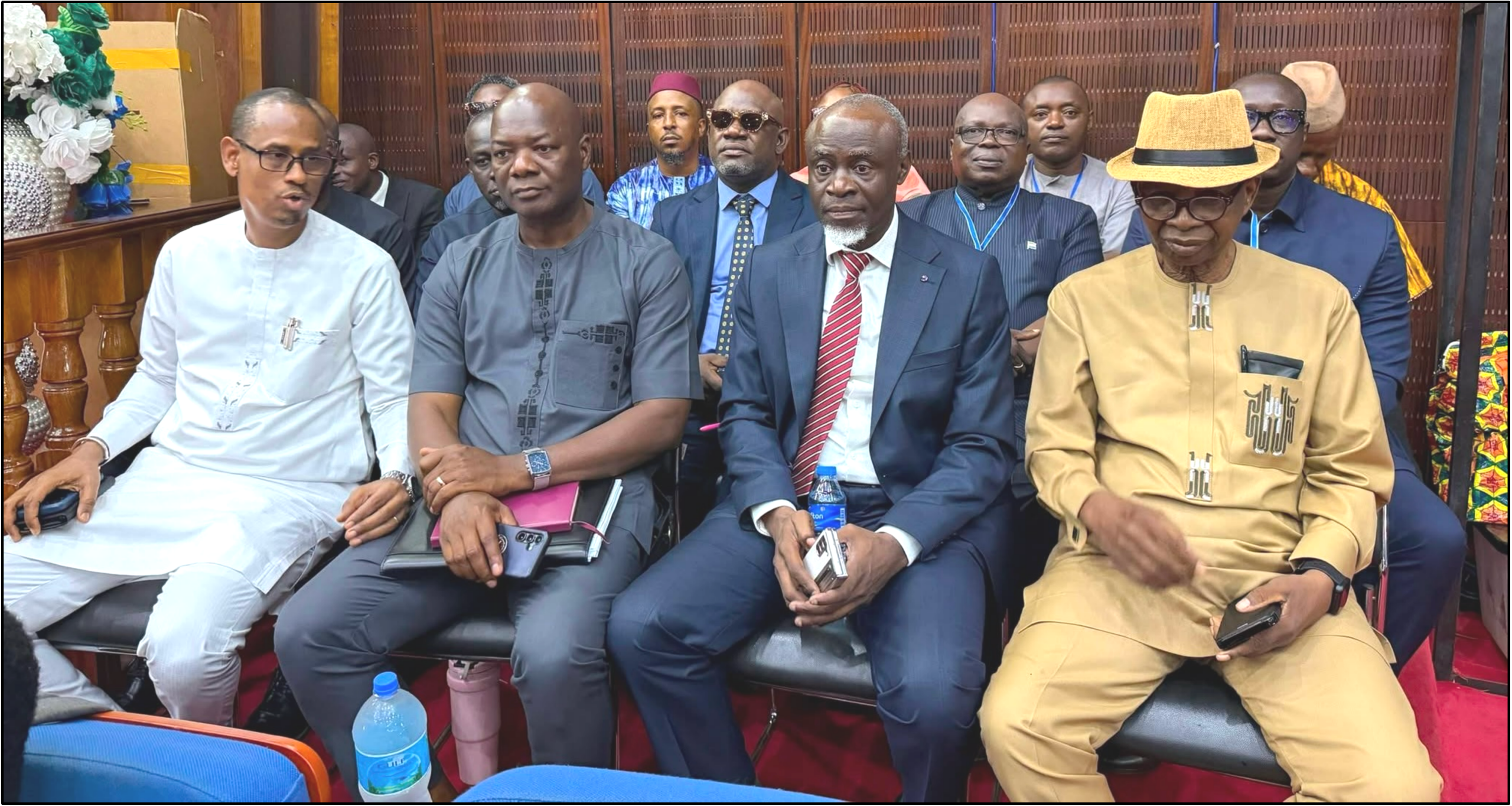
APC Chairman, Secretary General and key stakeholders in ParliamentSierra Leone has witnessed a renewed debate on electoral thresholds and voting systems. Still, the opposition All People’s Congress (APC) seems to be contradicting the positions it formally adopted during the constitutional review process under President Dr Ernest Bai Koroma. Sierra Leone’s constitutional review exercise began with commitments at the end of the civil war. Article 10 of the 1999 Lomé Peace Accord and the recommendations of the Truth and Reconciliation Commission put the country on a track to revisit and strengthen its 1991 constitution.
The first Constitutional Review Commission was set up in 2007, chaired by Dr Peter Tucker, and the Peter Tucker Report was produced in 2008. The report recommended amendments to several provisions of the 1991 Constitution. The next National Conference on Development and Transformation in 2011 called for a comprehensive review of the constitution to accelerate development and also to consolidate peace and democratic governance.
To advance the process, President Koroma set up a new Constitutional Review Committee (CRC) on 30th July, 2013. The CRC consisted of 80 members representing various sectors of Sierra Leonean society, political parties, government institutions, NGOs, civil society groups, women and youth groups, media and independent groups. Its task was to review the 1991 Constitution in the context of the Peter Tucker Report and citizen consultations.
The mandate of the CRC was to seek and receive views of Sierra Leoneans, hold consultations with stakeholders, research comparative constitutions and make recommendations on new and amended constitutional provisions.
The committee agreed on guiding principles such as a participatory and inclusive review process, and to promote national unity and cohesion and transform the Constitution from a political document to a national framework that facilitates long-term economic development and prosperity. Political parties, civil society organisations and individuals generated a range of ideas during the CRC’s work. The APC has specifically called for a revision of the outright first-round win on the electoral threshold for electing the president.
The APC made a recommendation to the CRC that the present 55% threshold for presidential elections was too high and that the constitution should be amended so that a candidate receiving 50% plus one of the valid votes cast in the first round would be declared president. This is contained in the CRC report submitted to President Koroma in 2016 on page 205.
The CRC also discussed the parliamentary elections’ voting system. The CRC report said the issue of implementing proportional representation was discussed during plenary sessions in August and October 2016 and members of the public generally expressed support for the change. The APC did not raise any objections to this public display of support during the proceedings and the CRC subsequently recommended that proportional representation be included in the amended Constitution (see page 261 of the CRC report).
But the APC is now openly challenging the changes it proposed or accepted during the CRC deliberations. The party that openly advocated reducing the presidential election threshold to 50% plus one is now against that threshold. Again, the party which did not object when the public supported proportional representation is now opposing the Bill, which has been introduced in Parliament, that incorporates proportional representation in the revised constitutional framework.
What is interesting about the apparent about-face is that it exposes a disconnect between the position the APC formally advocated during an extended, consultative constitutional review process and the stance it is taking in today’s political argument. The objective of the constitution review was to be inclusive and to mirror the national mood. Many of the recommendations, including the amendments to presidential thresholds and the introduction of proportional representation, came after consultations and deliberations among a wide range of stakeholders.
As the country wrestles with the CRC’s recommendations and the broader question of how to best structure its electoral system, observers will be watching closely to see whether political actors remain true to the positions they took during the collaborative review process or seek to reshape outcomes to fit current circumstances.
