
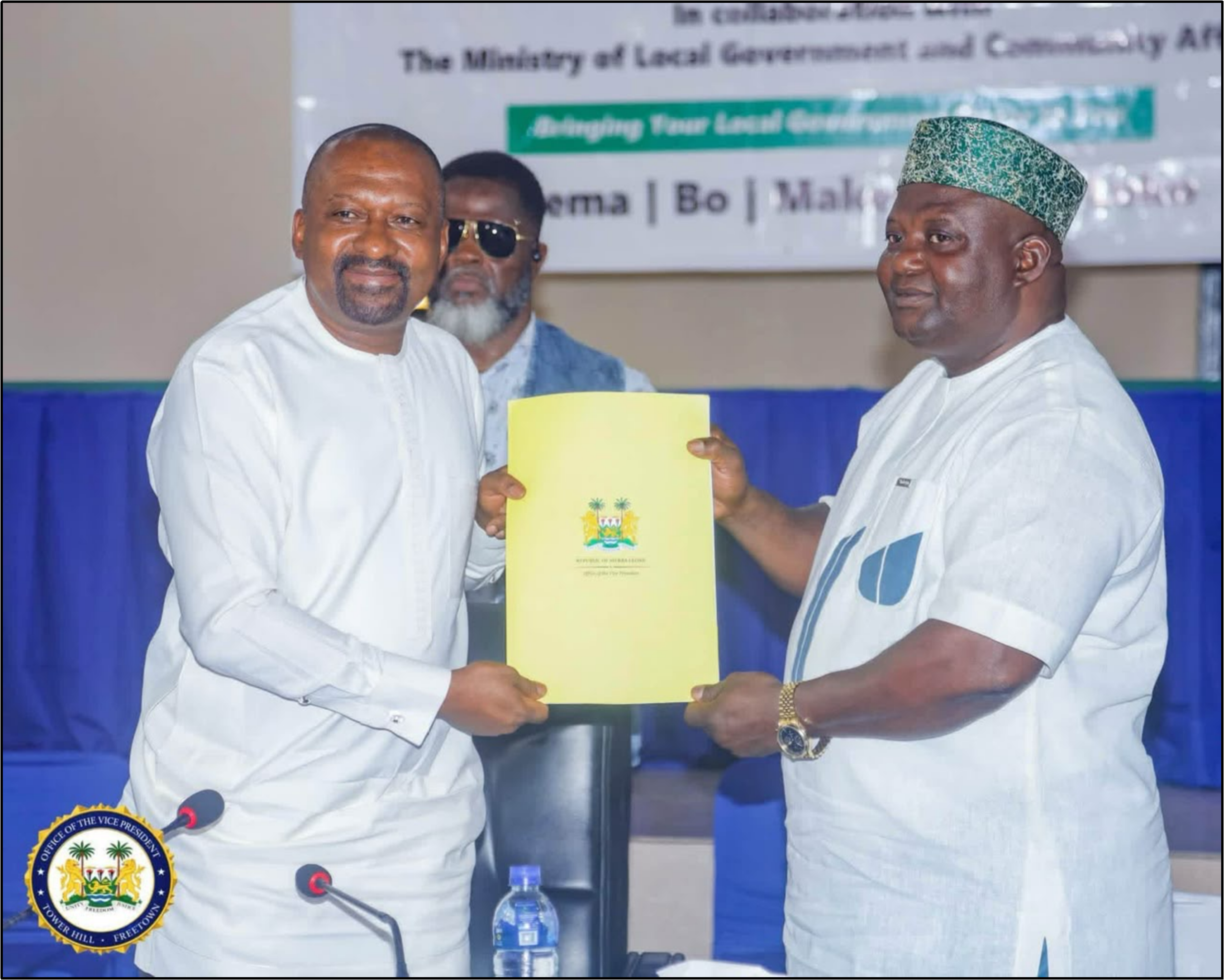
Resident Ministers of Sierra Leone have described the recently concluded Regional Consultations on Local Governance as a turning point in the country’s efforts to strengthen ties between the central government and communities. The meetings brought together government officials, local councils, traditional leaders and ordinary citizens to discuss grassroots challenges and develop practical solutions to improve service delivery and accountability.
Speaking on the consultations, the Minister of State for the Northern Region, Ibrahim Jalloh, described them as “a huge success” and commended Vice President Dr Mohamed Juldeh Jalloh for taking the conversation on local governance to the people. “The meetings created a unique and precious space to discuss freely, to express concerns and to offer practical and community-based solutions to improve governance and the delivery of services to the public,” he said.
The Southern Region Chief, John Abu, thanked the Vice President and all participants for making the consultation meaningful and inclusive. He said the exchanges gave communities, local councils, traditional authorities, and other stakeholders a chance to share their experiences and concerns firsthand and better understand what was needed to make local government more responsive to citizens’ needs.
Resident Minister for the Eastern Region, Gbessay Jusu Ngobeh, also commended the initiative, noting that the consultations underscored the importance of continuous coordination and open communication between central government institutions, local councils, traditional leaders, and community members. He noted that the meetings highlighted the importance of constant dialogue to build confidence and ensure that policy and implementation match local priorities.
For the Northwest Region, Resident Minister Umaru Bon Wurie thanked stakeholders for their active participation, saying the consultations had provided valuable insight into both the challenges and opportunities of local governance. He promised to work closely with partners to ensure that the issues raised are tracked and made into action steps.
At the end of the consultations, the four Resident Ministers were designated chairpersons of their respective Regional Coordination Committees. These committees are meant to institutionalise follow-up, strengthen coordination among local governance actors, and enable effective implementation of priorities agreed upon during regional meetings. “The committees will provide a structured mechanism for tracking progress and ensuring that the voices heard during consultations translate into tangible improvements in governance and service delivery,” officials said.
