
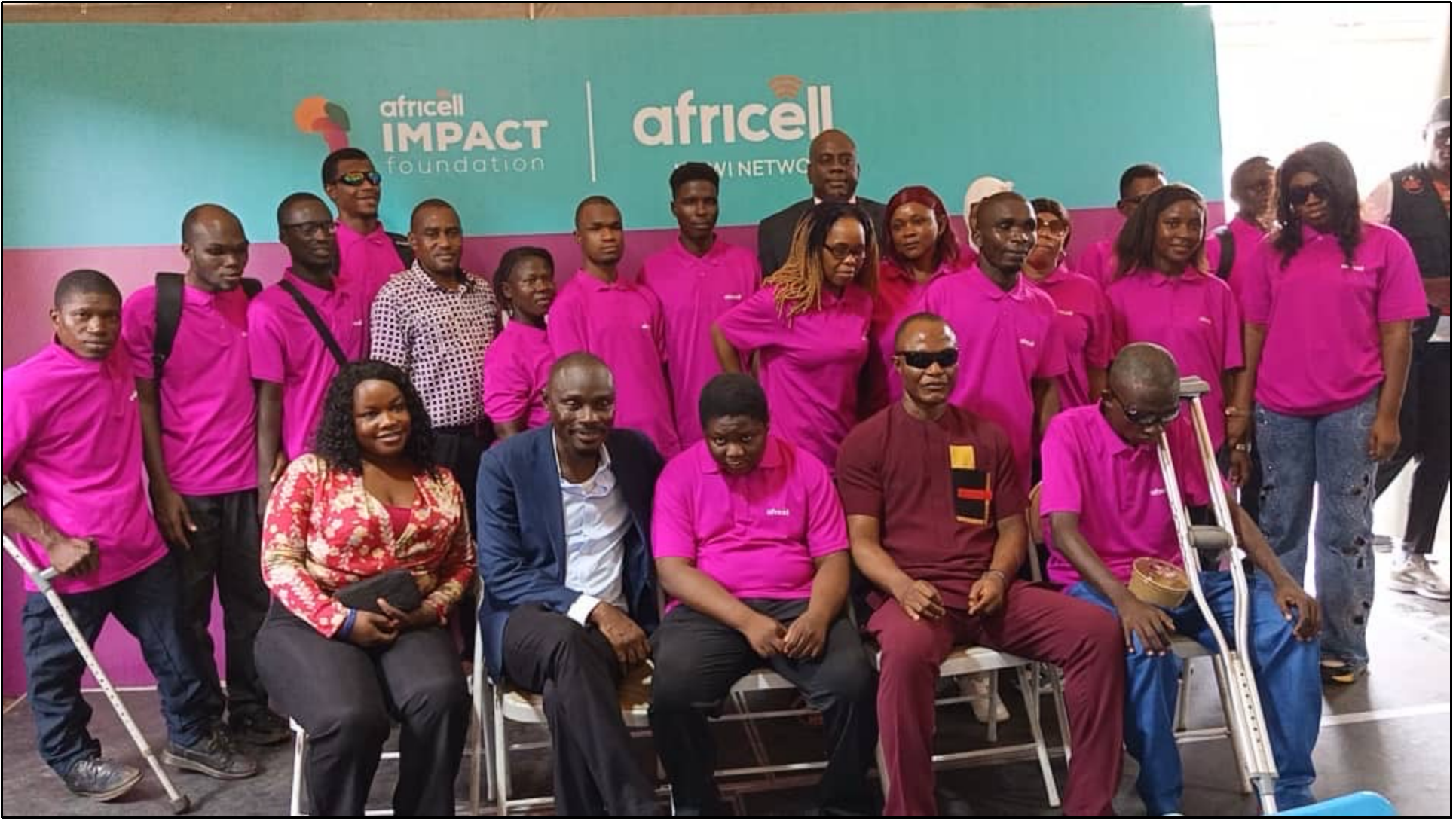
The Africell Impact Foundation has officially opened a Telemarketing Centre at the Milton Margai School for the Blind on Wilkinson Road, Freetown. The project seeks to provide long-term employment and vocational training opportunities to the visually impaired. The centre, to be opened on 28 July 2026, will seek to provide the visually impaired students with practical technical and professional skills to help them achieve economic independence and long-term inclusion in the labour market.
“The new facility is part of Africell’s ongoing commitment to inclusive development and long-term social investment. In a fireside chat at the launch, Africell’s Dr Fatu Taqi called the initiative a “conscious shift from short-term charity to long-term empowerment.” “Disability should never be viewed as inability,” she said, adding that, provided the right environment and opportunities, people with disabilities can make meaningful contributions to society. Dr Taqi urged employers to shed stereotypes and recognise the abilities and potential of people with disabilities.
Maseray Brima Lavalie, Liaison Officer to the Presidential Adviser on Social Welfare and Inclusion, agrees that inclusion means equal opportunities and not charity. She said true inclusion requires the removal of barriers to education, employment and accessibility and the development of environments where persons with disabilities can actively participate in national development. “The government remains committed to enhancing inclusive policy, and working with private sector players to expand opportunities, and we urge other organisations to follow Africell’s lead,” said Lavalie.
Afrimoney Chief Executive Officer, Martison Obeng Agyei, said the Telemarketing Centre was created to offer long-term employment, not temporary help. “This project came out of the potential of students at the Milton Margai School for the Blind and a commitment to creating long-term social impact through meaningful opportunities,” he said. “Inclusion begins with opportunity,” Agyei said, calling on employers to provide equal access to jobs, fair treatment and equal pay for people with disabilities. He also renewed Afrimoney’s commitment to deepen its partnership with the school, and called on other institutions to invest in programmes that foster inclusion and economic empowerment.
For the principal of the Milton Margai School for the Blind, Sallieu Turay, the Telemarketing Centre was a turning point for the school and for disability inclusion in Sierra Leone. He said the initiative has created job opportunities for 24 people with disabilities, including current students, graduates and vocational trainees, who are able to earn a living while contributing to national development. Turay said the project shows that lack of sight does not prevent achievement when the right help and education are available and hoped the centre would encourage other groups to set up similar arrangements around the country.
Director John Conteh, representing the Minister of Social Welfare, commended Africell and the Africell Impact Foundation for their corporate leadership, adding that projects that promote dignity, independence and economic participation of people with disabilities were important. He reiterated the government’s pledge to protect the rights of persons with disabilities through education, skill development and employment and urged other private sector entities to emulate Africell.
The Telemarketing Centre will offer professional training and employment opportunities to visually impaired people, supporting Sierra Leone’s ongoing work to promote inclusive development and economic empowerment. Africell and its partners, aiming to provide opportunities for people with disabilities to engage more effectively in the social and economic life of the country, are concentrating on practical skills, long-term jobs and cooperation between the private sector, government and specialised education institutions. The project generates dozens of immediate jobs for beneficiaries and is also looked at as a model that can be replicated for larger systemic change in inclusive employment practices.
