
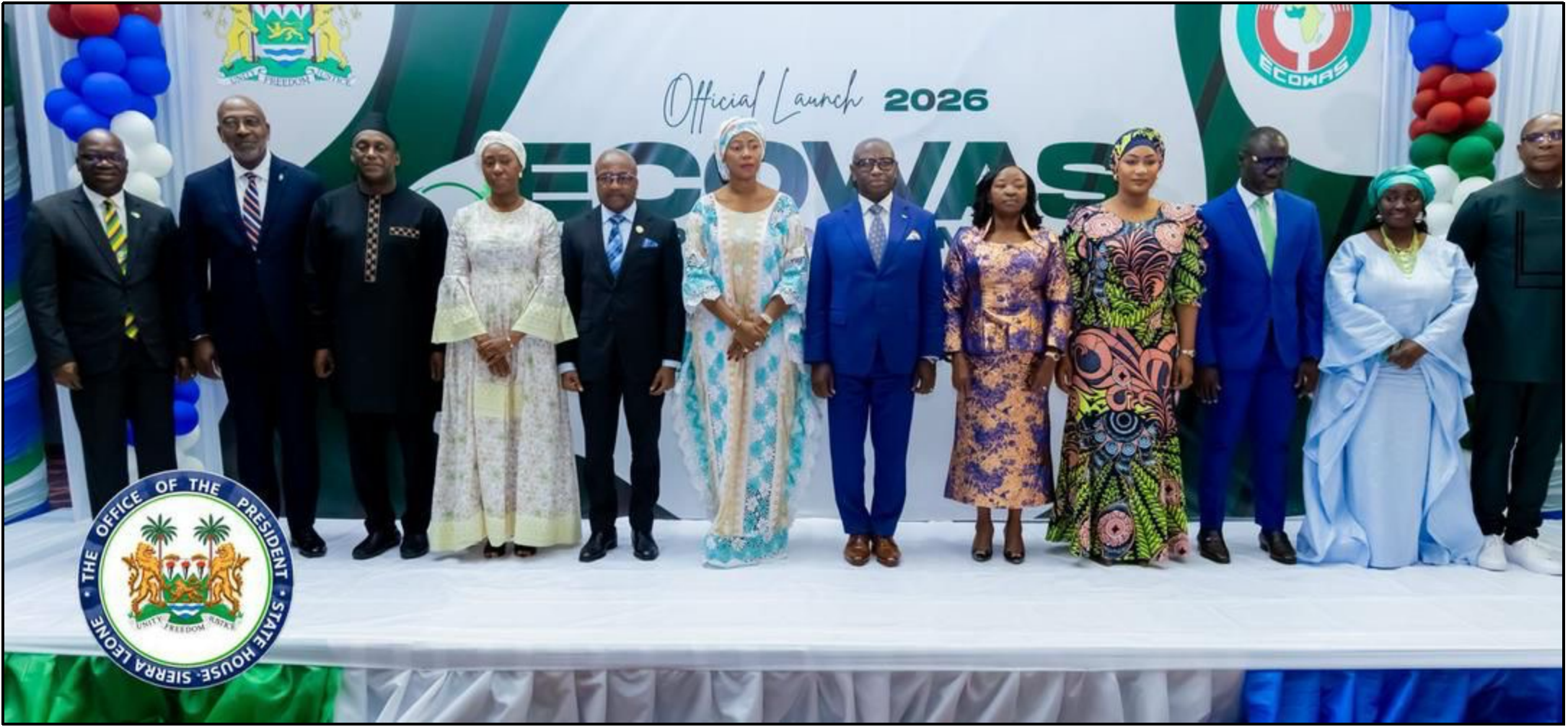
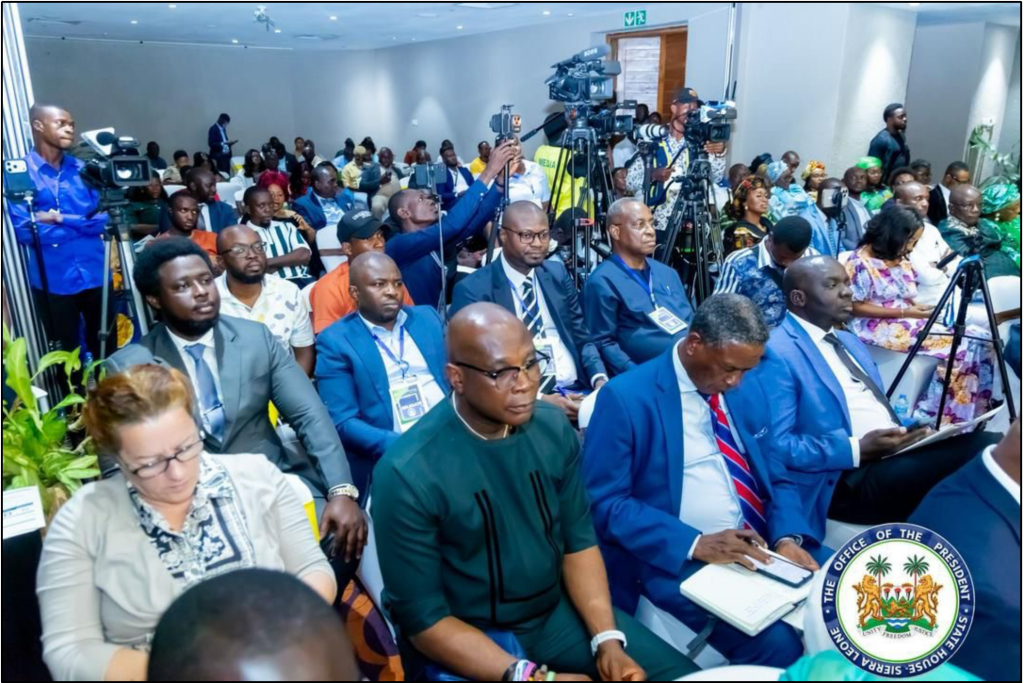
President Dr Julius Maada Bio has formally launched the Economic Community of West African States (ECOWAS) Commission’s Liquefied Petroleum Gas (LPG) Programme in Sierra Leone, unveiling a pilot program that will distribute 10,000 clean cooking gas canisters to households across the country. The launch occurred during a high-level policy dialogue on clean cooking, gender equality, and child protection, which brought together regional leaders, policymakers, development partners, and private sector representatives to accelerate the transition to safer, more sustainable household energy in West Africa.
In his keynote speech, President Bio described access to clean cooking as both a public health imperative and a development priority.
He revealed that nearly 10,000 Sierra Leoneans died in 2021 as a result of air pollution caused by cooking with firewood and charcoal, and emphasised that women and children continue to bear a disproportionate burden of indoor air pollution. “What we face today is not limited to Sierra Leone, but to Africa as a whole. “Lack of access to clean cooking necessitates our collective response,” he stated, emphasising the human cost of relying on traditional biomass fuels.
The President described personal encounters with the health risks that women face on a daily basis from open flames and charcoal stoves.
He stated that when his administration took office in 2018, there was no clear accountability framework for clean cooking, but the government has since established a dedicated Clean Cooking Delivery Unit to coordinate reforms and accelerate progress. President Bio urged the private sector to invest in clean cooking solutions, citing significant market potential and existing policy frameworks. He emphasised that women should not only benefit from the energy transition, but also be entrepreneurs and leaders in the clean energy value chain. “Our women do not lack solutions; they lack champions,” he declared, urging stakeholders to spend the next 100 days engaging communities that are already implementing cleaner systems.
First Lady Fatima Maada Bio highlighted the daily realities of mothers and families, pointing out that many women continue to cook over open flames, exposing children to hazardous smoke. She highlighted the government’s school feeding program, which currently serves over 600,000 children: many of those meals, she claimed, are prepared using open-fire methods that endanger cooks, teachers, and students. “This must change,” she said, advocating for cleaner cooking systems in schools and homes across the country.
Energy Minister Cyril Arnold Grant stated that the launch demonstrates Sierra Leone’s readiness to expand access to clean cooking. He provided baseline data demonstrating the scope of the problem: 72 per cent of households rely on firewood, 22 per cent use charcoal, and only 1.5 percent now use clean cooking solutions. He identified energy poverty as a cause of gender inequality and poor health outcomes, and urged for faster adoption of cleaner fuels and technologies.
The event featured remarks from regional and global leaders dedicated to the clean cooking agenda. Kenya’s First Lady Rachel Ruto, speaking as a global champion, stated that Africa’s movement must ensure that no woman cooks in smoke and that no forest is destroyed due to reliance on charcoal and firewood. Kandeh Kolleh Yumkella, chairman of the Presidential Initiative on Climate Change, Renewable Energy, and Food Security, emphasised the critical need to increase clean cooking nationwide. Representatives from the Ministry of Environment and Climate Change, the Clean Cooking Alliance, ECOWAS, and other dignitaries also expressed their support, with Rachel Ruto and Samira Bawumia, Global Ambassador for the Clean Cooking Alliance, delivering special addresses.
The launch is a significant step forward in Sierra Leone’s larger transition to cleaner household energy, with expected benefits for public health, women’s empowerment, and environmental sustainability as the country implements the ECOWAS LPG pilot and seeks to increase access to safer cooking solutions.
