
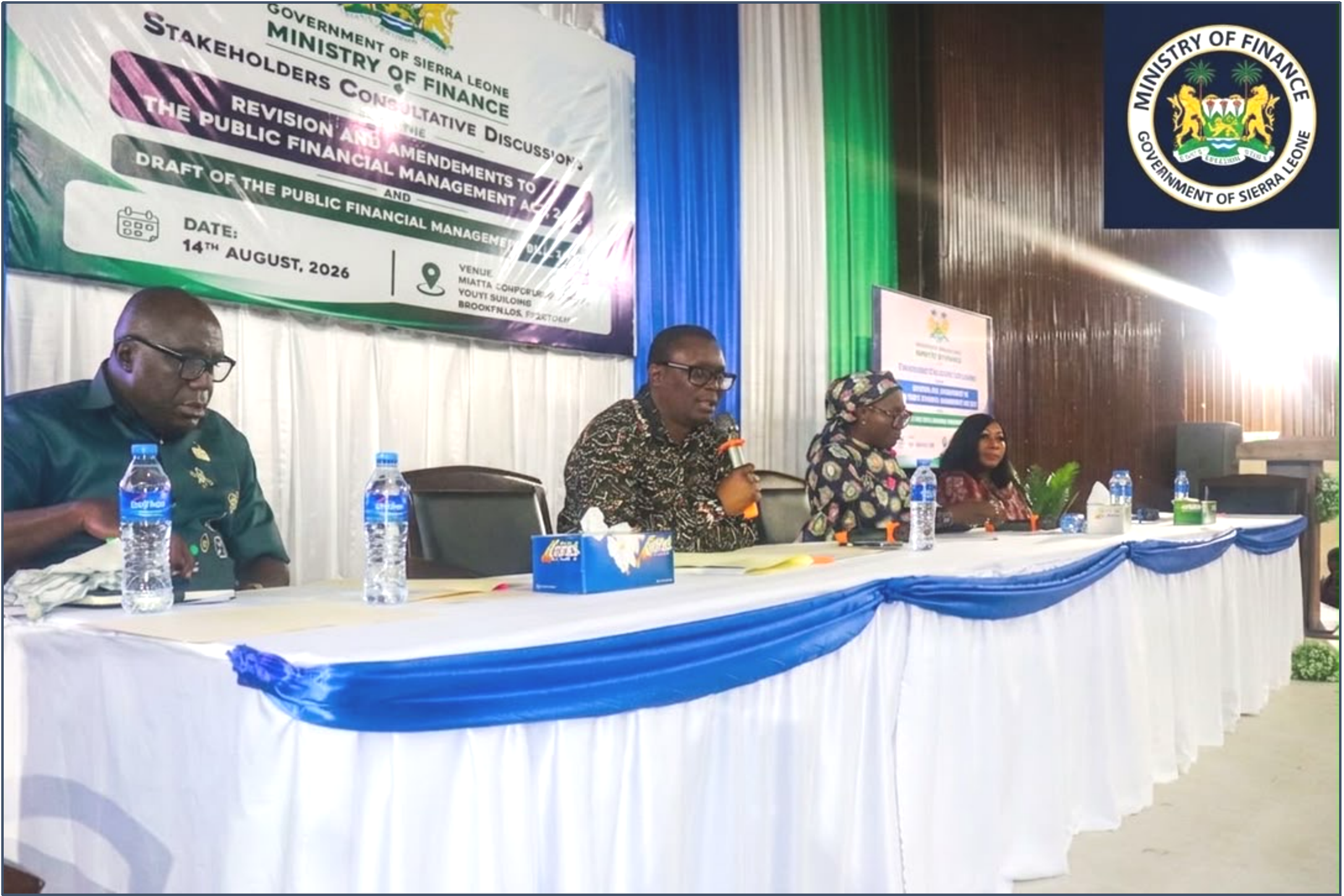
The Ministry of Finance held a series of stakeholder engagements on Friday, 14 August 2026 to solicit views on the proposed Public Financial Management (PFM) Act, 2026. The session held at the Miatta Conference Centre in Brookfields, Freetown, brought together Permanent Secretaries of Ministries, heads or representatives of Government Departments and Agencies, Chief Administrators of Local Councils, Leaders of State-Owned Enterprises and representatives of Civil Society Organisations. This consultation is part of the Ministry’s broader effort to seek practical input and to strengthen the draft legislation before submission through the formal legislative process.
The meeting was opened by Financial Secretary Matthew Dingie who explained the aims of the legislative review. He said the proposed PFM Act is aimed at establishing a stronger legal foundation for the management of public monies, increasing the resource base of the state and creating a modern framework for public financial management in keeping with evolving institutional needs. The Financial Secretary emphasised the need to review the 2016 Public Financial Management Act to address the gaps that have emerged during implementation, enhance transparency and accountability, and respond to new fiscal challenges.
Mr Dingie further noted that the consultation process is tied to conditions attached to the World Bank’s support to Sierra Leone and that meeting those conditions will facilitate the release of resources meant for key national development priorities. He called on Ministers and Vote Controllers to be active players, noting that they were at the centre of budget implementation. He specifically noted the need for stronger mechanisms to ensure effective implementation of audit recommendations, an area which he said is not adequately provided for under the existing 2016 Act.
In her keynote address, Acting Minister of Finance Kadiatu Allie emphasised the need to update the legislative framework to improve accountability, transparency and fiscal discipline in the management of public resources. She noted that after years of practical experience with the current Act, it is clear which provisions need to be reinforced especially as Sierra Leone seeks to improve fiscal sustainability and embraces greater digitisation of PFM processes.
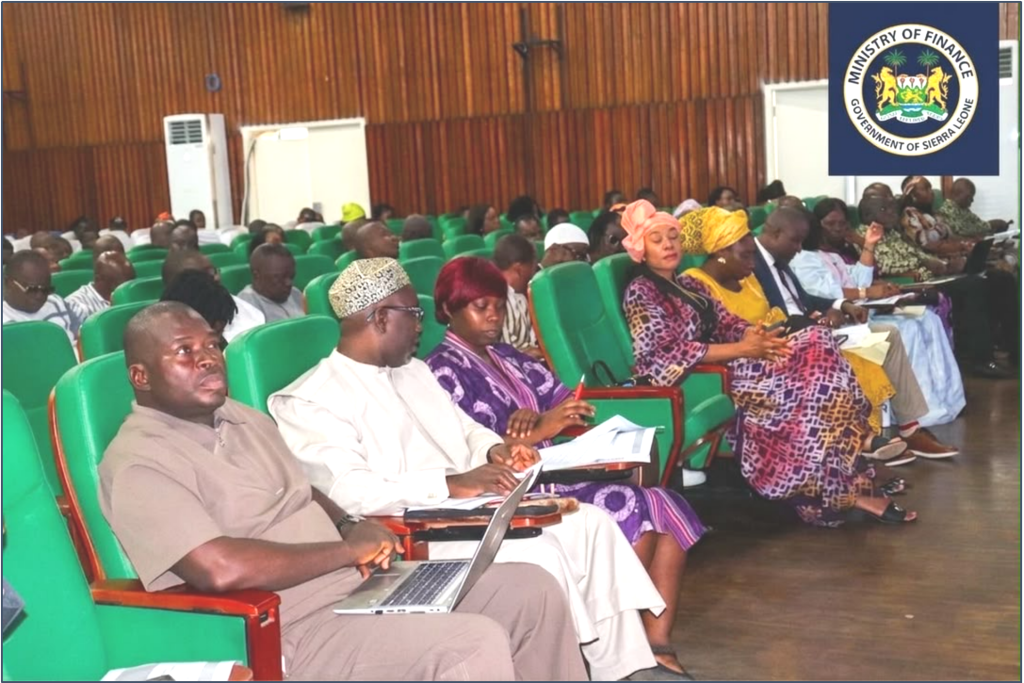
Madam Allie noted that the proposed PFM Act, 2026, seeks to introduce major reforms. These are: strengthened medium-term fiscal planning to ensure that policy priorities are reflected in resource allocation; a more comprehensive public investment management framework to improve the planning and execution of public projects; tighter commitment controls to limit unauthorised spending; and increased oversight of State-Owned Enterprises. She also highlighted important new provisions to provide a legal basis for Climate Finance and Carbon Revenue, formally recognise digital financial management systems and electronic payments, and ensure greater consideration of the fiscal impact of proposed legislation and policy measures.
Participants were asked to review the draft law in light of operational realities, mandates of institutions, existing legal instruments and capacity to implement, with a special emphasis on the challenges faced by Vote Controllers and other practitioners in charge of day-to-day PFM operations.
Following the opening remarks, the Ministry’s Legal Team presented proposed amendments to the 2016 Act through a PowerPoint briefing, followed by questions, discussion, and clarification from participants. The session follows an earlier stakeholder consultation and is expected to further improve the draft legislation in the light of the inputs received. These revisions will be captured as the Ministry takes the proposed PFM Act, 2026 through the appropriate legislative and approval processes.
