
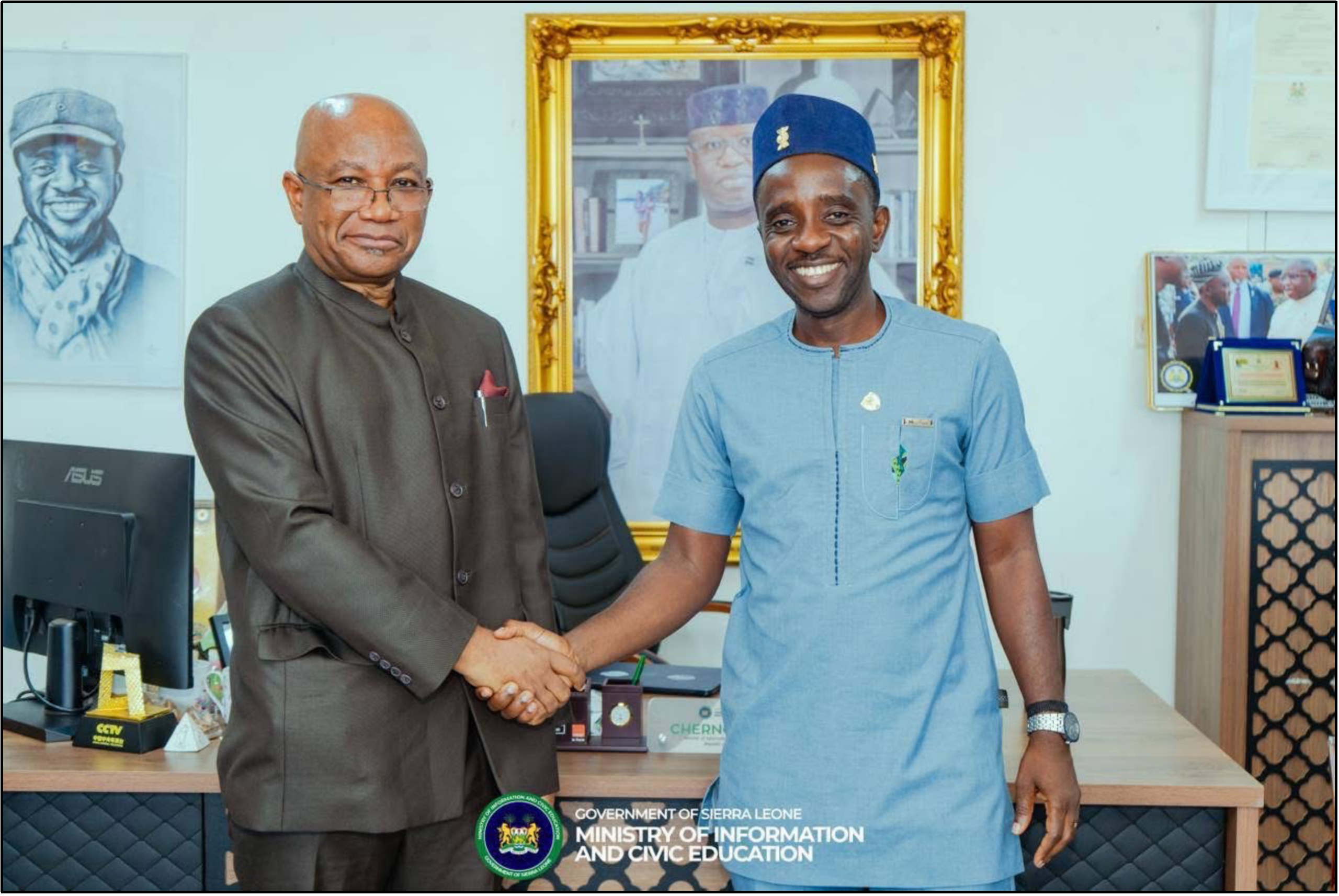
The Ministry of Information and Civic Education and the World Health Organisation (WHO) have reaffirmed their commitment to strengthening public health communication, civic engagement, and community mobilisation in Sierra Leone. The pledge was made during a meeting at the Minister’s Office between Minister Chernor Abdulai Bah and WHO Country Representative Dr George F. Ameh, during which both parties discussed ways to strengthen joint efforts in health messaging and national awareness campaigns.
Minister Bah welcomed the WHO delegation and introduced senior Ministry staff, expressing gratitude for the ongoing partnership between the government and WHO. He emphasised the Ministry’s critical role in informing and engaging citizens on major health and civic issues, and stated that the Government remains committed to working with international partners to improve public understanding and participation.
Minister Bah cited President Julius Maada Bio’s directive for government institutions to “bring the public along,” noting that part of the Ministry’s mandate is to ensure positive stories about the health sector are told alongside transparent, sustained communication about risks and responses. He highlighted existing initiatives in which the Ministry has taken the lead, such as public communication efforts during the MPox outbreak and the recently signed Memorandum of Understanding (MOU) with the Ministry of Health to spearhead the “300 Days of Activism” campaign. The Ministry of Information is in charge of increasing public engagement and mobilising communities across the country as part of this initiative.
Minister Bah outlined a broader vision for building a long-term public health education infrastructure, while acknowledging the ongoing focus on epidemic communication. He related this priority to the Ministry’s civic education framework, citing the six pillars of civic education as well as initiatives like “HEAL Salone” and national waste management campaigns. To achieve long-term behavioural change, he believes these programs will necessitate stronger partnerships and coordinated support from development partners, civil society, and government agencies.
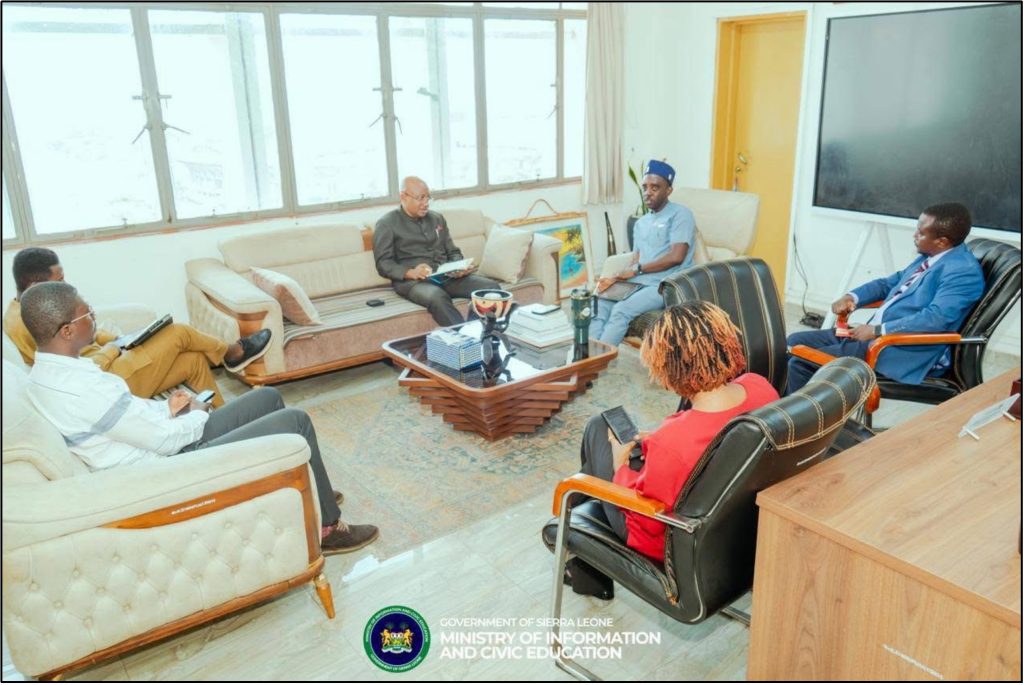
The Minister described the collaboration with WHO as an opportunity to improve Sierra Leone’s public health management ecosystem. He stated that such an ecosystem would promote health education, encourage behavioural change, and contribute to national development goals. He also mentioned ongoing progress on the Safe Motherhood Bill, recognising setbacks but emphasising the importance of targeted communication and advocacy in gaining public understanding and support for the legislation.
Dr George F. Ameh praised the Ministry’s proactive approach to public communication, as well as the recent memorandum of understanding with the Ministry of Health. He emphasised the importance of creating a responsive ecosystem capable of dealing with inevitable public health challenges, as well as ongoing engagement with communities, including traditional leaders and chiefs. The WHO Representative raised specific concerns about Kush abuse and rising HIV rates among young people, urging meaningful youth involvement and stronger collaboration among Ministries, Departments, and Agencies (MDAs).
Dr Ameh emphasised that sustained civic engagement and cross-sector cooperation are essential for public health gains, and he urged stakeholders to create a joint civic engagement program that would bring together UN agencies and others. “When women are healthy, the nation is healthy,” he added, emphasising the importance of maternal and women’s health to national well-being. He went on to say that development is inextricably linked to human behaviour and mindset change, which can only be achieved through ongoing public education and awareness campaigns.
Both the Ministry and WHO reaffirmed their commitment to collaborating to improve public health communication, strengthen civic education, and mobilise communities across Sierra Leone. They agreed to take coordinated actions that capitalise on each partner’s strengths, with the common goal of creating resilient, informed communities capable of preventing and responding to public health threats.
