
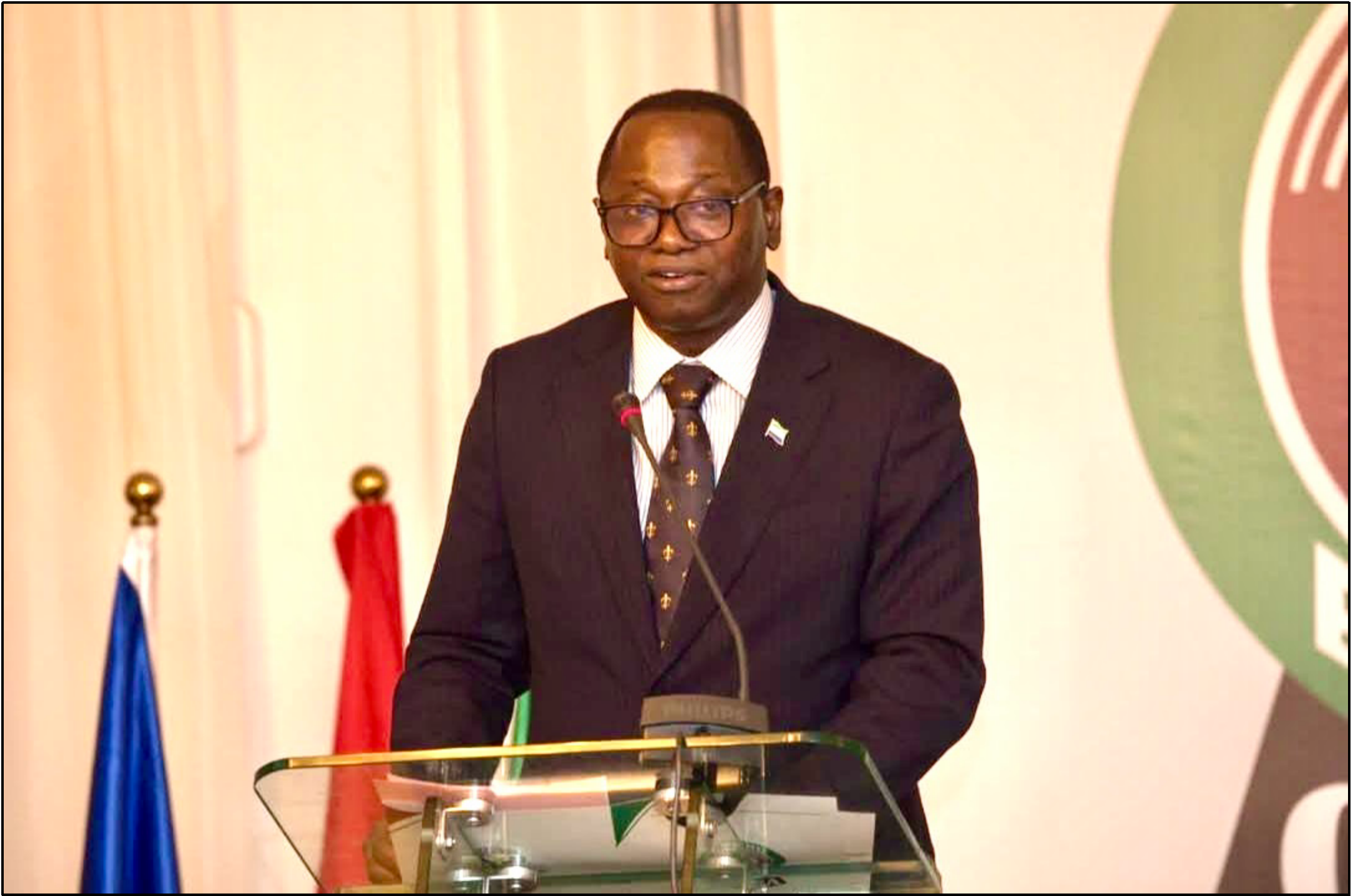
Speaking at the recently concluded Inter-Governmental Action Group against Money Laundering in West Africa (GIABA) Plenary and GIABA Ministerial Committee (GMC) session in Abidjan, Sierra Leone’s Honourable Minister of Finance, Sheku Ahmed Fantamadi Bangura, issued a stark warning about a shifting and intensifying security environment across the West African sub-region. He urged member countries of the Economic Community of West African States (ECOWAS) to strengthen regional cooperation and coordinate financial-security measures in response to rising cross-border threats.
Minister Bangura described the current security landscape as complex, with multiple interconnected threats that “respect no sovereign borders.” He cited the simultaneous rise of terrorist activity, persistent maritime insecurity in the Gulf of Guinea, and the rapid expansion of transnational cybercrime networks as his main concerns. According to the minister, these challenges are no longer isolated national issues, but rather shared regional crises capable of undermining economic growth, discouraging investors, weakening democratic governance, and disrupting long-term development across ECOWAS.
His main point was that terrorism financing, piracy, illicit financial flows, and cyber-enabled fraud are all becoming more interconnected. Criminal and extremist networks use loopholes in national and regional systems to move funds, launder proceeds, and sustain operations across borders. To counteract this, Bangura advocated for a coordinated regional response based on strong intelligence sharing, increased financial oversight, and strengthened anti-money laundering and counter-terrorism financing (AML/CFT) frameworks.
The minister emphasised the importance of increased collaboration among ECOWAS member states’ governments, financial regulators, security agencies, and international stakeholders. He advocated for investments in modern security infrastructure, improved digital resilience for critical institutions, and the deployment of coordinated maritime surveillance systems to better secure sea lanes and protect regional trade routes. The harmonisation of legal and regulatory frameworks across member states was also emphasised as critical for more effective cross-border investigation, cybercrime prosecution, and disruption of illicit financial networks.
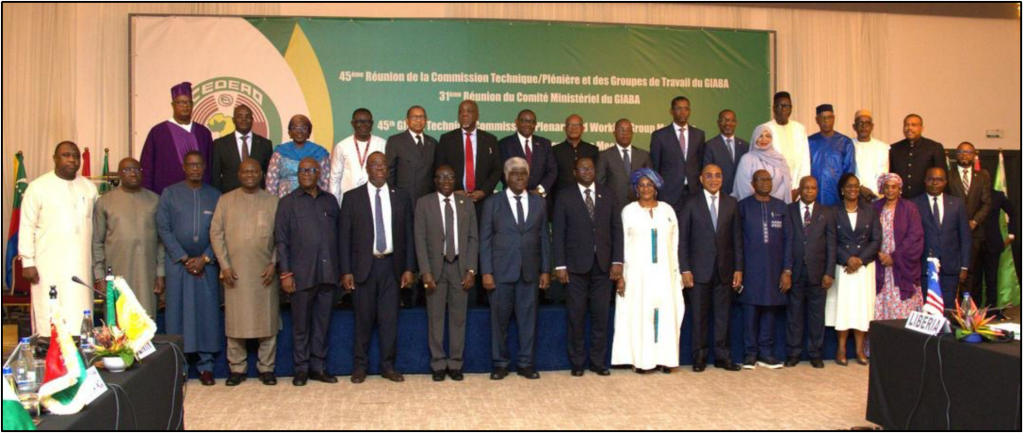
Bangura’s intervention comes as several West African countries continue to face violent extremism and organised criminal groups operating across porous borders. Maritime piracy in the Gulf of Guinea continues to pose a significant threat to international shipping and regional commerce, while cybercrime syndicates have increasingly targeted banks, government systems, and private enterprises throughout the subregion. These realities, according to the minister, necessitate the strengthening of AML/CFT measures and financial intelligence cooperation in order to prevent criminal organisations from exploiting systemic weaknesses.
Observers at the GIABA session described the minister’s plea as a strong call to collective action in the face of mounting security threats. Analysts at the meeting noted a growing recognition among policymakers that economic development and regional security are inextricably linked, and that long-term peace and macroeconomic stability rely on coordinated, regional-scale strategies.
The GIABA Plenary brought together delegates to discuss anti-money laundering strategies, counter-terrorism financing measures, financial intelligence collaboration, and regional approaches to emerging security threats. Minister Bangura’s speech lent support to calls for practical steps to strengthen the subregion’s resilience against increasingly sophisticated and cross-border threats, such as improved information exchange among financial intelligence units, mutual legal assistance, technical assistance, and capacity building.
