
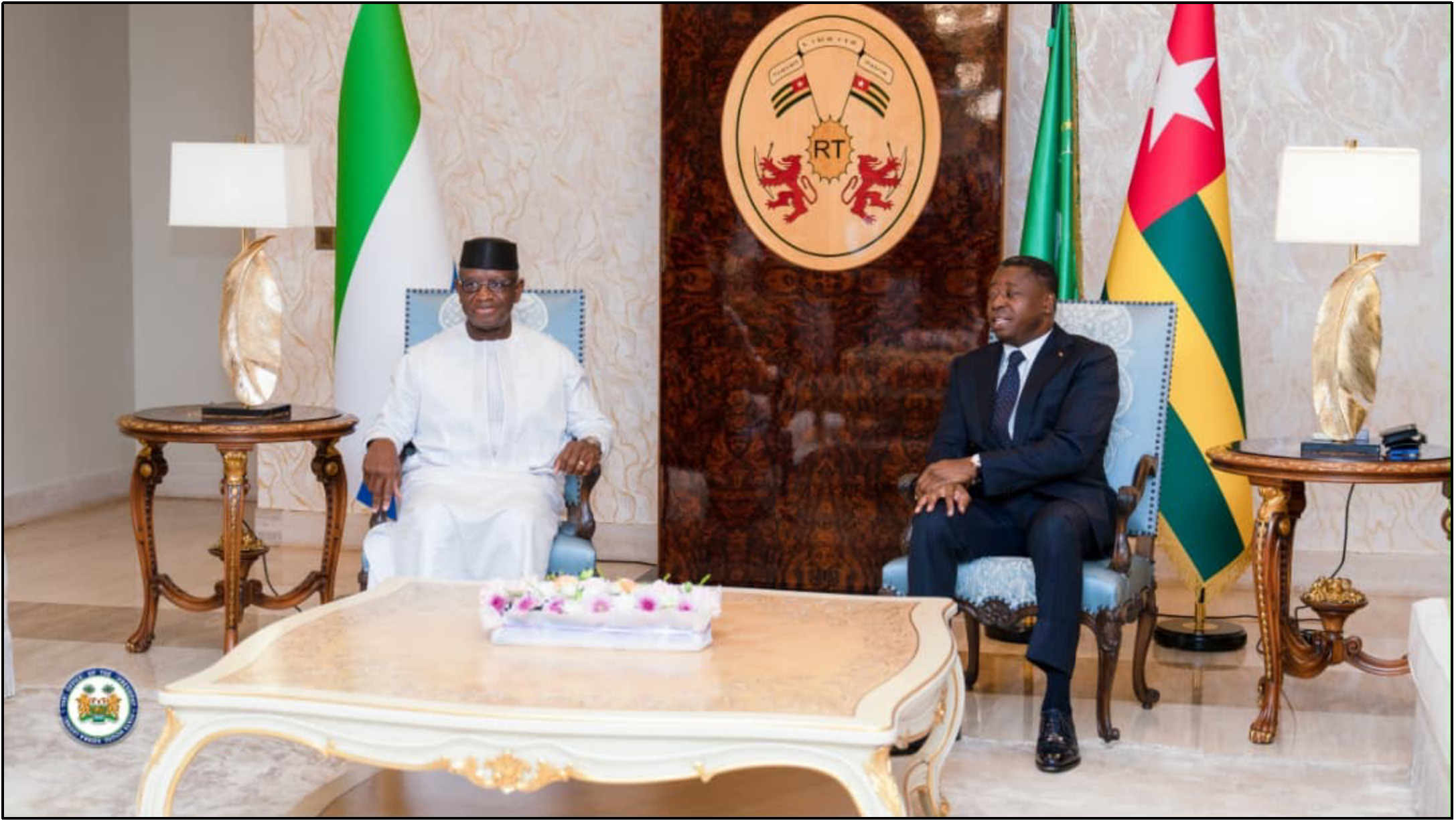
Lome, Togo – July 3, 2026 – Sierra Leonean President Dr Julius Maada Bio on Friday challenged African leaders to exploit the chaos in the world to galvanise a renaissance for the continent. “For too long, Africa has been a passive observer of geopolitical turmoil. We must now become active architects of the new world order,” he said. President Bio presented a comprehensive blueprint covering economics, security, diplomacy and institutional reform at the Extraordinary Conference of the African Political Alliance (APA) in Lomé, on the theme “Africa and the Middle East Crisis: Impacts, Challenges, and Strategic Responses.”
President Bio began his speech by stating that the Middle East conflict was not a problem far away but a shock already reverberating in African economies. The continent’s exposure to external shocks has grown due to spiralling fuel prices, inflation, broken supply chains, and declining investment flows, he said. “The crisis in the Middle East is a reminder of how in today’s interconnected world, there is no region that is insulated from the impact of conflict,” he said, emphasising the need for African resilience. No external crisis can determine the destiny of Africa. Only Africa can decide its own future, he said.
Bio commended Togolese President Faure Gnassingbé for the establishment of the APA, noting that it was an important forum for sustained strategic dialogue and political coordination among African heads of state. He said Africa lacked mechanisms to harmonise its international positions and called for the creation of more institutions that would allow for African-led solutions to global problems. He stressed in his remarks the importance that the continent not be caught up in great power competition over and over again. Africa’s top priority, he said, should be to protect its own peace, security and development through diplomacy, respect for international law and negotiated agreements, rather than picking sides.
President Bio said that, based on Sierra Leone’s post-conflict experience, genuine and lasting peace is built on reconciliation, inclusive governance and ongoing political dialogue and not solely on military means. He cited the recovery experience of his own country to emphasise the need for broad-based civic and political inclusion for security and stability.
The speech was mainly about economic transformation. President Bio called for a decisive break from the long-standing practice of exporting raw materials and importing finished goods. He urged for a speedy implementation of the African Continental Free Trade Area (AfCFTA), enhanced regional manufacturing capacity and increased value addition across sectors to attain economic sovereignty. He also advocated climate-smart agriculture, increased production of renewable energy and major investment in physical infrastructure to reduce dependence on external markets and to strengthen the resilience of African economies to external shocks.
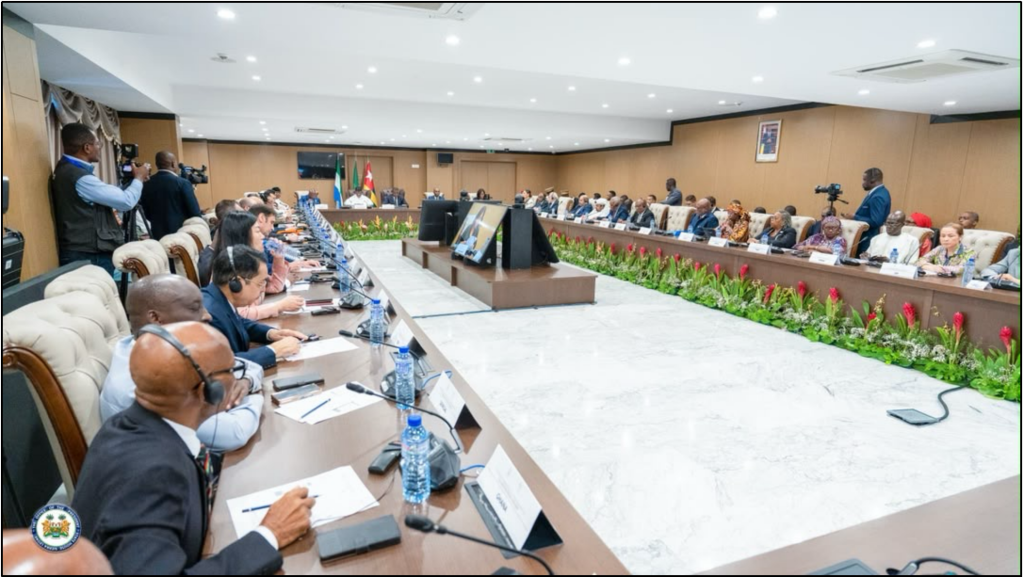
Bio challenged African governments to get ready for the Fourth Industrial Revolution in the new age of technology. He emphasised the need to invest heavily in education, digital infrastructure, innovation ecosystems, research, and entrepreneurship to harness the demographic dividend of Africa, which he called a strategic advantage if properly equipped.
President Bio reiterated a long-standing African call for reform of the UN Security Council on the international stage. He mentioned the Sirte Declaration and the Ezulwini Consensus, noting that “a continent with close to one-fifth of the world’s population deserves better representation and a stronger voice in decisions affecting international peace and security.”
Bio, who is chairman of the Economic Community of West African States (ECOWAS) Authority of Heads of State and Government, said his bloc remains committed to peacebuilding, democratic governance, regional integration and sustainable development. He proposed a permanent continental geopolitical risk assessment and early warning mechanism to better prepare collectively for future crises. He also called for a common African position on the Middle East conflict so that Africa could speak “in one voice” to international partners.
At different points in his speech appealed to African leaders to recognise the present global turmoil as a tactical opportunity to fast-track industrialisation, build up institutions, and expand Africa’s global footprint. He explained, “The world is changing before our eyes. The question is not whether change will occur. The question is whether Africa will shape the change or the change will shape Africa.”
Finally, he came back to the main message of the speech: Africa must take control of its own destiny. No external crisis can determine the destiny of Africa. ” ‘Only Africa can define Africa’s future,’ he told peers, calling on them to transform crisis into opportunity for long-term change.
