
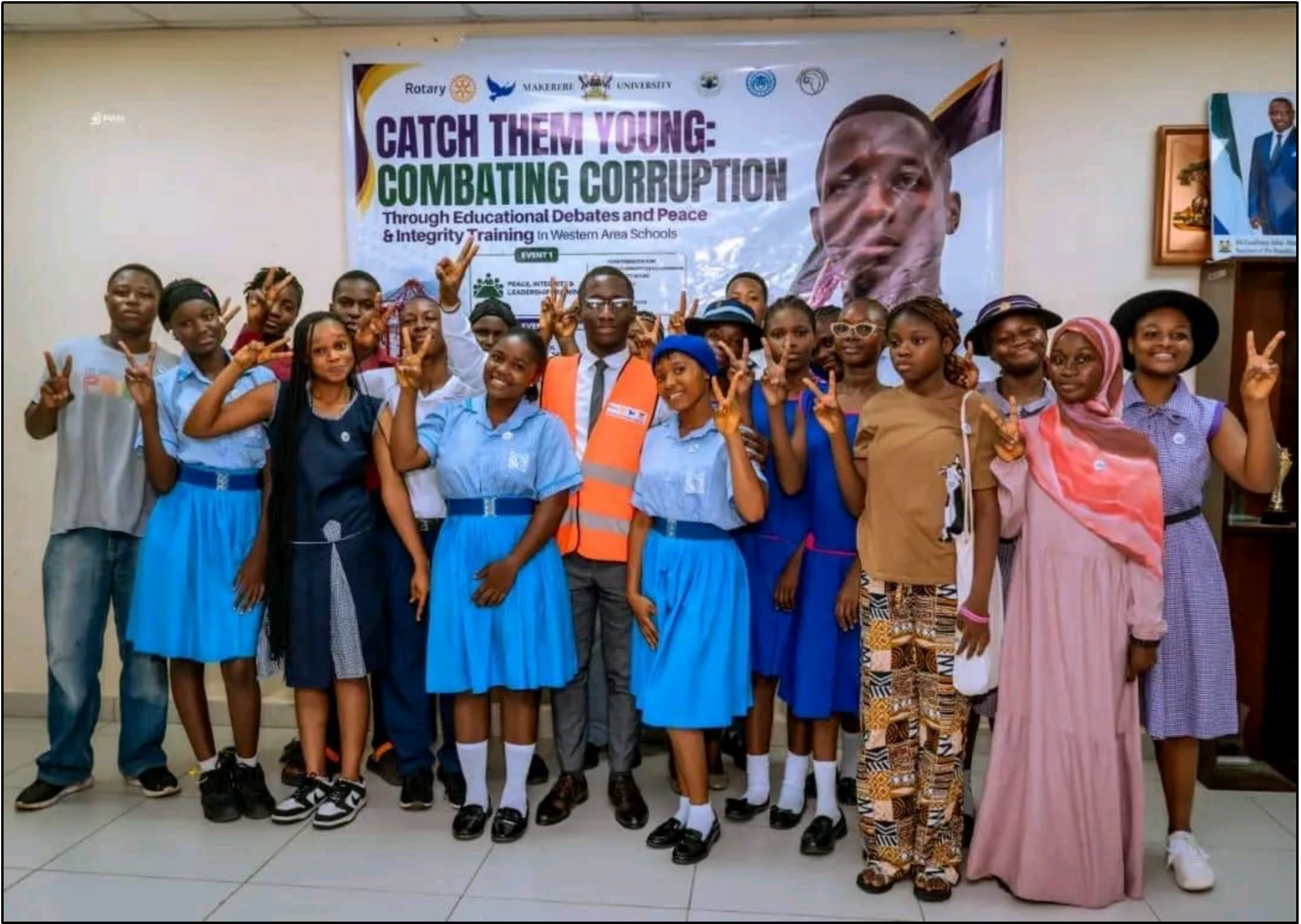
The Anti-Corruption Commission (ACC) has urged the youth to embrace integrity as a daily practice and find the courage to speak out against corrupt behaviour wherever they find it, saying that the fight against corruption starts with individuals, and has to be nurtured from young.
The appeal was made during a Peace, Integrity and Leadership Training held on Thursday, 20 August 2026 under the theme “Catch Them Young: Combating Corruption Through Educational Debates and Peace & Integrity Training” – a social change initiative led by Rotary Peace Fellow Alex A. Bah. The event was held at the ACC’s Conference Room, Integrity House, Tower Hill, Freetown and was attended by Senior Secondary School pupils drawn from seven Western Area schools.
“This is complementary to the mandate of the Commission to prevent and combat corruption,” said Patrick Sandi, Coordinator of Operations at the ACC. He linked peace, public trust and the fight against corruption, warning that the erosion of trust between citizens and their leaders undermines societal progress. “When there is a loss of trust by the governed and the governors, society does not prosper,” Mr Sandi said, noting that the fight against corruption is an important part of peacebuilding.
Mr Sandi encouraged the young participants, who were inducted later as Peace and Integrity Ambassadors, to be courageous, resilient and vigilant in promoting integrity and speaking up against corrupt practices, including those involving people in power. His comments were meant to advance an understanding of integrity as not just a civic duty for those in public office, but also as a personal responsibility that must be nurtured in the everyday choices that we make.
The Deputy Director of Public Education and Outreach at the ACC, Sylvanus Blake, echoed the message in a session titled “Integrity, Accountability and Young Citizens: Understanding Corruption and Our Role in Preventing It.” Mr Blake explained corruption in simple terms as the use of public office for private gain, but cautioned students against viewing corruption as purely the domain of public sector actors. Accountability begins with the person, he said, and he encouraged students to act with integrity in their daily lives and have the courage to stand up for what is right.
One key theme throughout the training was that prevention is just as important as enforcement. The speakers agreed that developing resilient ethical habits and empowering citizens to demand transparency are important steps in reducing opportunities for corrupt behaviour, rather than waiting for misconduct to happen. The ACC’s participation in the initiative shows its commitment to instilling integrity from an early age, public education, and engaging young people as pillars for building a culture of integrity in Sierra Leone.
The program also examined links between peace, conflict prevention and responsible leadership. The session entitled “Peace Begins With Us: Young People, Conflict Prevention and Social Cohesion” was presented by Titus Mohamed Kallon, Acting Director for Conflict Prevention at the Independent Commission for Peacebuilding and National Cohesion. He stressed that active listening, respectful communication and constructive dialogue are important tools to prevent conflict and promote social cohesion among young people.
Mark Ivan Kapindy Vandy, Head of Media and Public Relations at the Sierra Leone Ports and Harbours Authority, the Integrity Champion partner of the initiative, delivered the keynote address on “Integrity in Action: Building Ethical Leaders for Sierra Leone’s Future.” He encouraged pupils to include integrity in their everyday decision-making, and reminded them that “public office is not personal property. Its resources are not your resources,’ a phrase that highlighted the difference between private interest and public duty.
Other sessions included leadership and debate skills training. Ansumana Keita, Executive Director of the Patriotic Advocacy Network, moderated a discussion on “Young People, Leadership and Peacebuilding: Becoming Agents of Positive Change,” and Alex A. Bah led a practical workshop on “The Art of Debate: Critical Thinking, Evidence, Persuasion and Respectful Disagreement.” The components were designed to provide pupils not just with the ethical grounding to resist corruption but also the communication and critical-thinking skills they need to participate constructively in civic life, organisers said.
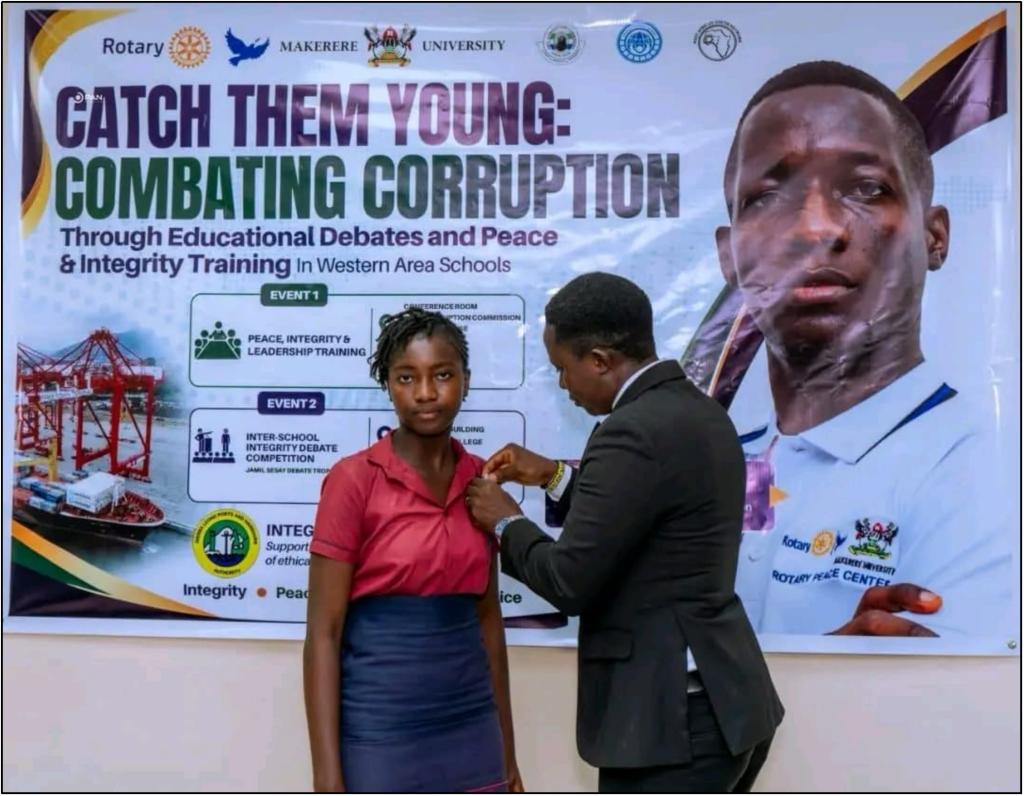
The training ended with the formal induction and oath-taking of the participants as Peace and Integrity Ambassadors. The pupils took the pledge to champion peace, maintain integrity, refuse to do wrong and show responsible leadership in their schools and communities.
The initiative will also continue with an Inter-School Integrity Debate Competition, allowing participating pupils to demonstrate their debate skills in evidence-based argumentation and respectful public engagement, organisers said. The ACC’s support of the project reaffirmed its commitment to educating the next generation about the harms of corruption and strengthening preventive measures that begin with an informed, integrity-minded citizenry.
By positioning the fight against corruption within a wider framework of establishing confidence, peace and accountable leadership, the ACC and its partners are trying to ingrain ethical behaviour among Sierra Leone’s youth so that future leaders are better prepared to protect public resources and the public interest.
