
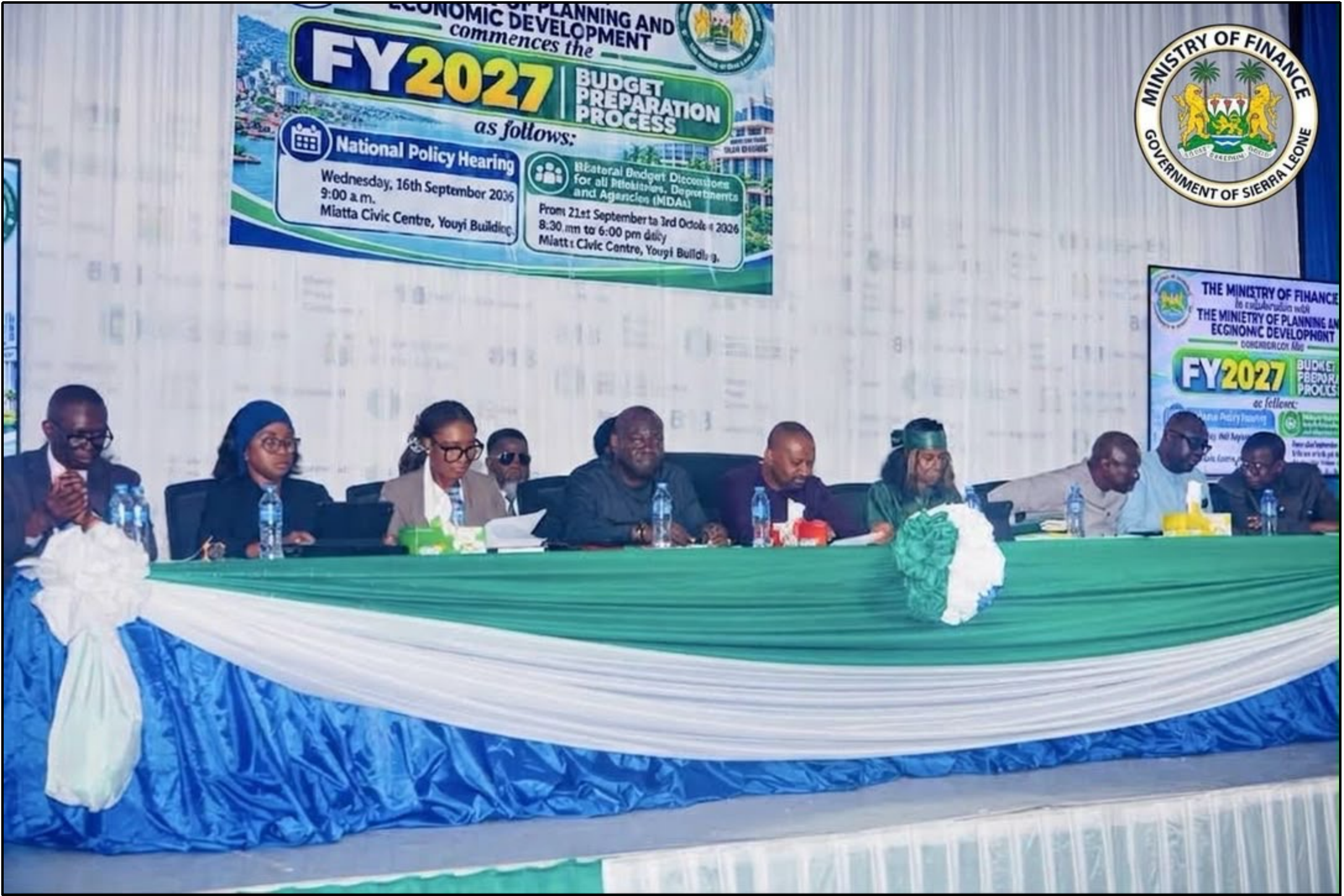
The Ministry of Finance, in collaboration with the Ministry of Planning and Economic Development, launched the National Policy Hearings for the FY2027 Budget Preparation Process at the Miatta Civic Centre, Brookfields, under the theme “Building Resilience to Create Jobs.” The hearings, officially opened by Vice President Dr Mohamed Juldeh Jalloh, brought together government officials, development partners, private sector representatives and other stakeholders to chart the country’s medium-term fiscal and development priorities.
In his keynote address, Vice President Jalloh cautioned against using public resources, noting the need for credible revenue assumptions and responsible fiscal management as the country prepares its budget. He cautioned against institutional “wish lists” with no basis in realistic funding prospects, emphasising that a vibrant private sector will be increasingly necessary for long-term job creation. “He advocated for reducing the cost of doing business, improving access to finance, improving infrastructure and energy supply and promoting local manufacturing to create jobs,” Jalloh said.
Dr Ilara Mahdi, Deputy Director of Budget, said the national policy hearings were a critical stage in the annual budget cycle, allowing stakeholders to influence policy direction and ensure budget proposals align with national priorities. Chairing the meeting, Director of Budget Tasima Jah and Secretary to the President Baba Fortune stressed the need for ministry proposals to align with the national development agenda.
Chairman of the Parliamentary Finance Committee, Hon. Keikura, stressed the significance of legislative oversight in ensuring transparency and accountability in the use of public money. On the private sector side, Chamber of Commerce representative Rashid Conteh commended government efforts to promote business growth and called for greater cooperation between the government and private companies to improve job-creation prospects.
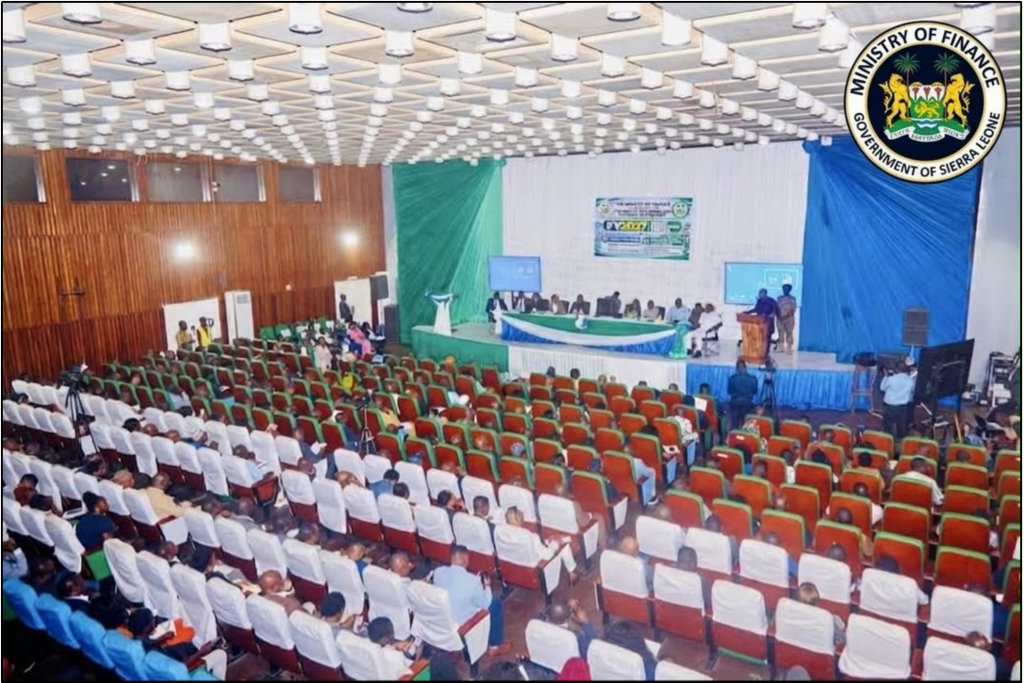
Several line ministries have identified sectoral priorities for growth and job creation. The Minister of Trade and Industry, Alpha Sesay, stressed the need for economic diversification, saying the manufacturing and agriculture sectors are the main drivers of development. He also appealed for more support from the Munafa Fund to help the private sector grow. Minister of Employment, Labour and Social Security Umaru Napoleon Koroma emphasised the value of job creation and decent work as essential tools to lift households out of poverty.
Planning and Economic Development Minister Madam Kenyeh Barley urged that the Medium Term National Development Plan guide budgetary decisions. Barley said progress had been made in agriculture, health, youth employment schemes, access to electricity, and digitalisation, but financing challenges remained for future development targets.
Development partners also reaffirmed their support for the government’s program. Isatou Diallo, World Bank Country Manager, reiterated the Bank’s partnership and underscored shared priorities, including increasing access to electricity, investments in human capital, fiscal reforms, and measures to promote private sector investment.
Finance Minister Kerefa A.F. Kargbo announced the FY2027 policy priorities, consistent with the Big Five Game Changers and the government’s Medium Term National Development Plan. Key priorities are food security, increased domestic revenue mobilisation, job creation, investment in infrastructure and technology, and public service reform. Kargbo cited ongoing macroeconomic gains and policy actions under the IMF program, and said a new expenditure framework for 2027-2029 will help ministries, departments and agencies align their budget proposals to national strategic priorities.
The hearings concluded with presentations by Financial Secretary Matthew Dingie and Deputy Minister of Finance I, Kadiatu Allie, on domestic revenue mobilisation, the Feed Salone Program, and job creation strategies. Bilateral Budget Discussions, September 21 – October 3, 2026: Continue the FY2027 Budget Preparation Process.
