
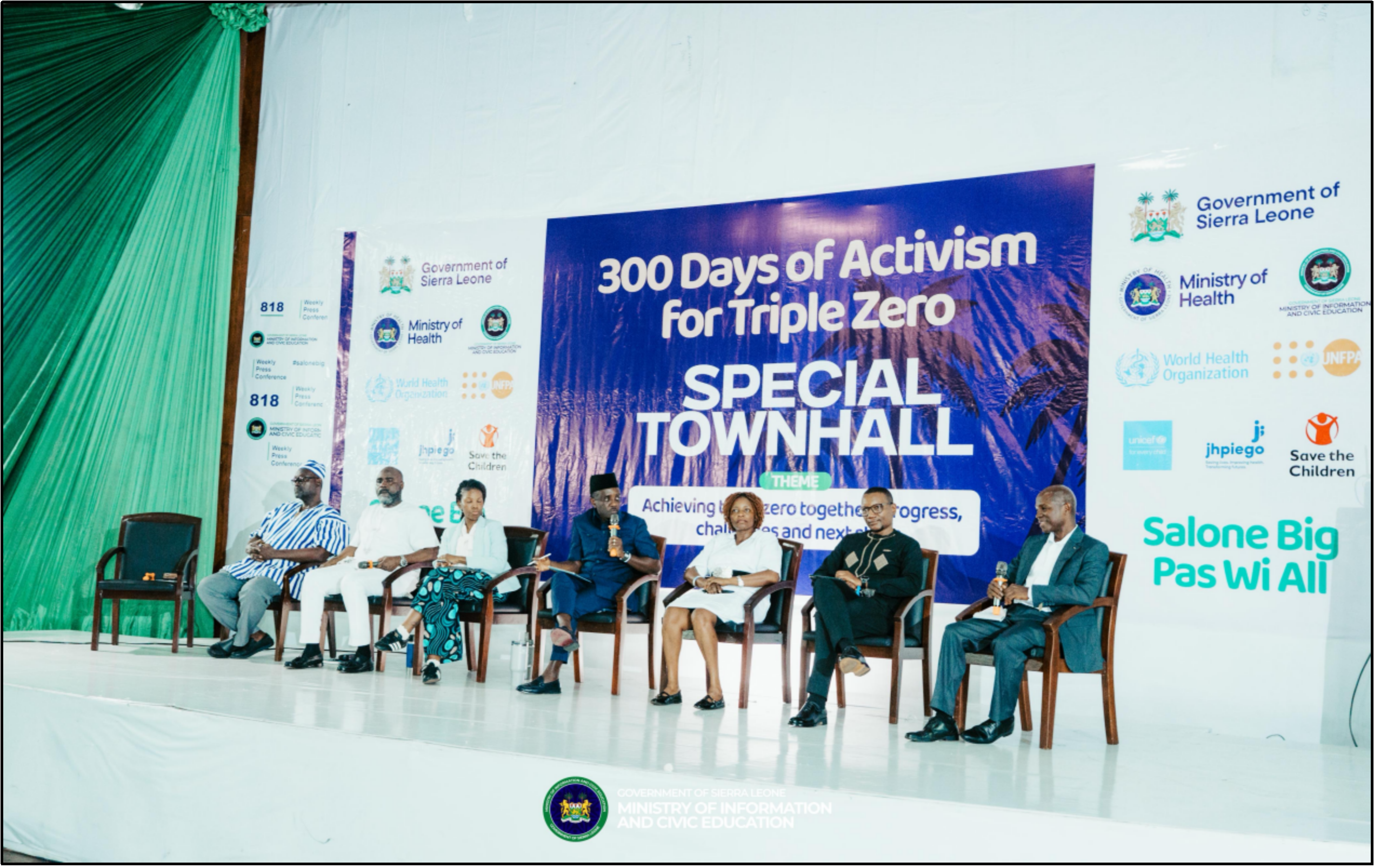
Sierra Leone launched a strengthened national effort to end preventable deaths among mothers, newborns and children with a special town hall meeting organised as part of the 300 Days of Activism for Triple Zero. On Tuesday, October 6, 2026, government officials, health workers, development partners, civil society, and community leaders met at the Miatta Civic Centre in Freetown to review progress, identify persistent gaps, and reach practical agreements on next steps.
Minister of Information and Civic Education Chernor Bah hosted the program, while guest speaker Dr Jalikatu Mustapha, Deputy Minister 2 of Health, attended. The town hall intentionally shifted the conversation from celebrating successes to a serious review of the work that remains to be done to achieve zero preventable maternal deaths, zero preventable newborn deaths, and zero preventable child deaths under the heading “Achieving Triple Zero Together: Progress, Challenges, and Next Steps.
Dr Mustapha said a lot of progress has been made in maternal health in the last decade, attributing this to a concerted government effort to invest in and support development partners, which led to a significant drop in maternal mortality. She cited a 70 per cent reduction in maternal death as evidence that lives can be saved by coordinated action. But she warned against complacency, adding that one preventable death was one too many.
“Why stop at a 70 per cent reduction in maternal deaths? “We need to go from three deaths to zero deaths because every life is precious,” she said, urging all stakeholders to take a strong stand against preventable deaths.
Dr Mustapha’s remarks focused on a shift in the national mindset: from seeing deaths among mothers and their children as unavoidable tragedies to seeing them as preventable tragedies that demand immediate, coordinated action. She said the Triple Zero campaign is about bringing together government agencies, health workers, communities, development partners, and the private sector to share responsibility for protecting mothers and children.
No woman should die in childbirth, and no child should die from a preventable cause. ” This is not acceptable, and we need to work together for zero,” Dr Mustapha said.
Participants also flagged structural and operational challenges that continue to limit access to timely, good-quality care during the town hall. While speakers and attendees acknowledged progress, they also identified persistent barriers as opportunities for intensified, targeted measures, including workforce capacity gaps, supply chain constraints, transportation and referral issues, financial barriers for families, and sociocultural factors that delay care-seeking.
Dr Mustapha stressed that achieving Triple Zero requires not only commitments at the highest levels but also identifying the root causes of preventable deaths in communities and applying workable solutions at the district and facility levels. This means improving emergency obstetric and neonatal care; ensuring consistent availability of essential medicines and supplies; Increasing skilled health worker coverage; Improving referral systems; and strengthening community health structures that detect and respond to danger signs early.
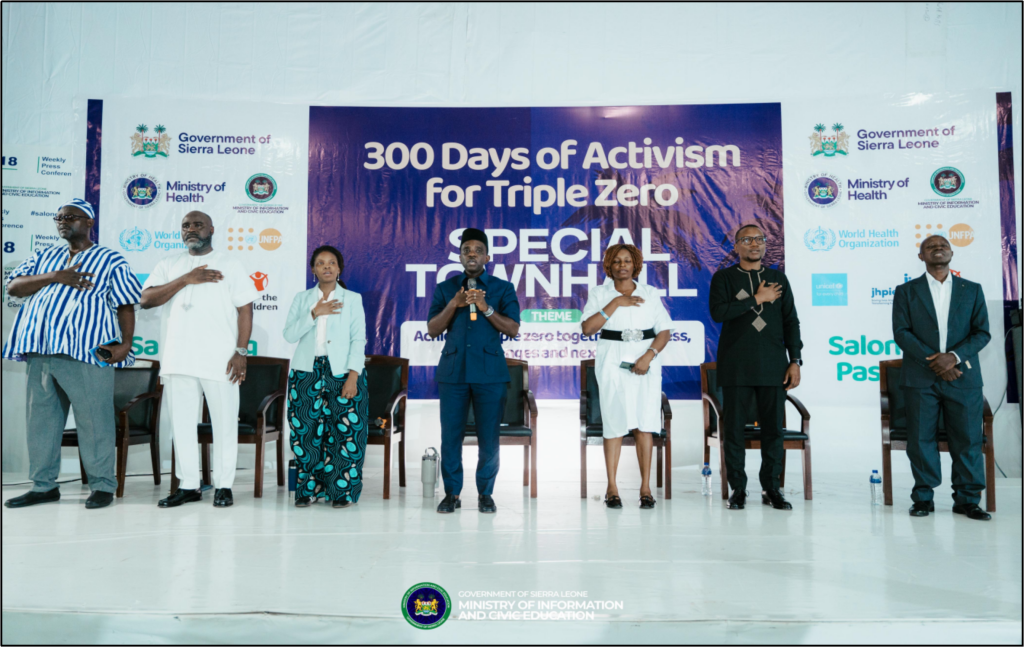
The town hall also allowed partners to reaffirm their commitment to coordinated action. Development agencies, non-governmental organisations, and private sector stakeholders reiterated their support for scaling up maternal, newborn, and child health services and investing in preventive measures, such as immunisation, antenatal and postnatal care, nutrition, and family planning. Several speakers emphasised the need for strong monitoring and accountability mechanisms to assess progress during the 300-day campaign and afterwards.
Participating community leaders stressed that local ownership must be reflected in national ambitions. Voices from the ground, and from traditional sources, called for empowering district health teams, strengthening engagement with community health volunteers, and adopting context-specific approaches that address local beliefs, transportation realities, and economic barriers to timely access to care.
The town hall ended with a new call for collective action from the Ministry of Health and its partners: “The 300 Days of Activism are not a one-off campaign for publicity but an opportunity to accelerate the momentum toward Triple Zero.” Officials said long-term funding, clear accountability, regular data review, and continued community engagement are key to extending and building on past successes.
Sierra Leone’s progress shows there is much that can be done to reduce maternal and child mortality, but Miatta Civic Centre made it clear that progress is not the end goal. The ultimate goal is to change the country’s health system and social response such that preventable maternal, newborn and child deaths are not acceptable anymore.
As the 300-day campaign continues, health officials have appealed to all sectors of society to walk the talk – to prioritise investments, to strengthen services, to support frontline workers and to hold systems accountable – so that the ambitions of Triple Zero can be translated into measurable results.
