
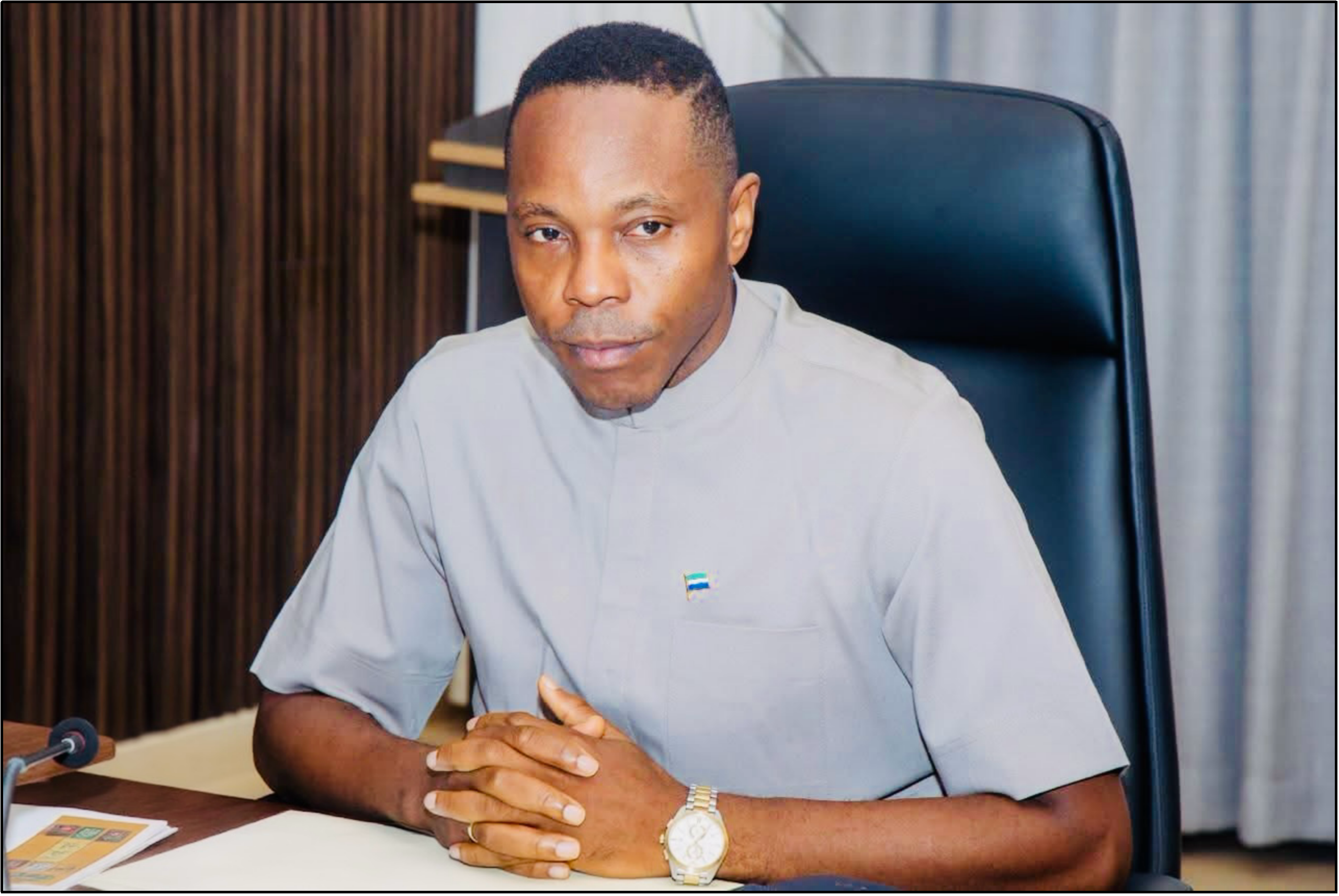
President Julius Maada Bio’s challenge to young Sierra Leoneans to take the lead and initiative sparked the nation’s imagination, and few examples did this better than Dr David Moinina Sengeh. Dr Sengeh’s transition from a globally recognised scientist and innovator to a national political leader is a living example of what a new generation of Sierra Leoneans can achieve, inspired by President Bio’s call to public service.
His career, blending world-class academic achievement, cutting-edge research, and modern youth-oriented governance, has become a foundation and inspiration for many aspiring leaders in the country. Dr Sengeh’s academic career has paved the way for his future success. He began his undergraduate studies at Harvard College in Cambridge, Massachusetts, in 2006 and graduated with honours in 2010 with a Bachelor’s degree in Biomedical Engineering, having completed his pre-medical requirements.
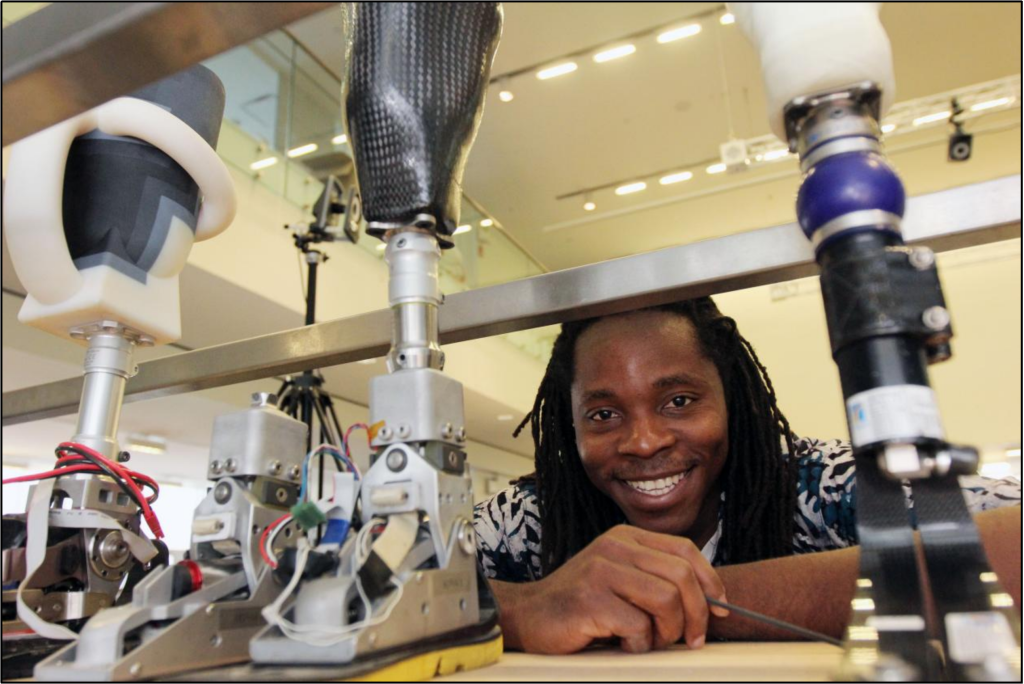
His undergraduate work focused on aerosolised tuberculosis vaccines, an early sign of his interest in rigorous science to solve urgent global health problems. He completed his graduate studies at Harvard, earning a Master of Science in 2012, focusing on advanced prototyping of prosthetic sockets using medical imaging, biomechanical modelling, and computer-aided manufacturing to improve comfort and function for transtibial amputees.
He received his Doctor of Philosophy in 2016 with a dissertation titled “The Use of a Novel Residuum Model to Design a Variable-Impedance Transtibial Prosthetic Socket”. He further cemented his expertise at the intersection of human-centred design and biomedical engineering.
Dr Sengeh has published and patented widely throughout his academic and research career. His peer-reviewed work includes detailed biomechanical modelling of transtibial residua and the development of variable-impedance prosthetic sockets based on MRI data, with practical implications for prosthetics design and rehabilitation. His publications include work in the Journal of the Mechanical Behaviour of Biomedical Materials and the Journal of Prosthetics and Orthotics.
He has provided commentary and analysis on health systems and digital health in publications including PLoS Neglected Tropical Diseases and The Lancet Digital Health. He will release a book in 2023 called Radical Inclusion: Seven Steps to Help You Create a More Just Workplace, Home, and World, which reflects his leadership philosophy and commitment to inclusive practices.
Dr Sengeh also holds several patents and patent applications from his interdisciplinary research in biomechanics, computational design and digital systems. Patents include variable-impedance mechanical interfaces for prosthetic devices, automated computational frameworks for designing human-specific mechanical interfaces, and advances in digital content modification and text-to-speech algorithms. These intellectual-property achievements show his ability to translate theoretical research into useful technologies.
Before his appointment as Research Manager, Data-Driven Healthcare at IBM Research Africa, Dr Sengeh was a research scientist deploying healthcare innovations in decision support, natural language processing, network sciences, and applied machine learning (August 2016 – September 2017). He assembled teams of scientists and engineers to roll out health innovations across the continent, and learned about team leadership, technology deployment, and the practical constraints of African health systems.
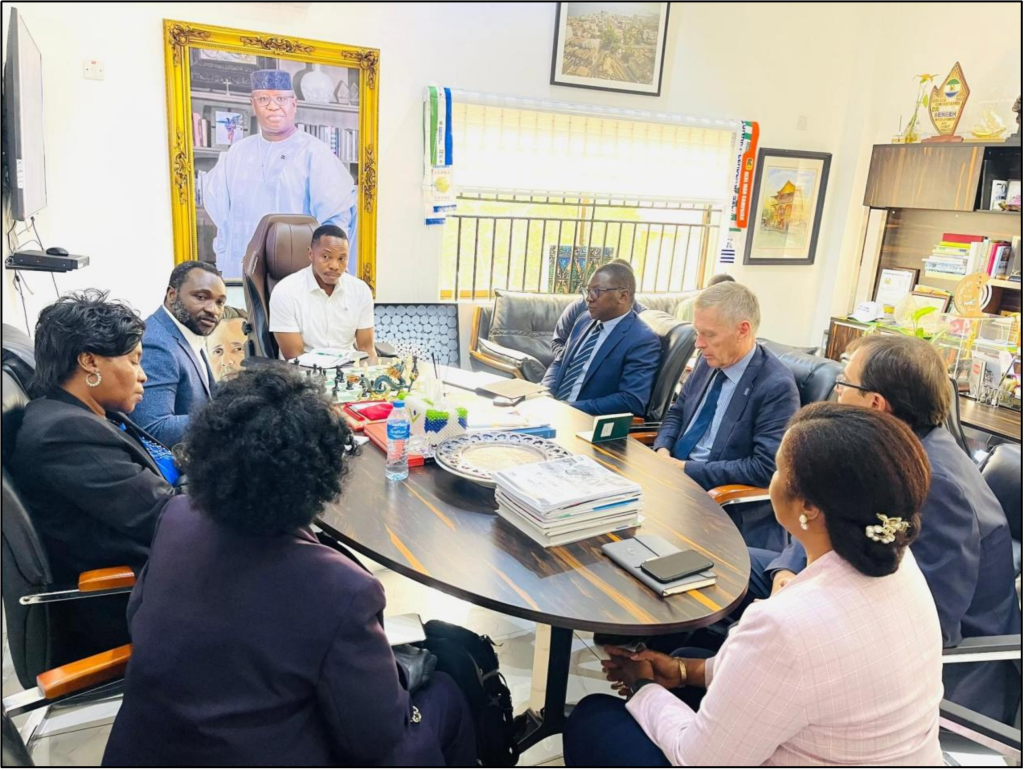
Dr Sengeh returned to Sierra Leone and injected his international technical experience into public service. Chief Innovation Officer at the Directorate of Science, Technology and Innovation, as Cabinet Minister at the Ministry of Basic and Senior Secondary Education and is currently the Chief Minister of Sierra Leone. He is a global leader in education and has been appointed to key advisory and governance roles, including Chairperson of the UNESCO Global Education Monitoring Report Advisory Board, board member of the Global Partnership for Education, and member of the UN Secretary-General’s Committee of Experts on Public Administration (ECOSOC). That mix of responsibilities national governance, international education advocacy, and science and technology leadership is rare for someone under forty.
Maybe it’s the way Dr Sengeh makes his points, more than the titles he’s earned. He has emerged as a champion of modern communication channels and a participatory governance style that connects directly with youth across Sierra Leone, and many refer to him as a Gen-Z pioneer. He reaches out to citizens where they are through social media and public outreach; he listens to their concerns, explains policy in layperson’s terms, and invites young people to discuss the nation’s future.
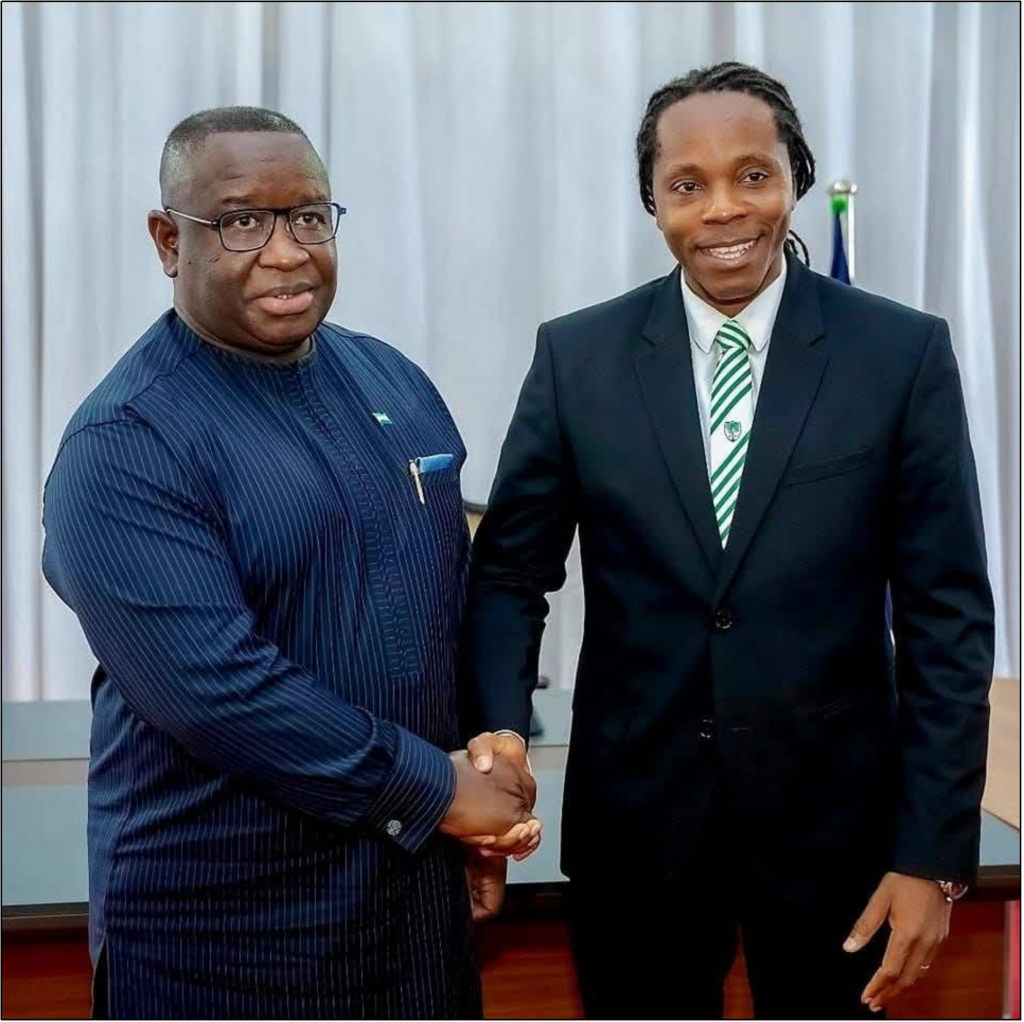
This approach has redefined the expectations of what government engagement can look like in Sierra Leone and inspired a generation now seeing public office as a viable platform for change.”
The optics of Dr Sengeh’s story a young Sierra Leonean trained at elite institutions, author, inventor, researcher, and national leader — matter in a country where youth make up a large share of the population. His story shows that technical excellence and public service are not mutually exclusive, and that youth can translate specialised knowledge into meaningful national leadership. To many young leaders in local communities, Dr Sengeh is not only a role model but living proof that President Bio’s vision for young Sierra Leoneans to be change agents is achievable.
Dr Sengeh’s ascent is more than a personal success story. It sends a message to young people across Sierra Leone that hard work, expertise, and a willingness to participate can make you influential and successful. As he continues to lead and set an example for an inclusive, tech-forward approach to governance, many people hope his example will inspire more young Sierra Leoneans to take up the mantle of leadership in their communities and beyond and, in doing so, help shape the country’s future.
