
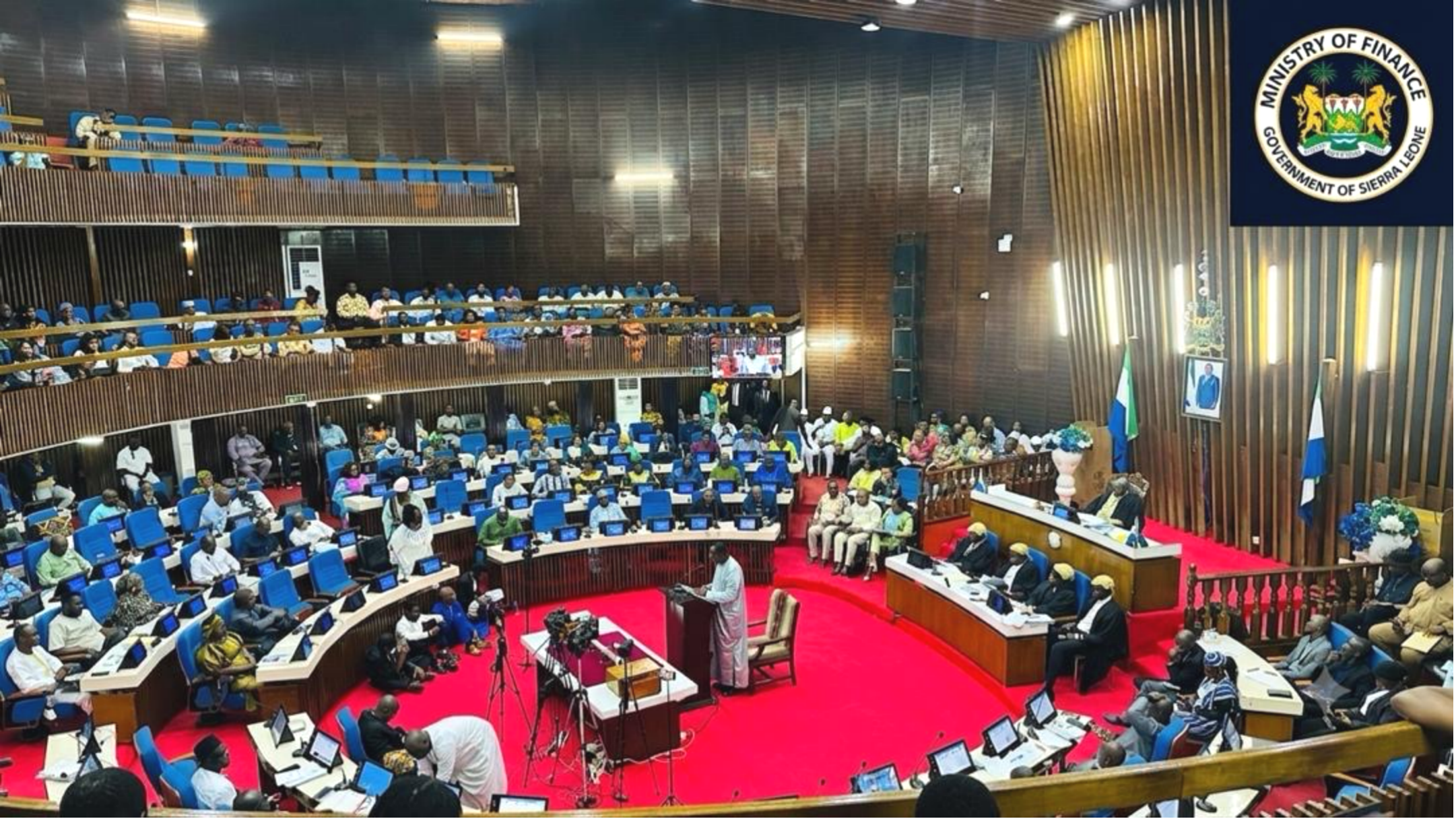
The Parliament of Sierra Leone has approved the FY2026 Supplementary Budget presented by Minister of Finance Sheku Ahmed Fantamadi Bangura. The fiscal adjustment is intended to protect the macroeconomic stability of the country and the livelihoods of its citizens in the face of increasing global oil prices and geopolitics in the Middle East.
The additional budget, put forward under the slogan “Improving Budget Credibility to Secure Macroeconomic Stability and People’s Livelihood”, adjusts the initial fiscal plan as external challenges intensify. Minister Bangura informed lawmakers that international oil prices have surged beyond the previous forecast of US$70 per barrel since March 2026, hampering growth prospects, increasing inflationary pressures and deteriorating the country’s terms of trade.
The surge in the price of global oil has resulted in increased government spending, including the introduction of fuel subsidies in April 2026 and higher energy subsidies to the Electricity Distribution and Supply Authority (EDSA) to ensure payment to Independent Power Producers, he said. The Minister also cautioned that shortfalls in revenue in the first half of the year are likely to continue as demand for petroleum products falls, and as overall economic activity slows.
Minister Bangura detailed the fiscal trade-offs needed to preserve stability without sacrificing critical services: “Government must rationalise the domestic capital budget to the revised Public Investment Programme aligned to the revised capital spending envelope, to offset recurrent expenditure.
The supplementary budget is a corrective measure to sustain fiscal credibility while shielding citizens from the immediate impact of the crisis. “The adjustments are aimed at ensuring macroeconomic stability and protecting vulnerable households at a time of global uncertainty,” Minister Bangura said.
Sierra Leone begins 2026 on a relatively strong macroeconomic footing, having achieved stability in 2025 through prudent fiscal and monetary policies, he noted. Economic growth in 2025 was 4.8 per cent, higher than earlier estimates and the Sub-Saharan Africa average. Agricultural gains from the Feed Salone Programme, higher iron ore production and growth in manufacturing and services supported the expansion. Inflation also fell sharply, to 4.4% in December 2025 from 13.8% a year earlier and 52.2% in 2023. The Minister credited the turnaround to tight monetary policy, fiscal consolidation, a stable exchange rate and lower global food and oil prices. Both the ruling Sierra Leone People’s Party (SLPP) and the main opposition All People’s Congress (APC) commended the Ministry of Finance team for stabilising the economy through sound policies and reforms. Meanwhile, MPs across the political divide demanded faster progress on domestic revenue mobilisation and tighter expenditure management to bolster resilience against future shocks. The supplementary budget has been passed by Parliament and is intended as a temporary rebalancing of spending priorities to preserve recent gains and to deal with the immediate effects of disruptions in global energy markets.
