
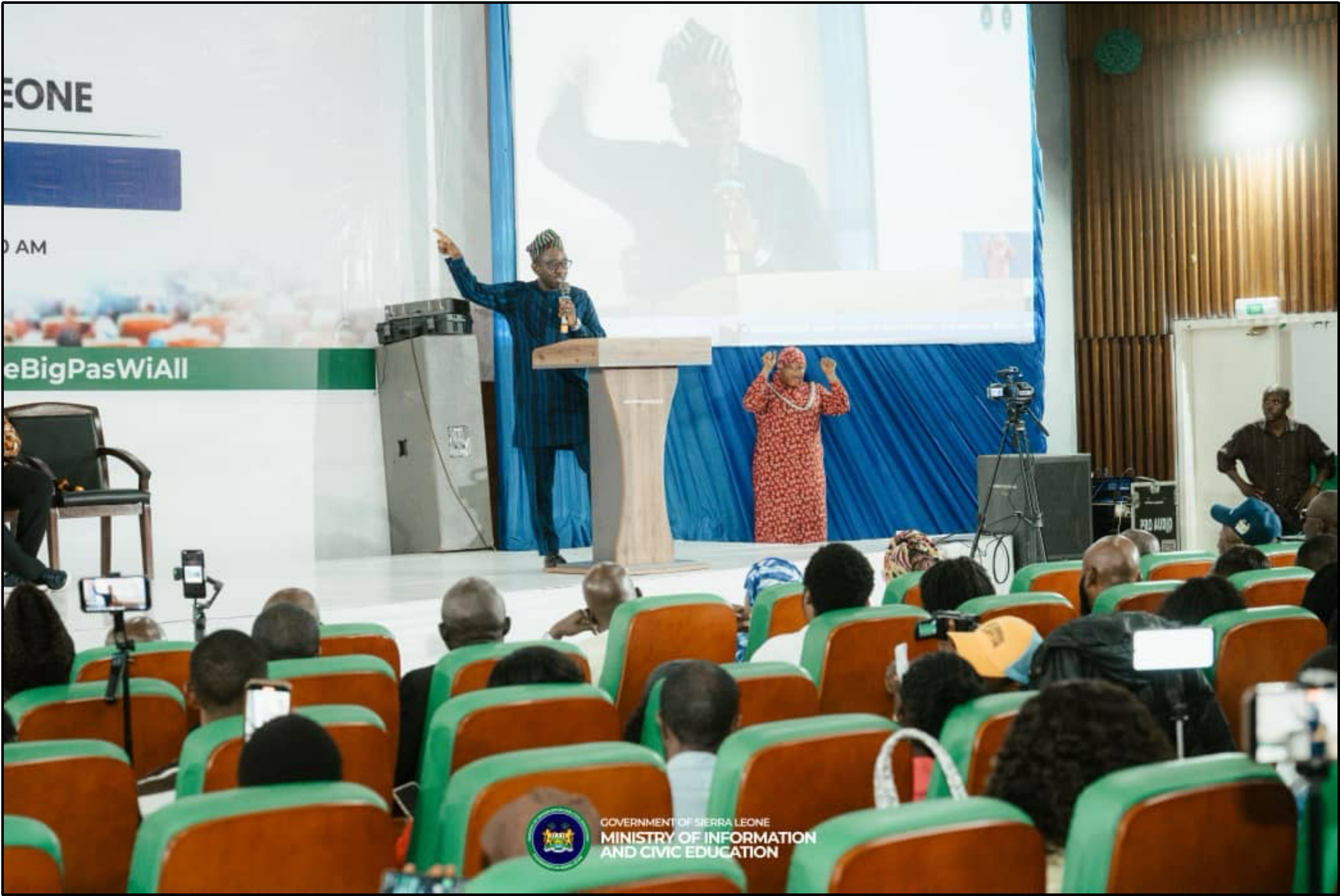
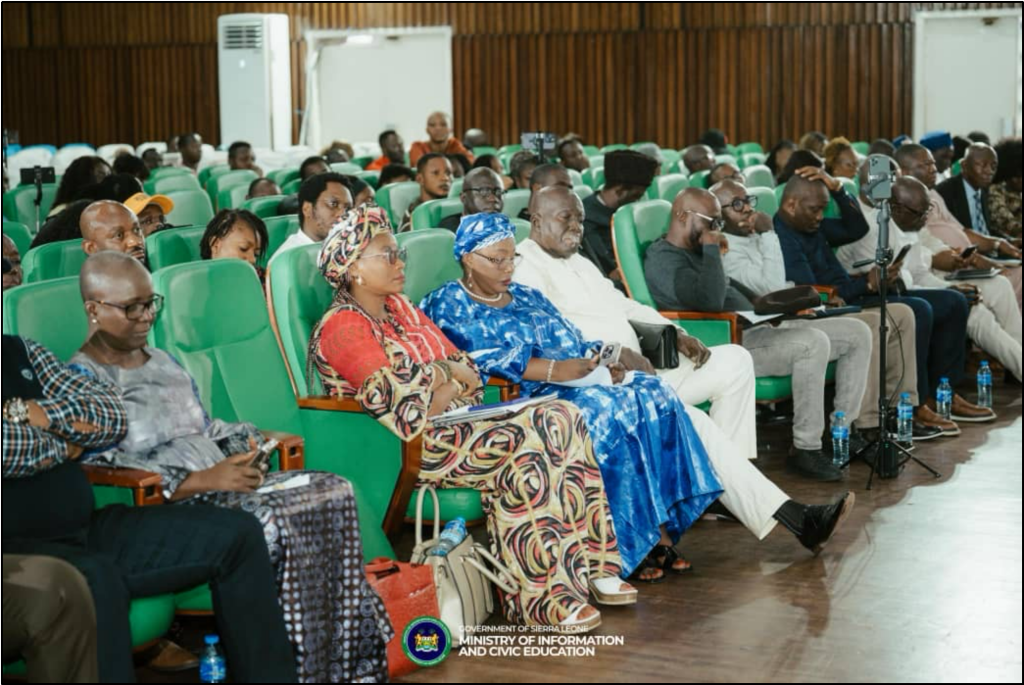
The Ministry of Information and Civic Education and the Sierra Leone Broadcasting Corporation (SLBC) organised a high-level National Conference on Sustainable Funding for the Public Broadcaster on Thursday, October 8, 2026, to secure predictable funding and modernise the national broadcasting system. The meeting, themed “Ring-Fencing Funding for the Sierra Leone Broadcasting Corporation”, brought together government officials, development partners, media stakeholders, and civil society members to discuss ways to strengthen the SLBC’s public service role.
Delivering the keynote address on behalf of Vice President Dr Mohamed Juldeh Jalloh was Chernor Bah, Minister of Information and Civic Education. SLBC must be a credible and modern public broadcaster, financially viable, and the government is committed to that, he stressed. SLBC is a critical component of Sierra Leone’s national information infrastructure and should be at the centre of efforts to reform the country’s information sector, Minister Bah said.
The minister acknowledged the many challenges the broadcaster has faced over the years, citing infrastructure shortfalls, resource constraints, and financing gaps. However, he noted previous gains, such as improved facilities, better working conditions for staff, improved program quality, and the establishment of modern studios with support from development partners and other stakeholders. He lauded the commitment of SLBC Director General Josephine Kamara, the Board, management and staff in the face of challenging conditions.
Minister Bah said predictable, sustainable financing is key to developing Sierra Leone’s national broadcaster. He argued that despite increased competition for audiences in a fast-changing media landscape, the need for accurate, credible, and easily accessible information has never been greater, and demand must be met. As a public broadcaster, SLBC has a responsibility to verify information before broadcasting, explain national issues clearly, and provide reliable news and civic information to citizens, especially those in isolated areas. A strong public broadcaster, the minister said, helps inform citizens and connect them to national developments, promoting national cohesion, peace, civic education and democratic participation.
The key note was on SLBC’s national mandate. He said the broadcaster must go beyond commercial centres to reach citizens in remote chiefdoms and urban areas, and it must prioritise inclusion by creating airtime for local languages, supporting agriculture, promoting national pride, reflecting Sierra Leone’s diversity, and strengthening civic education and public engagement. He also stressed that the broadcaster’s credibility is built on fairness, professionalism, editorial independence, sound management, and public accountability; therefore, any financing model must provide resources while strengthening systems that ensure transparent and effective use of public funds.
The minister said the country’s shift from analogue to digital broadcasting is a key national commitment and a major opportunity for the industry. He said digital transmission would improve the quality of radio and television service, allow more programming and content production, and let multiple channels use transmission infrastructure more efficiently. Technical work and preliminary studies on the transition have already begun, and the minister said the most conservative estimate for the cost of the required transition is about US$50 million. He called for a fully funded national plan to support the transition to digital broadcasting and ensure citizens are well informed and ready to take advantage of the new environment.
The minister also raised the unfinished SLBC building as another urgent problem. It is a long-standing, symbolic structure whose construction goes back decades. Instead of leaving the place, Minister Bah insisted on a comprehensive structural evaluation and a workable investment proposal to convert the area into a modern broadcasting house. Potential uses include studios, production facilities, training spaces and archives, as well as revenue-generating services that could help SLBC stay financially viable. The minister stressed the importance of determining what rehabilitation is structurally possible, the costs involved and the best financing model while safeguarding the public interest.
On funding options, Minister Bah urged careful consideration of mechanisms that would provide for reliable public support while enhancing accountability. He suggested examining legislative and revenue options, such as establishing a dedicated public broadcasting fund, and better coordination among institutions responsible for information, broadcasting, telecommunications, spectrum, and related infrastructure. He insisted that any financing proposal must meet practical tests of fairness, viability, transparency, and value for money, and be accompanied by strong accountability measures so the citizenry can see what the broadcaster receives, how money is spent, and what services are provided.
Finally, Minister Bah challenged stakeholders to move beyond diagnosing the problem to concrete, credible, long-term solutions. He urged continued collaboration with Parliament, the private sector, communities, development partners and citizens to accelerate SLBC’s financing and transformation agenda. He said the broadcaster’s future should not be left to one minister or government department. Still, it should be a national commitment to recognise public broadcasting as a public good and a necessary pillar of democracy. He opened the conference on behalf of the President and reiterated his commitment to transforming SLBC.
