
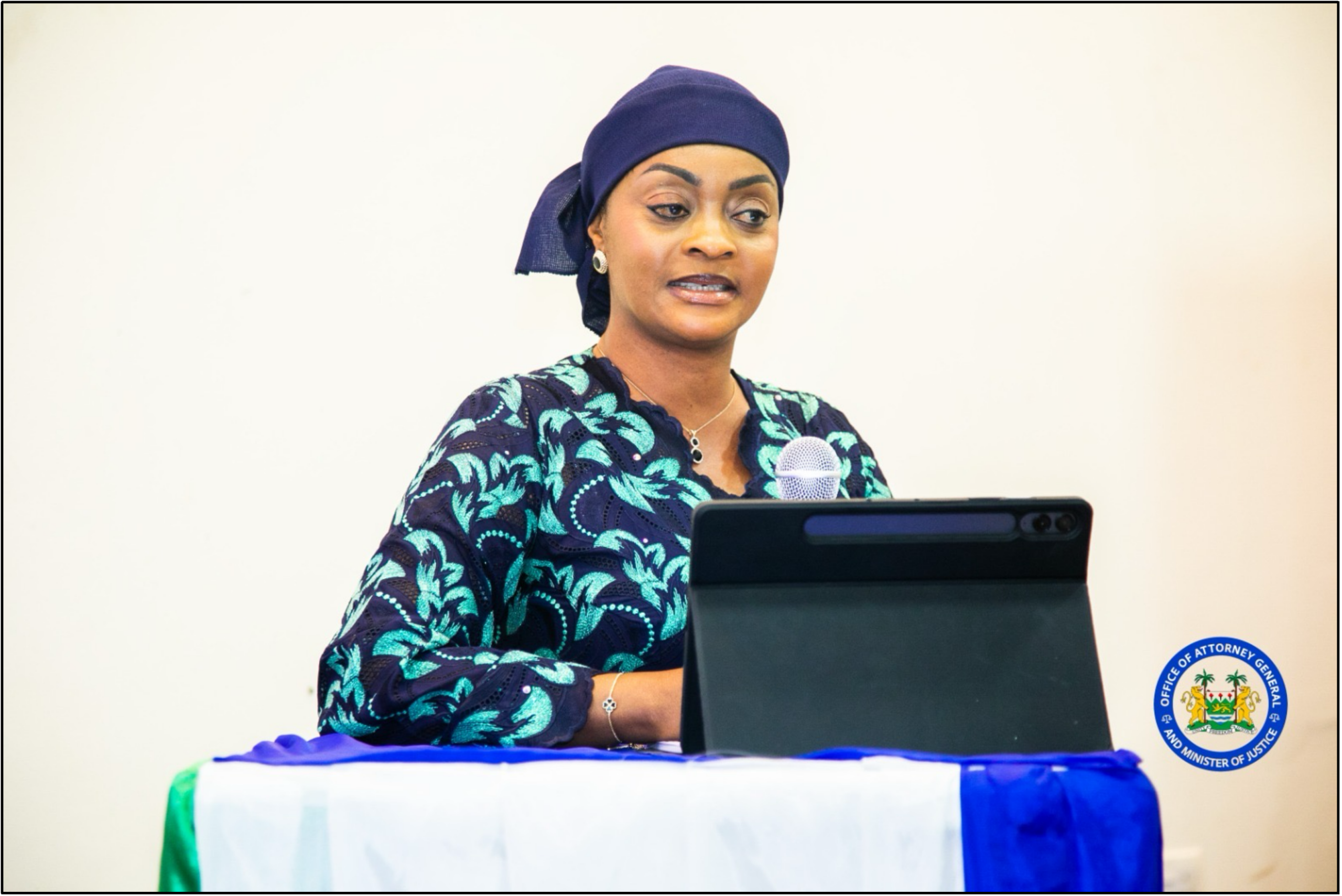
Deputy Minister of Justice Madam Saptieu Elizabeth Saccoh has urged micro, small and medium-sized enterprises (MSMEs), startups, creative professionals, innovators, and producer communities in Sierra Leone to treat intellectual property protection as vital to building successful businesses.
At the launch of National Intellectual Property Week 2026, Madam Saccoh said intellectual property (IP) can help creators and businesses to protect their work, strengthen their market position and compete better. IP should not be seen as simply a legal requirement, but as an important business asset, she stressed. “But intellectual property is not just a legal formalism,” she said. I
t’s a business asset, often the most valuable one that a creator, entrepreneur, startup or producer community has. The event’s theme was “Transforming Innovative Ideas and Creativity into Competitive Businesses — Leveraging Intellectual Property for MSMEs, Startups, Creative Industries and Producer Community”.
The Office of the Administrator and Registrar General and the Office of the Attorney General and Minister of Justice organised it, in cooperation with the World Intellectual Property Organisation (WIPO) and the Japan Patent Office (JPO). Madam Saccoh spoke about the challenges faced by people whose creative and commercial work is used without their consent. She drew on her experience as Sierra Leone’s former Administrator and Registrar General, a position she held for over five years before becoming Deputy Minister of Justice.
She said fashion designers, musicians, and other creators can have their work copied, pirated, or commercially exploited without enough protection. Frequently, people opt for legal remedies only when they’ve already suffered financial damages. She said this highlights the need to be more aware of intellectual property rights before infringement occurs.
One key challenge, Madam Saccoh said, was the gap between legal protections and the public’s understanding of them. She said people need to know how to use legal mechanisms available to protect their ideas, products, brands and creative works. She urged start-ups to consider intellectual property rights from the start of the planning process and called on MSMEs to protect their business identity.
By contrast, creative professionals should know who owns a work, how it may be attributed and licensed, and what contractual obligations apply. The Deputy Minister pointed out that there is a difference between allowing someone to use a creative work and transferring ownership of the rights to that work. “Knowing that difference,” she said, “can empower creators to make informed decisions and prevent losing control of valuable material.”
Farmers, artisans and producer communities were also called upon to consider how intellectual property tools could benefit their products. For example, collective branding and quality standards could help communities make their products more competitive while safeguarding the cultural identities and reputations associated with their place of origin. She also urged lawyers, public officials and intellectual property professionals to make legal guidance more accessible. Legal concepts, she said, need to be expressed in clear, practical language so people from all backgrounds can understand them and exercise their rights.
Participants were encouraged to translate the information shared during the program into actionable steps in their businesses and communities.
That could include seeking advice on business names, reviewing contracts, documenting inventions, and sharing what they learned with colleagues and community members. “Knowledge becomes more powerful when it goes beyond the people who were in the training session,” Madam Saccoh said.
She stressed the Government’s commitment to strengthening Sierra Leone’s intellectual property ecosystem. Areas of focus to support that work include treaty ratifications, growth of digital services, partnerships in the region and intellectual property education in schools, she said.
These initiatives should help build a stronger foundation for local innovators, creators, entrepreneurs and producer communities to protect their work, develop successful enterprises and compete in wider markets, the Deputy Minister said. Mrs Saccoh encouraged participants to take advantage of the opportunities available during the National Intellectual Property Week. On behalf of the Office of the Attorney General and Minister of Justice, the Office of the Administrator and Registrar General, WIPO and the JPO.
