
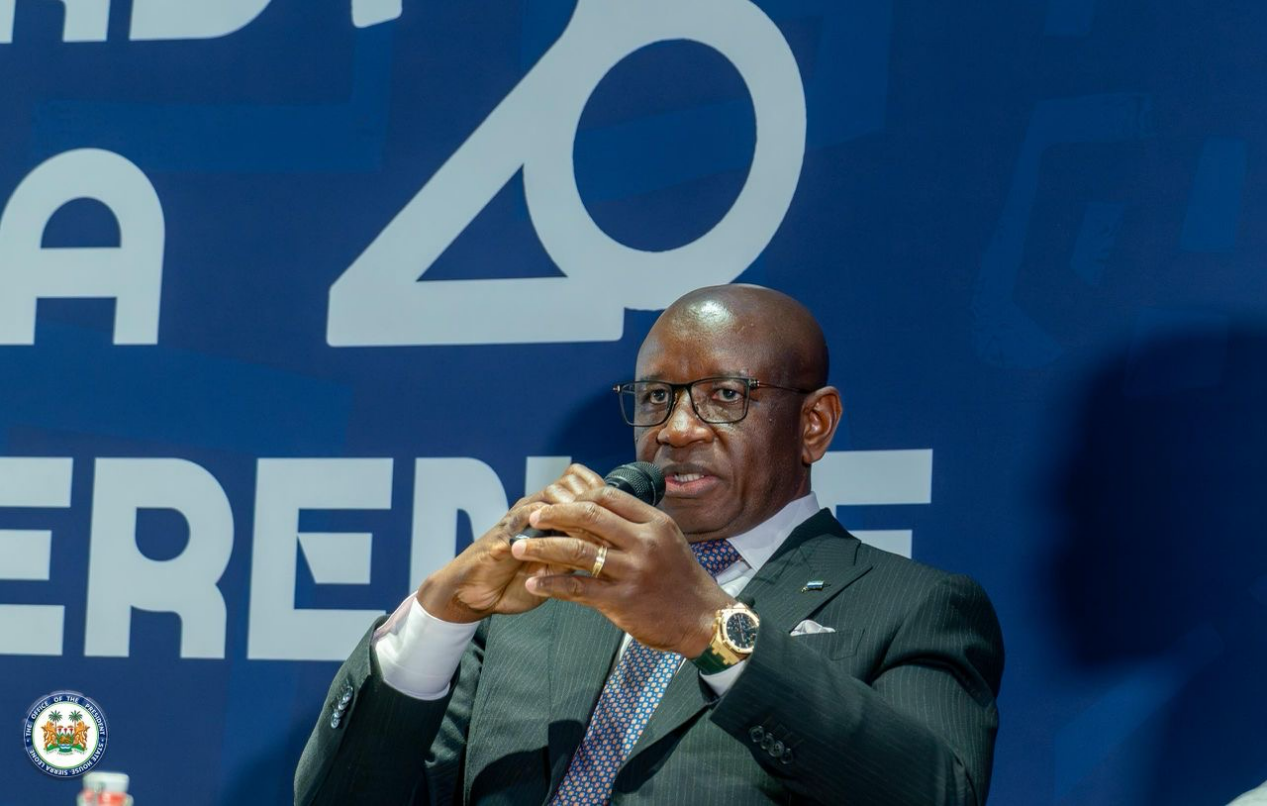
Sierra Leone’s President Julius Maada Bio told an audience at the University of Oxford on May 17, 2026, that Africa must cultivate leadership capable of both holding steady in crises and driving transformative reform if the continent is to navigate a period of global instability, technological change, and rising climate threats.
President Bio, who also serves as Chairman of the ECOWAS Authority of Heads of State and Government, delivered the Presidential Keynote at the Oxford Africa Conference 2026, titled “Anchoring Africa: Grounded, Game-Changing Leadership in the Age of Disruption.” He urged a shift from rhetoric about African agency to a focus on durable institutions that can withstand shock. “Last year, I discussed African agency,” he said. “This year, we must ask a more challenging question: Can what we define endure? Can it withstand shocks and disruptions?
President Bio addressed scholars, policymakers, students, and members of the African diaspora, framing many of the continent’s current problems as interconnected rather than isolated. A drought, he warned, can lead to a food shortage, a revenue shortfall, and security instability, emphasising his larger point that constitutional order, economic resilience, security cooperation, climate adaptation, youth opportunity, and technological sovereignty must be treated as mutual public goods.
Using Sierra Leone as a case study, the president reflected on his country’s journey from civil war and the Ebola epidemic to economic and climate vulnerabilities, presenting the national experience as a model of gradual reform and resilience building. He cited two government programs that aim to strengthen social and economic foundations: the Free Quality Education Programme, which aims to increase educational access, and the Feed Salone agricultural initiative, which aims to boost domestic food production. “These aren’t perfect results. But they are meaningful ones,” President Bio stated, arguing that long-term policies aligned with national priorities can yield tangible results even in difficult circumstances.
Concerning regional stability and governance, the ECOWAS chair warned that the wave of coups and other unconstitutional changes of government in West Africa is a symptom of deeper governance failures and eroding public confidence. “Democracy extends far beyond elections,” he explained. “For democracy to be meaningful, it must function on a substantive level. Our responsibility is not only to defend democracy, but also to make it relevant in our citizens’ daily lives.” He urged regional cooperation, pointing out that instability in one country spreads through migration, arms flows, and economic disruption, affecting neighbouring countries and jeopardising collective security.
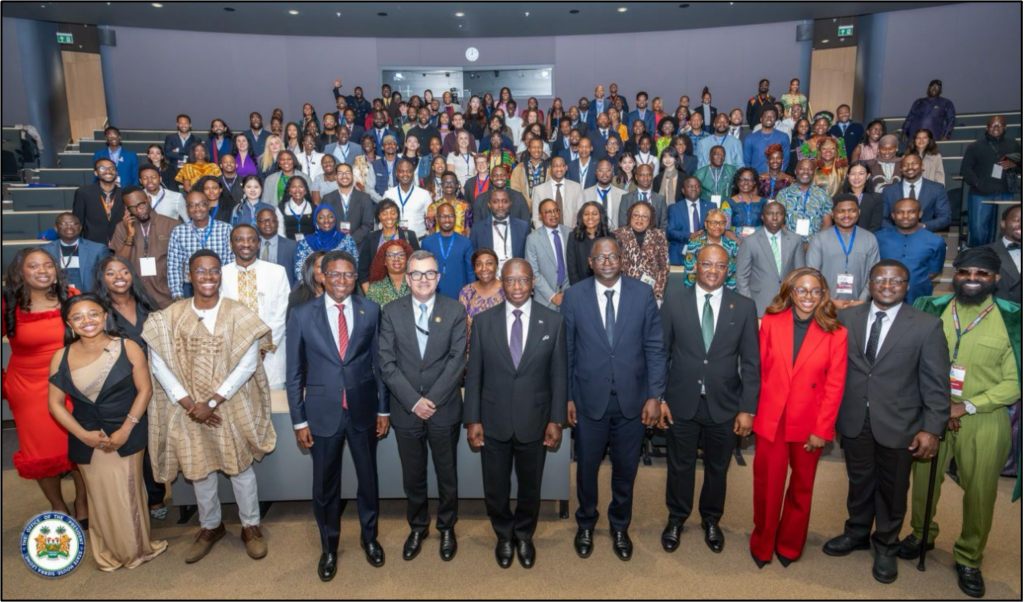
President Bio also addressed Africa’s demographic reality, emphasising that the continent’s young population is both an asset and a challenge to political and economic systems. He warned that if political institutions and labour markets do not adapt quickly enough to meet youth expectations, frustration will outweigh reform. “Africa is the world’s youngest continent,” he said, urging governments to create opportunities for young people to engage in productive activities rather than become disillusioned.
On technology, the president advocated for greater African involvement in shaping global digital governance, particularly in the field of artificial intelligence. He cautioned against becoming passive consumers of technologies developed elsewhere and called for the establishment of a pan-African AI governance framework to ensure that emerging systems reflect African values and priorities.
President Bio referred to the climate crisis as “one of the greatest injustices of our time,” noting that Africa contributes the least to global emissions while suffering disproportionately from climate impacts. He called for equitable global climate financing and insisted that African countries continue to invest in resilience and adaptation strategies while advocating for fairness on the international stage.
In his final appeal, President Bio addressed young Africans and the diaspora directly, encouraging them to stay involved in the continent’s development and contribute their skills and resources. “To the young Africans here: build where you stand. But stay connected to your roots,” he advised, describing the diaspora as “one of Africa’s most powerful assets.”
In his closing remarks, Bio expressed a cautious optimism: Africa is already shaping its own future, but maintaining that progress will require consistent, courageous leadership and stronger institutions. “Africa can tell its own story. “We are already doing this,” he stated. “What remains is leadership that is stable enough to hold the ground where it is required, and bold enough to change it where reform is overdue.”
