
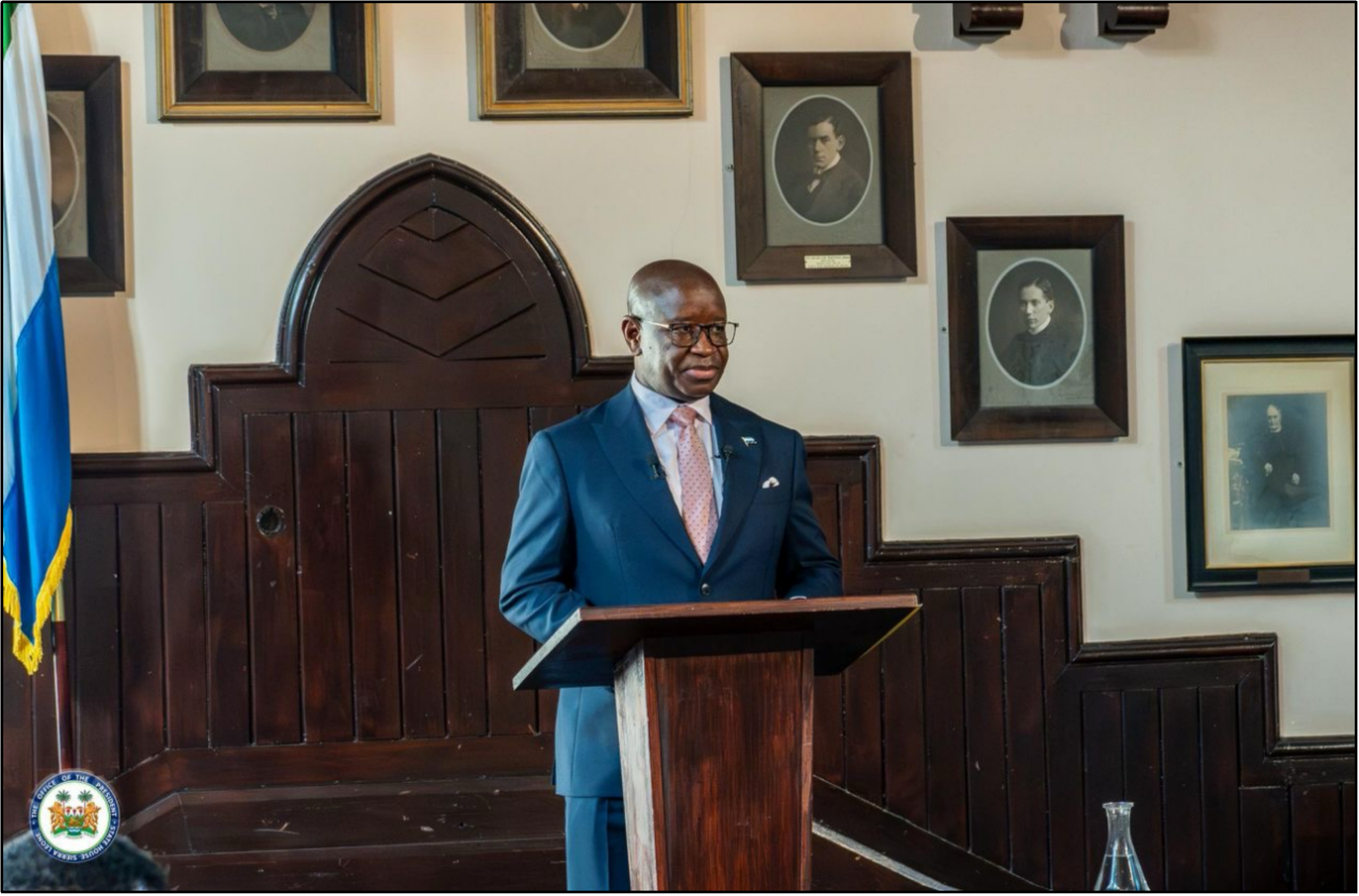
His Excellency President Dr Julius Maada Bio of Sierra Leone, who also serves as Chairman of the ECOWAS Authority of Heads of State and Government, delivered a Presidential Lecture at the Africa Together Conference 2026 at the University of Cambridge. He urged African nations to embrace strategic leadership, build resilient institutions, and make bold choices in the face of mounting global disruption. Under the conference theme “Africa in an Age of Disruption: Power, Agency, and Strategic Choice,” President Bio addressed scholars, students, members of the African diaspora, and a distinguished international audience, framing the continent’s situation as one of urgent possibility and peril.
President Bio described the current international landscape as being reshaped by rapid technological change, increased climate pressures, geopolitical fragmentation, and challenges to democratic governance. He cautioned that the greater threat to Africa is not disruption itself, but “entering an age of disruption without strategic agency.” That lack of agency, he argued, would condemn nations to reactive, short-term responses and perpetuate dependency, rather than allowing Africans to shape global outcomes to their advantage.
Drawing on his personal experience, including Sierra Leone’s civil war and the country’s transition from military rule to democratic governance in 1996, the President emphasised a fundamental lesson about leadership: legitimacy comes from submitting power to constitutional order, not seizing it.
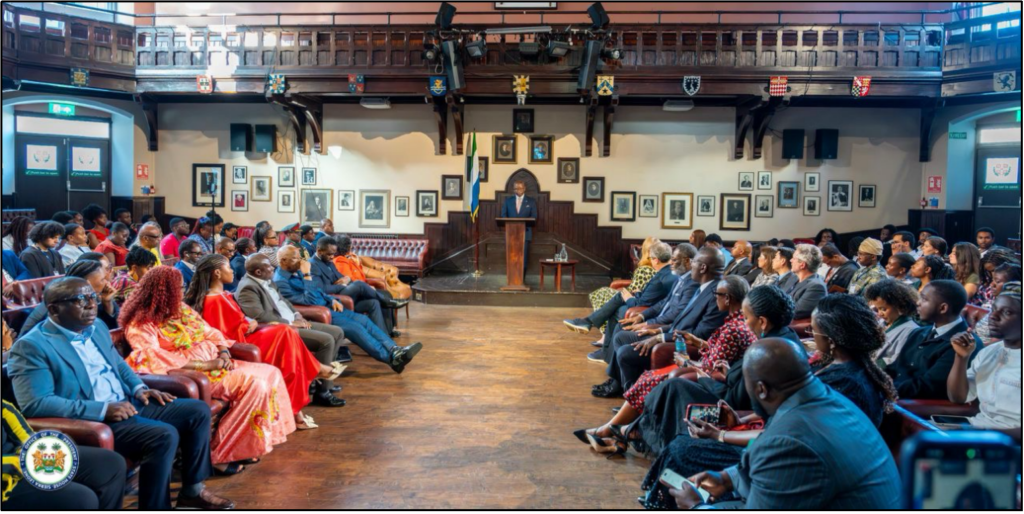
He used his dual roles at the national and regional levels to emphasise that the threats he described are already occurring across the continent. “As President of Sierra Leone and Chairman of ECOWAS, I can say with certainty that disruption is no longer theoretical for Africa,” he said, citing unconstitutional government changes, violent extremism, economic shocks, disinformation campaigns, and climate insecurity as immediate and interconnected challenges confronting West Africa and beyond.
President Bio cited Sierra Leone’s policy trajectory since 2018 as an example of the types of reforms required to increase resilience and opportunity. He emphasised the Free Quality Education Program, increased access to healthcare, women’s empowerment initiatives, the Feed Salone agricultural transformation program, and coordinated investments in youth employment, technology, and public sector reform. He contended that human capital development — education, health, and young people’s skills — remains Africa’s single most strategic long-term investment, and that long-term transformation necessitates both capable institutions and responsible leaders.
Looking ahead, the President identified three strategic pillars that will shape Africa’s future: technology and digital sovereignty, economic transformation, and climate change resilience. On technology, he issued a direct call for African countries to transition from passive consumers to creators, owners, and regulators of technological advancements, particularly in the field of artificial intelligence. “Africa must not only prepare for the future of AI. Africa must help shape it,” President Bio declared, calling for national and continental strategies to increase research capacity, protect digital sovereignty, and ensure ethical governance of new technologies.
He also emphasised the significance of reimagining international partnerships. Global academic centres like Cambridge, he said, have a role to play in Africa’s renewal, but collaboration must be based on mutual respect and co-creation of knowledge rather than historical hierarchies. The President made a direct appeal to African diaspora members, urging them to contribute their expertise, investment, mentorship, and networks to accelerate innovation and development on the continent.
In conclusion, President Bio invoked the image of a communal African fire — a symbol of intergenerational wisdom, shared responsibility, and continuity — to encourage younger Africans to take the initiative in shaping the future rather than being passive inheritors. “History is already moving,” he added. “The question is whether Africa will proceed as an author or as an observer.” The lecture at Cambridge aimed to sharpen the debate about agency and strategy, urging African leaders, institutions, and citizens to act with foresight and determination as the global order shifts.
