
By Francis Kargbo, Media Relations Intern
The Africell Impact Foundation has announced the winners of the 2026 Tech for Good Innovation Challenge: three young innovators with tech-based ideas aimed at addressing societal challenges. The program, organised in partnership with the Oxford University Africa Society and Fourah Bay College (FBC), gave students and recent graduates a chance to present solutions that could benefit communities in Sierra Leone and beyond.
The challenge was launched at the annual Oxford Africa Conference under the 2026 Innovation Seed Fund, bringing together the three partner institutions to encourage innovation amongst young people. The idea was to provide a platform for students and recent graduates of Fourah Bay College to develop and pitch ideas that could help society and aid development across Africa.
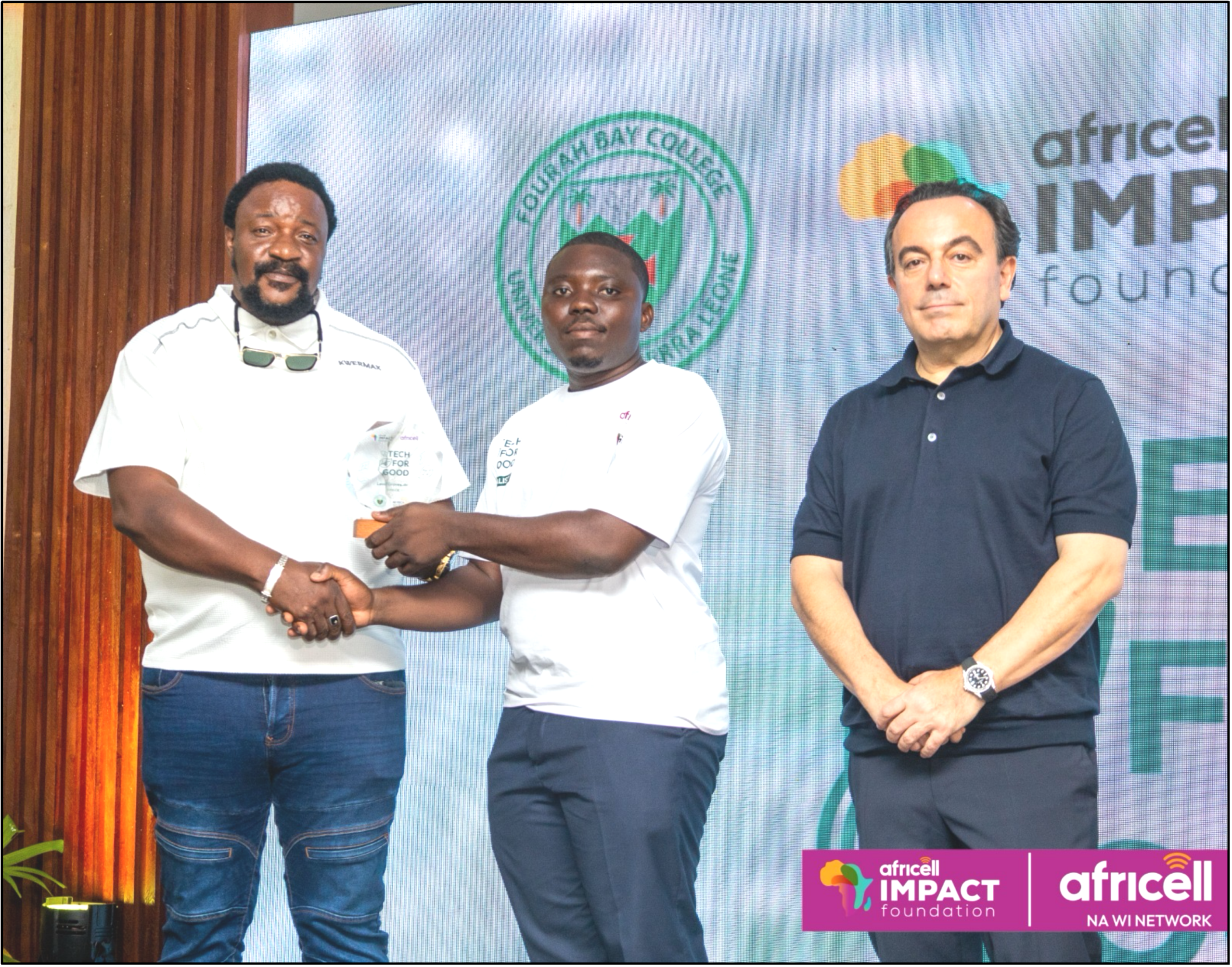
In the first stage of pitching, 10 students pitched their proposals to the Oxford University Africa Society for consideration. After the evaluation, the committee selected three finalists. Leon Lollyn Arnold Grovesnor was named the overall winner, while Michael Mahungbe Blango and Yeaniva Agnes Lansana were named the other finalists.
Speaking at the celebration, Shadi Gerjawi, Chief Executive Officer of Africell Sierra Leone, congratulated all participants and praised the ideas they presented. He said it would be important to support the next stages of development and commercialisation so the innovations move beyond proposals and into practical solutions that can benefit society.
Gerjawi also invited young people interested in technology and who have innovative ideas to keep working on them. He said Africell has an open-door policy for young people interested in technological development and is willing to engage with and support them.
He was optimistic about the initiative’s future, saying Africell looked forward to organising a second edition of the Tech for Good Challenge. The company wants to include more universities, broadening the programme’s reach and enabling more young people to share their ideas.
“It is a proud moment for the institution to see our students being recognised, especially as we prepare for our bicentenary celebration,” said Fourah Bay College Deputy Registrar Brima Bah. He expressed gratitude to Africell Impact Foundation and Oxford Africa Society for providing the opportunity to the FBC students.
In the first round of pitching, 10 students from the college took part, Bah said. He said the panel reviewed their proposals before choosing three finalists. He said selecting an overall winner from among those finalists was a significant achievement for the university and its students.
“I was excited to get the recognition,” said Grovesnor, a student in the Department of Economics at Fourah Bay College. He said his involvement in the challenge broadened his knowledge and boosted his confidence as a young innovator.
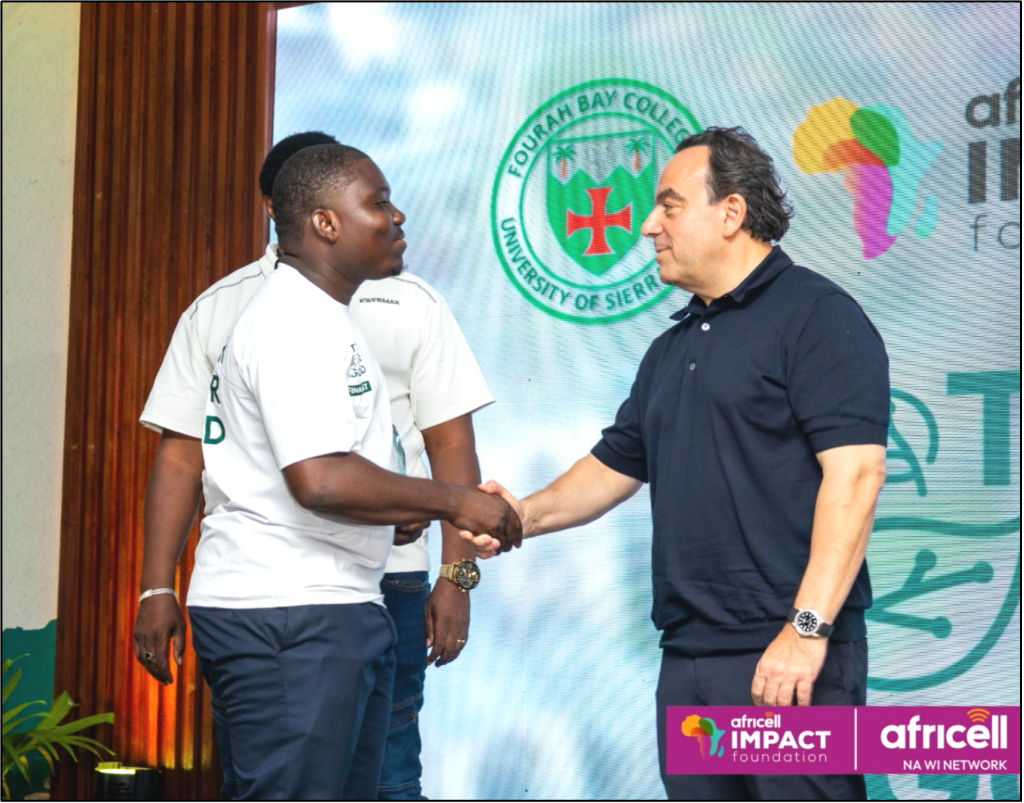
He also hailed Africell for giving him a platform to present his idea to Oxford University without having to travel to the United Kingdom. “Opportunities to present ideas are valuable, but innovators need support to develop ideas into practical solutions,” said Grovesnor.
His project, Eco Corpor, is a technology-driven platform that enables members of the public to trade recyclable materials. The project helps people recycle and manage their waste more sustainably by giving them a way to exchange materials that can be reused.
The challenge shows how collaborating with academic institutions, international organisations, and private sector partners can create new opportunities for young people. The program invites students to pitch technology-based proposals and encourages them to consider how innovation can help to address social and development challenges.
Africell Impact Foundation’s participation also reflects its stated commitment to youth empowerment and innovation. The foundation supports the challenge to create opportunities for young innovators and encourage the development of ideas with the potential to make a lasting social contribution.
In the future, the initiative may reach even more students and fresh graduates, with Africell considering a second edition and possibly other universities. The partners’ work to help young people develop and present their ideas aims to support promising innovations that can translate into practical applications serving communities.
