
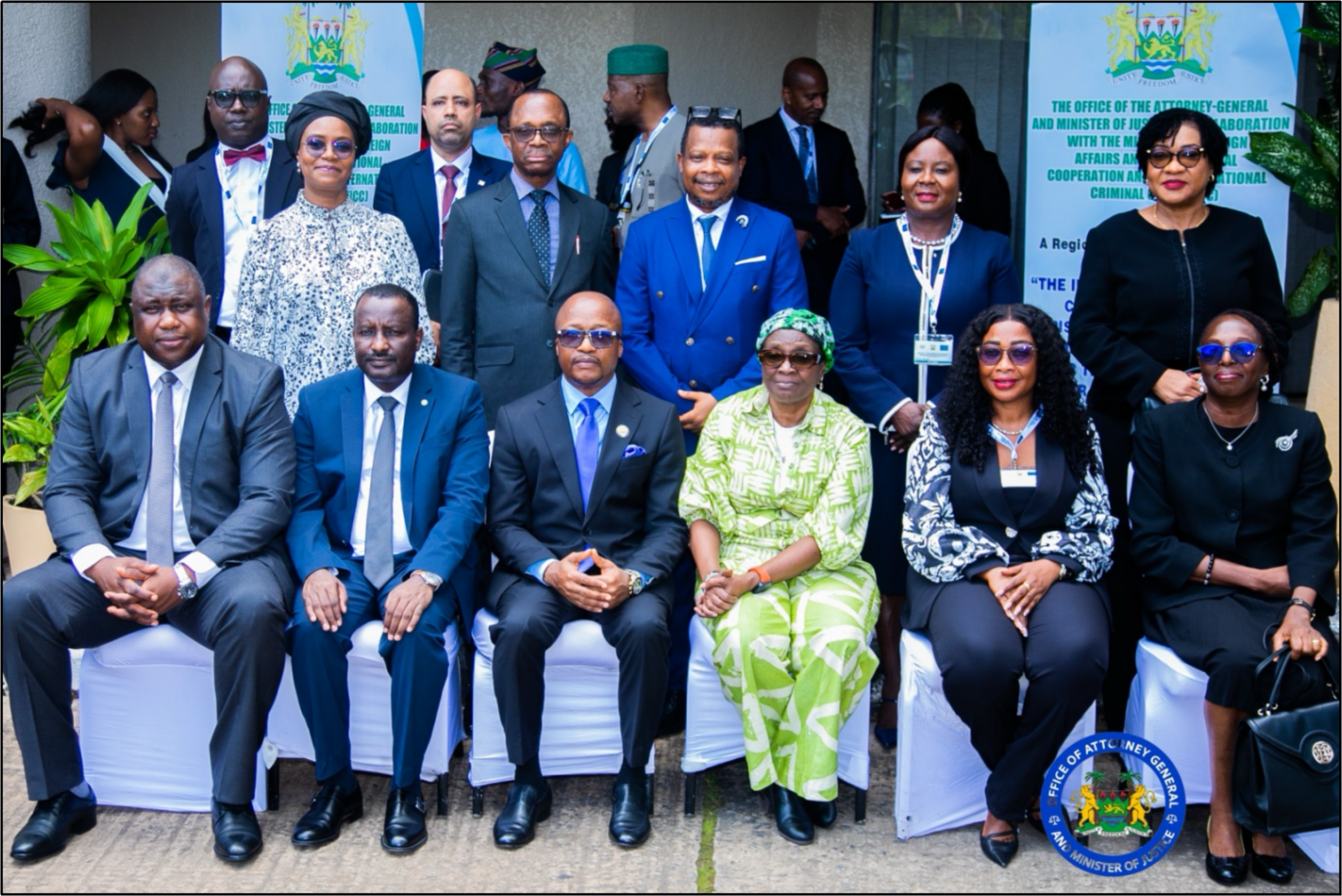
Sierra Leone’s Attorney General and Minister of Justice, Alpha Sesay Esq., reaffirmed the country’s commitment to the International Criminal Court (ICC) and called for stronger cooperation among states, more effective domestic legal systems, and consistent application of international criminal law.
Sesay made the call at a two-day regional seminar at the Radisson Blu Mammy Yoko Hotel in Aberdeen, Freetown. The seminar, under the theme “The International Criminal Court and National Jurisdictions: A Partnership in Fighting Impunity for the Gravest Crimes Under International Law”, was organised by the Office of the Attorney General and Minister of Justice in collaboration with the Ministry of Foreign Affairs and International Cooperation and the ICC.
Speaking to participants, the Attorney General highlighted the difficulties facing the Court, including sanctions, political pressure, and shortcomings in international cooperation. He said states should honour their treaty obligations and referred to Article 127 of the Rome Statute, which outlines the withdrawal process and its continuing legal implications.
Sesay also spoke about Sierra Leone’s experience of civil war and the establishment of the Special Court for Sierra Leone in 2002. The country deposited its instrument of ratification of the Rome Statute in September 2000. He also stressed the need for accountability and reiterated the principle of “no one is above the law.
He called on states to strengthen their domestic institutions and laws to help the ICC arrest and surrender suspects, collect evidence, and trace assets. He said international justice depends on practical cooperation at the national level, pointing to Article 86 of the Rome Statute, which calls on States Parties to cooperate fully with the Court.
The Attorney General advocated enhanced safeguards for the ICC’s independence and ability to function, and a continued focus on victims’ rights and reparations. He said Sierra Leone’s Ministry of Justice was reviewing the country’s legal framework to improve cooperation with the Court and bolster efforts to combat impunity.
ICC Second Vice President Judge Reine Alapini-Gansou warned that sanctions and political pressure could undermine the Court’s independence and effectiveness. She said the Court’s judges, prosecutors and staff were dedicated to serving victims and upholding the rule of law. She called for constructive dialogue and recognised Africa’s contribution to the development of international justice.
Abdoul Aziz Mbaye, the Prosecutor’s International Cooperation Adviser, speaking on behalf of Acting ICC Prosecutor Mame Mandiaye Niang, said the ICC depended on states to perform essential tasks such as arresting suspects, collecting evidence and interviewing witnesses. He pointed out that the Court has no police force, so states’ cooperation is essential to its work.
Mbaye also noted that national jurisdictions have the primary responsibility to prosecute international crimes. Effective domestic justice systems are therefore essential for accountability, and for the Court’s wider work, he said.
The Attorney General and Minister of Justice of The Gambia, Dawda A. Jallow, said stronger domestic justice systems, better witness protection, and closer regional cooperation were needed. He also highlighted his country’s efforts to promote accountability.
The Mauritanian Minister of Justice, Mohamed Ould Soueidatt, introduced the judicial reforms in his country and the cooperation framework established with the ICC in 2014. Mauritania is not a State Party to the Rome Statute.
The Deputy Head of the European Union Delegation to Sierra Leone, Emilio Rosseetti, reaffirmed the EU’s political, diplomatic, financial and practical support to the ICC. He also mentioned the legacy of the Special Court for Sierra Leone and its contribution to the development of international criminal law.
Ibrahim Sorie Yillah, member of the ICC Trust Fund for Victims Board of Directors, said justice must not end with convictions. He called for meaningful reparations and sustainable support for victims, as well as efforts to restore their dignity.
The seminar stressed the need to strengthen partnerships between the ICC and national jurisdictions. Participants highlighted the need for cooperation, effective national legislation and assistance to victims to maintain international law and ensure that those responsible for the most serious crimes are brought to justice, regardless of nationality or official position.
