
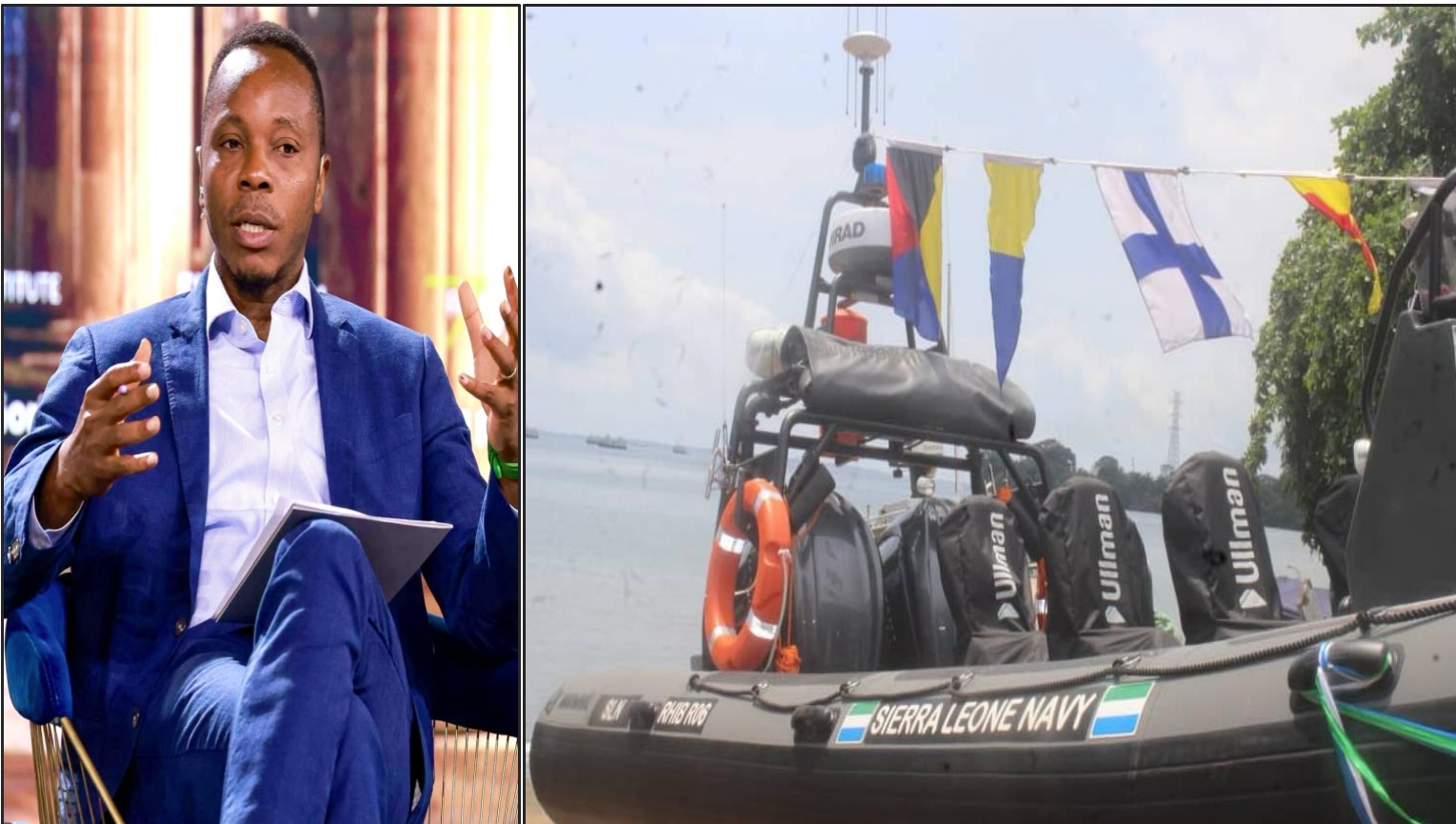
Chief Minister David Moinina Sengeh, ........... brand-new Rigid Hull Inflatable BoatsWeeks after Chief Minister David Moinina Sengeh publicly called for greater collaboration with the European Union to combat drug trafficking and other transnational organised crime, tangible assistance has arrived for Sierra Leone’s maritime security forces. Sengeh claimed that Sierra Leone is actively pursuing national development despite acute vulnerabilities that complicate efforts to secure its coastal waters. “Sierra Leone is a beautiful country. Sierra Leone is a safe country.
“And yes, Sierra Leone is a vulnerable and low-income country,” he said, emphasising the geographical and resource constraints that make maritime policing difficult. He mentioned Sierra Leone’s location in the Gulf of Guinea, where the open ocean channel is more than 100 nautical miles from shore — a distance that is beyond the reach of many of the country’s existing naval assets. To close the gap, Sengeh advocated for modern technology and capability-building measures.
“The use of cutting-edge technology in the form of drones can not only protect our waters from the drug trade, but it can also help combat illegal fishing,” he said. He also criticised calls to suspend EU development cooperation, arguing that asking the bloc to withdraw investments in health, education, and infrastructure in exchange for action against organised crime is a neocolonialist demand. “Our ‘poverty’ level does not deprive us of respect, and we will reject any such approach,” he said.
The call for partnership and capacity-building echoed commitments made during President Julius Maada Bio’s 2025 EU-Sierra Leone Political Partnership Dialogue. As recorded, the two parties agreed: “Building on this shared commitment to the rule of law, both parties agreed to intensify collaboration in a renewed fight against organised crime, illicit drug trafficking, and transnational criminal networks.” They emphasised the significance of coordinated action, institutional strengthening, and information sharing in addressing the growing threats these crimes pose to security, public health, governance, and regional stability.”
Sengeh cautioned that such collaboration should be reciprocal and comprehensive. “If some EU member states do not share information, there is no institutional strengthening support, and the rule of law is only applied in one direction, that is not collaboration,” he stated.
That message appears to have resonated in Brussels. On Tuesday, June 23, 2026, at the Sierra Leone Navy headquarters, the European Union, through the Support to the West African Integrated Maritime Security (SWAIMS) Project, formally donated two brand-new Rigid Hull Inflatable Boats (RHIBs) outfitted with forensic kits to the Naval Service of the Republic of Sierra Leone Armed Forces (RSLAF).
The vessels were handed over to Deputy Minister of Defence, Colonel (Col) Muana Brima Massaquoi (Rtd), in a ceremony that signalled increased maritime security cooperation.
Officials and observers welcomed the donation as a practical step toward improving Sierra Leone’s ability to patrol its coastal waters, intercept illicit trafficking, and respond to maritime crimes, such as illegal fishing. The inclusion of forensic kits also indicates a focus on improving investigative capacity so that maritime interdictions can more reliably lead to prosecutions and deterrence.
While the new assets were widely praised, many stakeholders emphasised that these initial contributions should be the start, not the end, of more extensive collaboration. Those who believe the underlying vulnerabilities Sengeh described remain acute have reiterated calls for increased information sharing, further institutional strengthening, and sustained support for surveillance technologies such as drones. They argue that a comprehensive response requires more than just boats and equipment; it also necessitates coordinated intelligence, legal assistance, and agency capacity building.
Sengeh’s public appeal for an equal and respectful partnership appears to have had an impact, refocusing attention on maritime threats to Sierra Leone and the Gulf of Guinea. The EU’s delivery of RHIBs and forensic kits is a concrete example of that renewed collaboration. Nonetheless, government officials and civil society groups argue that more resources, shared intelligence, and long-term institutional support will be required to convert donated assets into sustained reductions in transnational organised crime and to secure Sierra Leone’s waters for the country’s economic and social development.
