
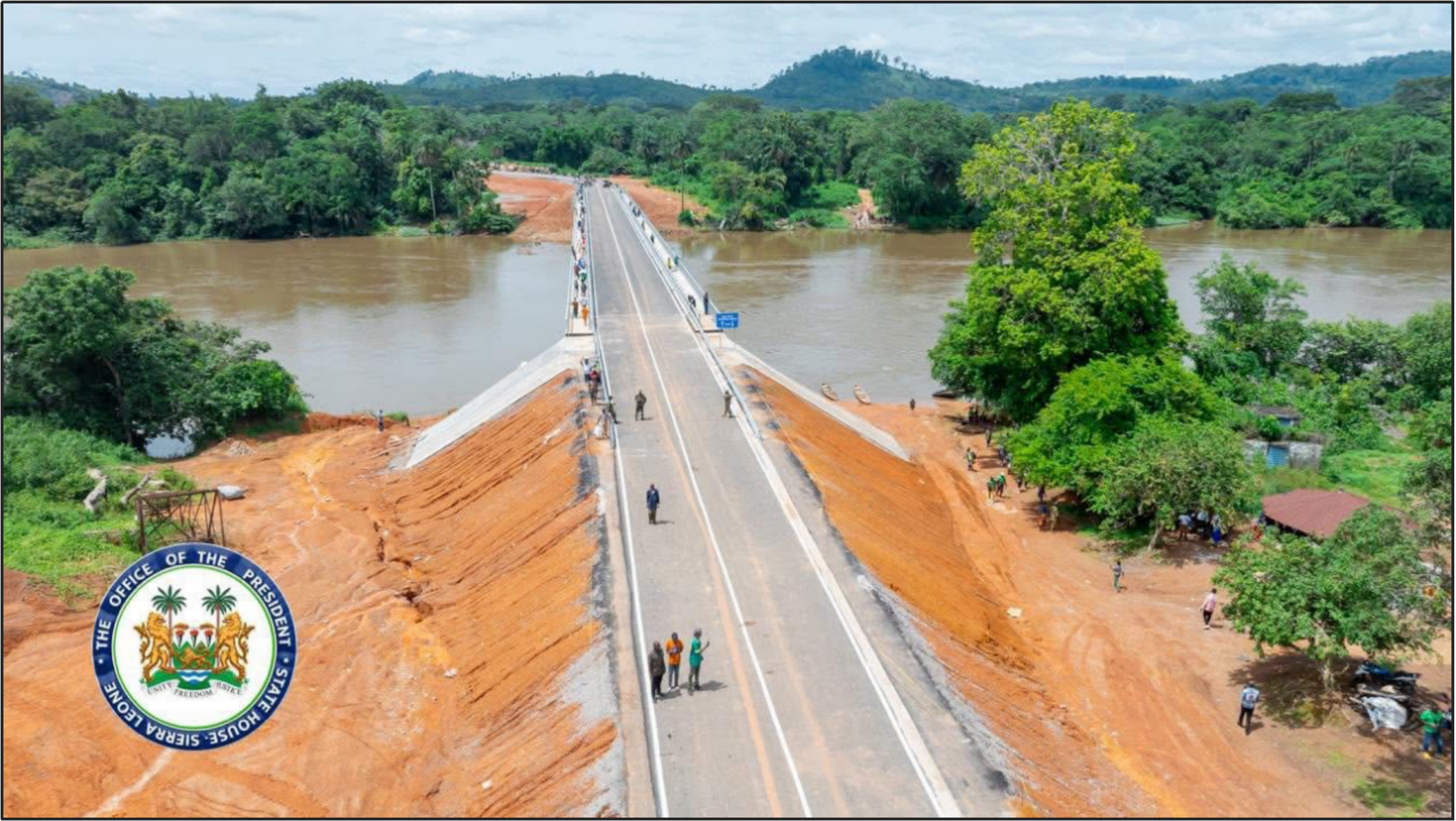
20 June 2026- His Excellency President Dr Julius Maada Bio officially inaugurated the Manowa Bridge over the Moa River in Peje Bongre Chiefdom, Kailahun District, marking a significant milestone in the government’s infrastructure drive to improve connectivity, expand market access, and accelerate socioeconomic development in eastern Sierra Leone. The new two-lane bridge, built under the World Bank’s Smallholder Commercialisation and Agribusiness Development Project (SCADeP), replaces a decades-old manual cable ferry and is designed to be an all-weather, durable crossing that will serve both banks for generations.
The completed structure is expected to strengthen links between Peje Bongre and Upper Bambara Chiefdoms, as well as improve access to neighbouring chiefdoms such as Kpeje West, Upper Bambara, Penguia, and Luawa. Authorities say the Manowa Bridge will reduce travel times and transportation costs, reduce isolation, and increase access to markets, clinics, schools, and government services by providing a reliable surface crossing where travel was previously dependent on the availability and safety of a ferry.
President Bio, speaking at the commissioning ceremony, reflected on the long-standing difficulties faced by residents of Manowa, Pendembu, and the surrounding areas, who for decades relied on an often-undependable ferry crossing. He recalled that, since independence in 1961, communities on both sides of the Moa River had relied on a manual cable ferry that was susceptible to seasonal changes and operational disruptions. “For generations, the journey between these communities was never defined solely by distance. It was determined by whether the ferry was running, whether rain had fallen, and whether crossing the Moa River was possible at all,” he explained.
The President described the bridge as more than just a physical structure; it is a policy statement about equality of opportunity. He explained that the all-weather crossing will replace uncertainty with dependability, isolation with connection, and delay with opportunity. He emphasised the human impact, noting that mothers will no longer have to wait to see if a ferry is running before seeking emergency medical care, and farmers will be spared the risks and delays that previously hampered the timely delivery of cocoa, oil palm, rice, cassava, and other produce to market. “This bridge will transform lives and livelihoods,” President Bio stated.
The Manowa Bridge is one of several crossings being funded by the World Bank under a national program launched after the government received a US$30 million grant in 2020 to replace seven manual ferry crossings in Sierra Leone with modern bridges. With today’s inauguration, President Bio announced that four of those bridges — Manowa, Mattru-Senehun, Gendema, and Tomparie — would be completed. He described these projects as part of a deliberate strategy to connect isolated communities, unleash economic potential, strengthen resilience to seasonal disruptions, and ensure that infrastructure-led development reaches every corner of the country.
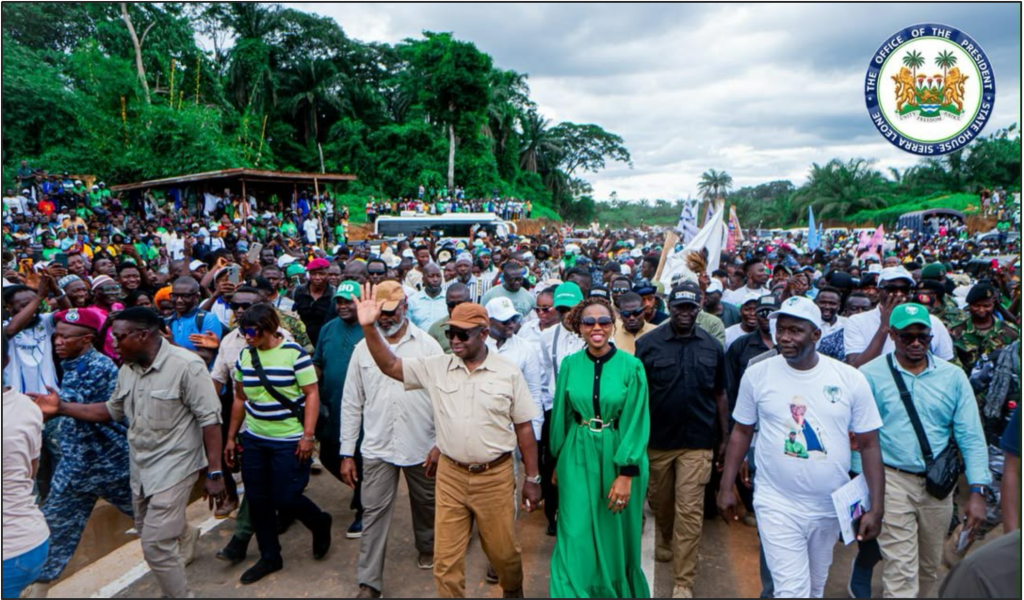
First Lady Dr Fatima Maada Bio, who attended the ceremony, praised the project as yet another concrete example of the administration’s commitment to inclusive national development. She emphasised the importance of reliable transportation links for rural households and farmers, claiming that replacing ferry crossings with permanent bridges directly improves livelihoods and access to critical services.
Abdu Muwonge, World Bank Country Manager, reaffirmed the Bank’s commitment to supporting Sierra Leone’s development priorities, which include the government’s “Big Five Game Changers.” He stated that the Manowa Bridge is expected to have a significant economic impact on the region. By reducing post-harvest losses and improving connectivity, the new crossing is expected to assist farmers in the area in generating an estimated annual agricultural turnover of more than $7 million. Mr Muwonge also stated that the bridge will facilitate trade flows within Sierra Leone and strengthen cross-border links with Guinea, thereby improving regional market integration.
Local leaders, traders, and community members at the event expressed confidence that the bridge will lower transportation costs, create new commercial opportunities, and improve access to healthcare and education. Authorities said the Manowa Bridge will play an important role in increasing economic participation for rural producers and traders who have long been hampered by seasonal ferry outages and limited transportation infrastructure.
The opening of the Manowa Bridge exemplifies Sierra Leone’s broader infrastructure agenda, which prioritises replacing vulnerable ferry crossings with resilient bridge solutions to support year-round mobility and economic growth. Officials anticipate that as more of the planned crossings are completed under the SCADeP initiative and through continued collaboration with development partners such as the World Bank, rural connectivity, market access, and socioeconomic outcomes for communities across the country will improve over time. Mr Muwonge concluded by assuring the government of the World Bank’s continued support as Sierra Leone implements its development agenda and increases investments that connect people to opportunities.
