
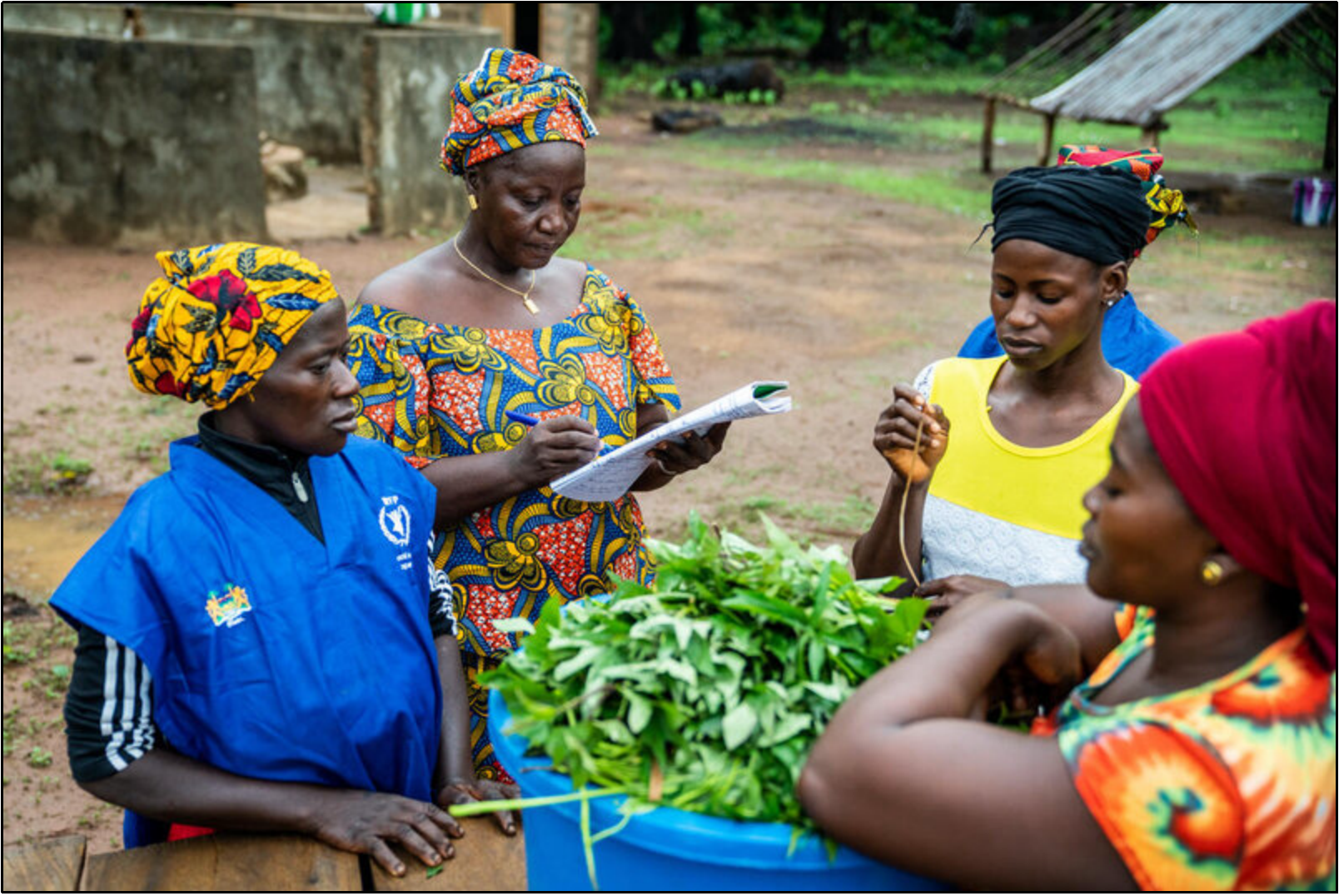
Earnings are divided equally at the end of the working week. Photo: WFP/Michael Duff
The World Food Programme (WFP) is expanding its School Feeding Programme in Sierra Leone using a Home-Grown School Feeding (HGSF) model, which connects daily school meals to local smallholder farmers. The initiative, which operates in the Eastern, North Western, and Southern regions, aims to improve learning outcomes, increase school attendance and retention, strengthen child nutrition, and support rural livelihoods by generating stable market demand for locally produced food. The programme is carried out in collaboration with national government agencies, local stakeholders, farmer cooperatives, schools, and communities. Key focus areas include nutritious daily meals, improved education and cognitive performance, market access and income opportunities for smallholder farmers, community mobilisation and ownership, and school WASH infrastructure improvements. Cross-cutting priorities include gender inclusion, building capacity for national school feeding systems, and strengthening agricultural value chains. Typical program activities include selecting target schools in food-insecure areas, collaborating with local producers and suppliers, providing balanced meals during school days, strengthening procurement, storage, and delivery systems, monitoring attendance, learning, and nutrition outcomes, and scaling successful models. The expected outcomes include increased school attendance and completion, decreased child malnutrition and improved dietary diversity, strengthened local market systems and farmer incomes, stronger institutional capacities and compliance with national standards, and increased community resilience and social cohesion. To ensure sustainability and local economic benefit, the HGSF approach places an emphasis on local procurement and community-driven supply networks. The WFP programme aims to eliminate hunger-related barriers to education, improve long-term human capital, and build more resilient food systems in Sierra Leone’s most vulnerable regions by integrating education, nutrition, and rural development.***
