
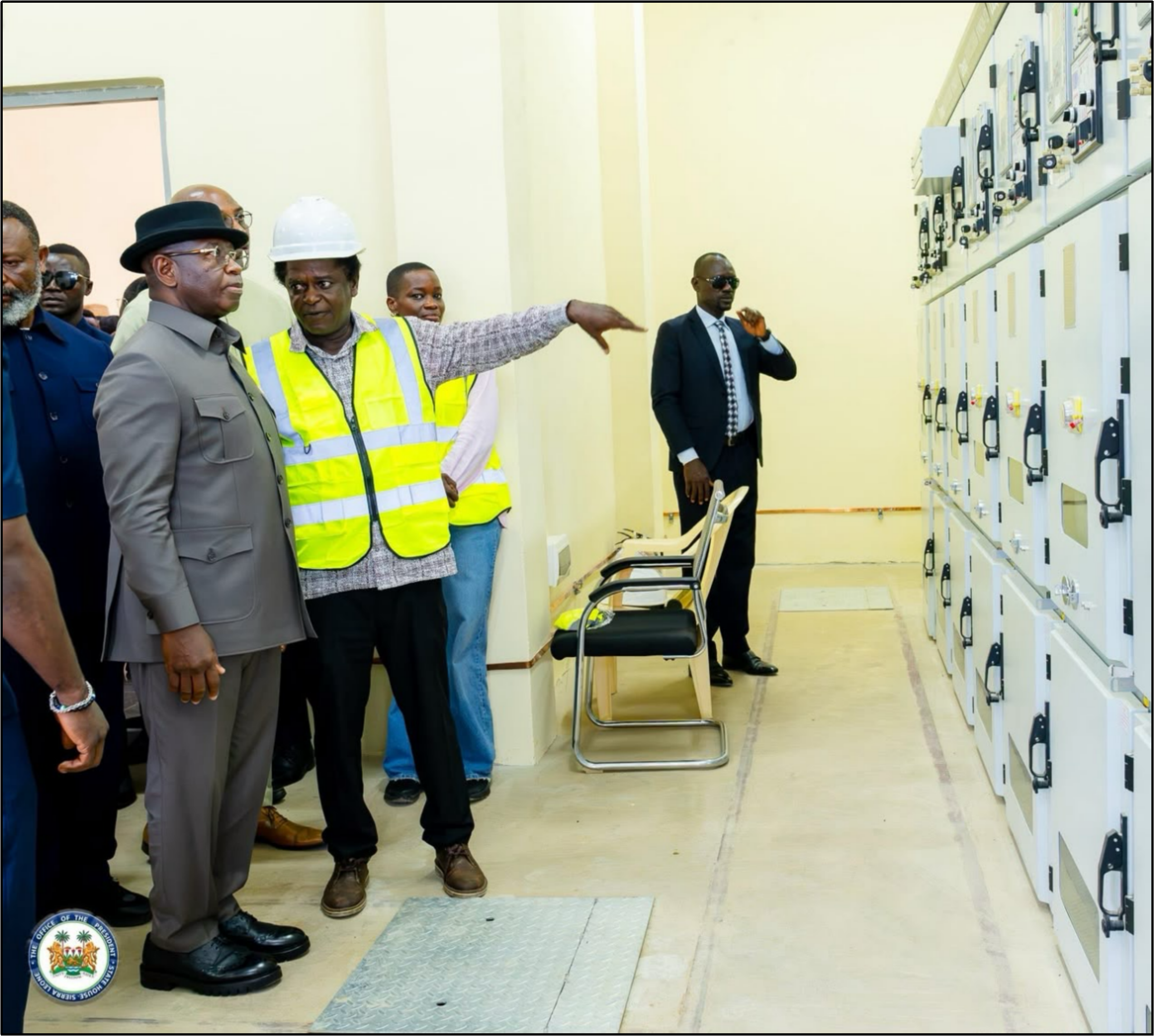
President Dr Julius Maada Bio has officially commissioned two landmark solar power plants: a 30-megawatt facility with a 15-megawatt-hour Battery Energy Storage System (BESS) in Newton and a 10-megawatt facility with a 6-megawatt-hour BESS in Lungi. The installations are the single largest addition to renewable generation capacity in Sierra Leone’s history. The projects were created as part of the Regional Emergency Solar Power Intervention (RESPITE) Project, which received World Bank funding.
During the commissioning, President Bio described the plants as a watershed moment in the country’s efforts to achieve energy security, accelerate economic transformation, and promote sustainable development. He emphasised that the Newton and Lungi projects represent a significant departure from previous energy constraints and signal Sierra Leone’s determination to transition to a cleaner, more reliable power system.
“This is more than just infrastructure,” the President said, emphasising the investments’ national significance. He described the ceremony as both a reflection of the country’s current achievements and a declaration of its future goals. President Bio thanked the World Bank Group for its technical and financial support in bringing the RESPITE Project to fruition, describing the commissioning as “a statement of Sierra Leone’s ambition” to invest in its future through bold, collaborative action.
The President drew on his travels around the country to recall the daily realities that many Sierra Leoneans face as a result of an unreliable electricity supply. He portrayed electricity as a necessity, essential for education, healthcare, business, and household well-being, rather than a luxury. He stated that long-term energy poverty has severely limited the country’s potential, forcing communities to adapt to darkness and uncertainty while constraining service delivery and economic activity.
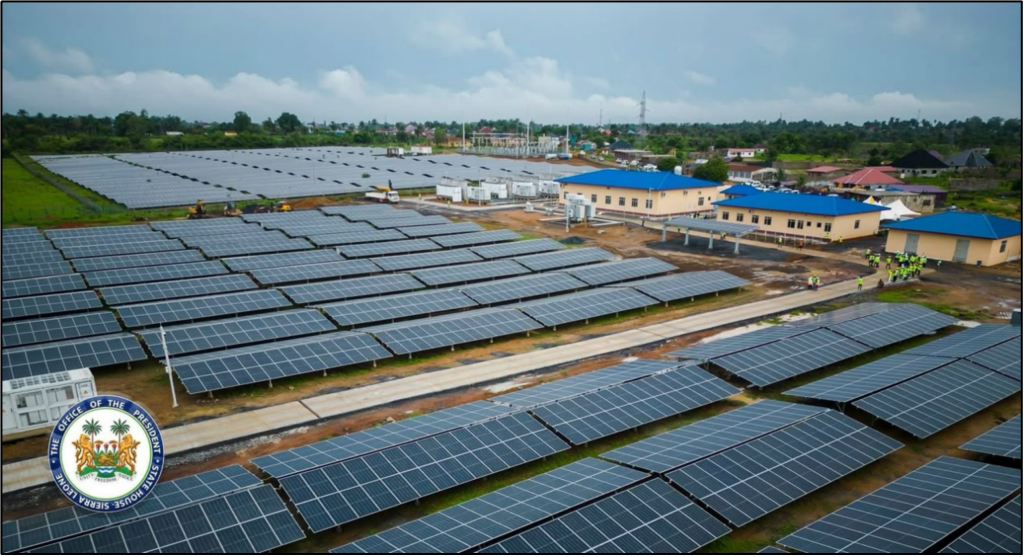
The combined 40 megawatts of solar capacity and BESS installations are expected to strengthen the national grid, improve reliability, increase resilience to disruptions, and provide electricity to hundreds of thousands of citizens. President Bio stated that the projects will not only increase generation capacity, but will also serve as catalysts for broader development by creating jobs, improving healthcare and education services, and facilitating industrial growth.
“The true measure of these investments is not just the megawatts generated, but the opportunities they create for people and businesses across the country,” he said, dedicating the achievement to students who have studied in the dark, healthcare workers who have served without reliable power, entrepreneurs who have endured repeated outages, and families who have long waited for improved electricity services. “We are building a future in which reliable electricity is a service available to everyone,” he stated.
President Bio also took the opportunity to extend an open invitation to investors and development partners. He urged international financial institutions, climate finance entities, technology providers, and innovators to support Sierra Leone’s energy transformation agenda, stating that “Sierra Leone is open for investment.” Sierra Leone is open to collaboration.”
Representatives from the World Bank, national officials, and traditional leaders all spoke at the ceremony. The World Bank Country Representative praised the collaboration under the RESPITE Project, emphasising the project’s role in meeting immediate needs for increased generation capacity while also contributing to long-term resilience and sustainability goals. The Minister of Energy and the Paramount Chief both emphasised the importance of the new facilities for community development, grid stability, and future private-sector growth.
The addition of Battery Energy Storage Systems to the solar plants is a strategic component of the installations. BESS technology reduces variability in solar output, stores excess generation for use during peak demand or low-sun periods, and improves the overall reliability and flexibility of the power system — all of which are especially important as Sierra Leone expands its renewable energy integration efforts.
Officials at the commissioning described the Newton and Lungi plants as part of a larger national effort to modernise the energy sector. Beyond the immediate benefits of electrification and grid reliability, the projects aim to lay the groundwork for future investment in renewable generation, grid upgrades, and supportive policy reforms, all of which can attract private capital and spur industrialisation.
As the country celebrates the completion of these projects, government officials reaffirmed their commitment to building on the momentum. The administration indicated that future efforts will focus on increasing access, strengthening institutional capacity, and mobilising additional funding and expertise to accelerate Sierra Leone’s transition to a resilient, inclusive, and low-carbon energy system.
