
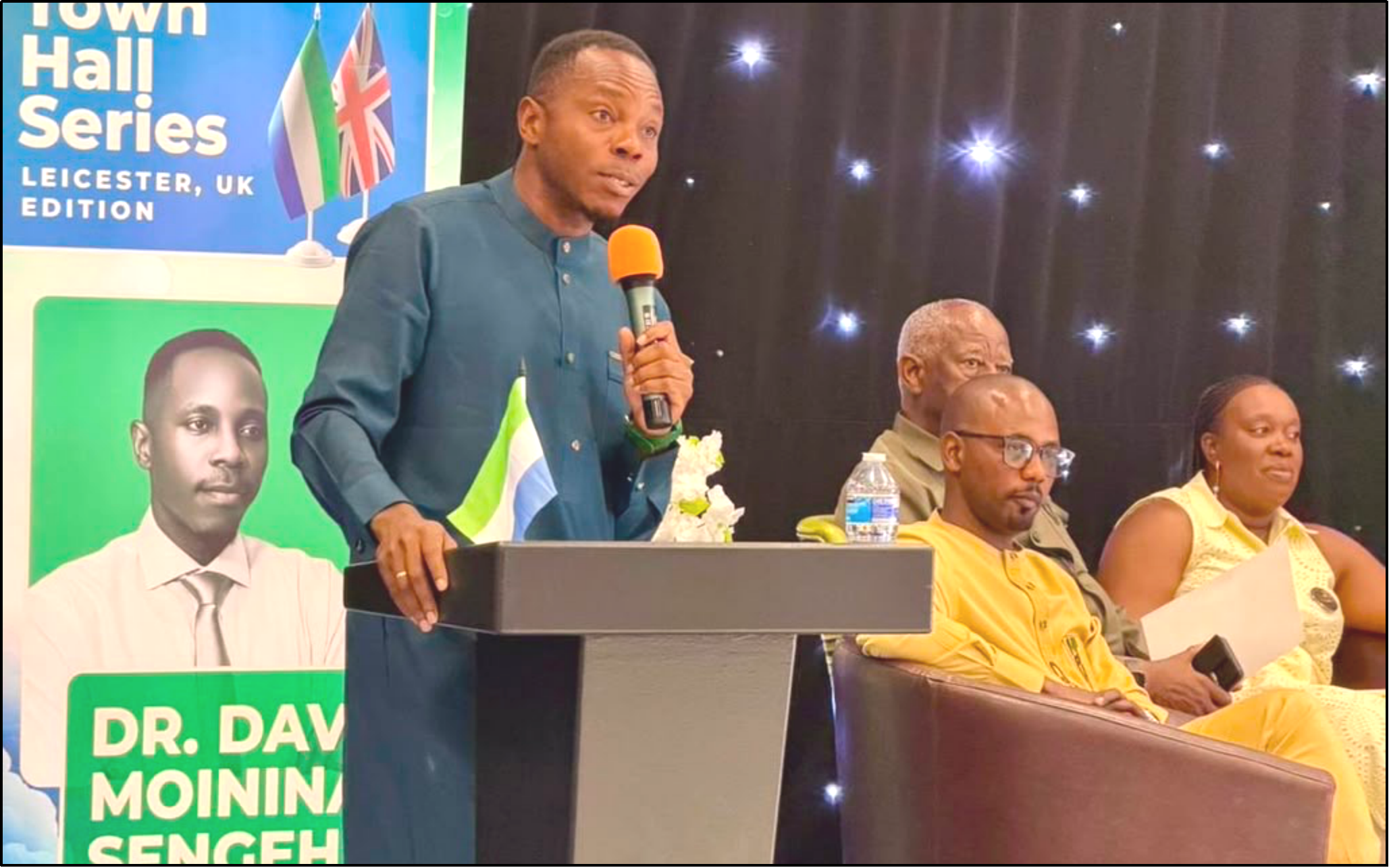
Dr David Moinina SengehChief Minister David Moinina Sengeh made history for the Sierra Leonean community in the UK on May 30, 2026, when he gave a powerful keynote speech at the BSL Hall on Anstey Lane in Leicester. Participants called the event historic because it was the first time a senior government minister had interacted directly with residents through an open, questioning forum, going beyond one-sided political declarations to sincere conversation. Chief Minister Sengeh outlined the government’s strategic vision for national transformation before a crowded, multiethnic audience that included members of the Sierra Leonean diaspora.
The government’s “Five Big Game Changers” are a set of priorities that have their roots in President Julius Maada Bio’s 2023 election manifesto. He presented the National Development Plan as the final blueprint for Sierra Leone’s future and contended that improved citizen-government cooperation is necessary for the plan’s successful implementation. He told the audience, “The plan will only work if we bring the people’s concerns back into government and bring the government closer to the people.”
The Chief Minister emphasised the critical need for increased Public-Private Partnerships (PPPs) to address long-standing infrastructure and service delivery issues. He maintained that strategic cooperation with the private sector is necessary to scale efficiency, enhance utilities, and better manage resources because government resources alone cannot meet the scope and pace of improvements required across sectors, from energy and transport to health and water.
A large part of the speech concentrated on the vital role Sierra Leoneans living abroad can play in nation-building because the audience was primarily diaspora-based. Professionals in the diaspora were urged by Chief Minister Sengeh to return home or make other contributions to the country’s development using their networks and expertise. Professional skills transfer, innovation and creativity, strategic collaboration, national coordination, global networking, and direct citizen engagement are what he referred to as the core pillars of diaspora engagement. He called for coordinated, long-term involvement that aligns with the National Development Plan.
An unprecedentedly lively open forum served as the program’s finale. The session shifted from traditional political monologues to a rigorous, interrogative exchange in which audience members had unprecedented access to ask the minister direct questions about diaspora integration, governance, and policy implementation. Participants praised the openness and candour of the conversations, claiming that the occasion raised the bar for civic participation.
This Leicester town hall set a new standard for openness and two-way communication between the Sierra Leonean government and its citizens in the UK by bringing senior leadership directly to the diaspora in an open, accountable setting. The result has increased expectations for more of these discussions as well as for concrete follow-up that turns discussion into partnership and advancement at home.
