
By Ibrahim Sorie Koroma
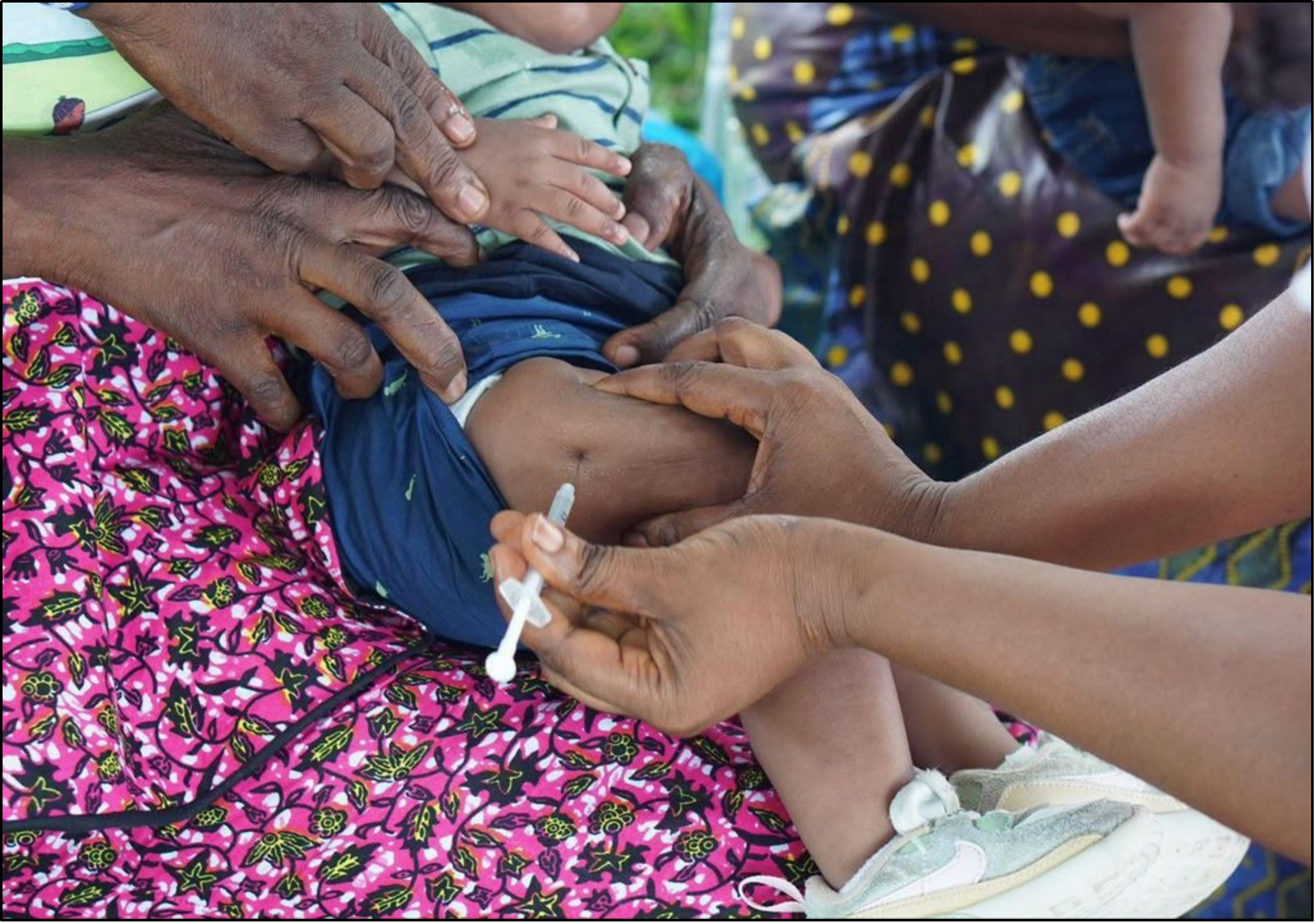
Getting life-saving vaccines to every child in Sierra Leone is often more difficult than it sounds. Many families live far from the nearest health facility, often many kilometres away. Other communities live in remote settlements that are hard to reach during the rainy season. Some children fall outside the routine immunisation system and are therefore invisible to health services. The focus of Sierra Leone’s 300 Days Activism campaign is these ‘zero-dose’ children – children who have never received a single routine vaccine.
Good news halfway through the 300-day initiative: 7,117 of the 9,006 targeted zero-dose children have been identified and vaccinated, or 79% of the national target. That percentage represents thousands of children now better protected from vaccine-preventable diseases. However, 1,889 zero-dose children remain to be traced and vaccinated, a gap the Ministry of Health (MoH), with partners, is trying to close during the second half of the campaign.
“We need to leave the walls of the health facilities, go beyond the traditional way of waiting for families to come to the clinics to reach and vaccinate these children. Community Health Workers (CHWs), vaccinators, community leaders and other local structures have been key in identifying children missed by routine services. Teams are using local knowledge and data, including health facility records, community registers, and micro-planning data, to track, trace, and reach children in settlements and neighbourhoods where routine coverage has been weakest.
Micro-planning and targeted outreach have driven the campaign’s success. Outreach teams have reached children not on any routine list by mapping previously unmapped settlements, prioritising high-risk areas, and mobilising community volunteers. “Results are strongest in several districts where outreach has exceeded original targets, including Falaba (exceeded by 464 children), Karene (exceeded by 262) and Western Area Rural (exceeded by 141. These improvements show that more aggressive, data-driven outreach can reach children who have been missed in the past.
We have targets to meet and beat, and this is cause for celebration, but we should also examine them carefully. More than expected could be because outreach teams found children in settlements not previously mapped. They may also reflect population movement, with families moving in from adjacent catchments, or initial underestimations. The MoH and partners are analysing the data to understand these dynamics and to plan better for the remainder of the campaign and beyond.
Statistics of the campaign are the result of human impacts. Program analysis has estimated that to date the intervention has saved some 592 lives, including mothers and children. For families, the difference is real: children who can grow, learn and play with greater protection from vaccine-preventable diseases; caregivers who have more confidence that critical preventive services are coming to their homes.
Community engagement has driven the campaign. Community volunteers, religious and neighbourhood networks and traditional leaders have been central to establishing confidence, increasing vaccine uptake and directing outreach teams to hard-to-reach households. Their involvement helps ensure that activities are culturally relevant and that messages reach caregivers who may otherwise be missed.
But there are still hurdles. Challenges are seasonal inaccessibility, dispersed settlements, registration gaps and population mobility. These gains will need to be sustained through continued investment in outreach, stronger routine immunisation systems, improved data quality and flexible, community-led approaches. The 300 Days Activism now enters its second 150-day phase. We call for renewed commitment, increased community engagement, and coordinated action among national and district health teams.
Sierra Leone’s experience so far is proof of what can be achieved when health workers, communities and the health system work in unison. Connecting local data, micro-planning and community action can identify and vaccinate children invisible to the routine system. We are halfway there and have reached 79% of the national target. While there are still 1,889 zero-dose children left, we can be optimistic about the progress made and have a clear roadmap for the work ahead.
The lessons learned have energised the MoH and partners to continue this effort more than ever: use data to find the unreached, engage communities to build trust and tailor outreach to the realities of remote and mobile populations. Now that these pieces are in place, there is the opportunity to reach every eligible child and protect them from vaccine-preventable diseases, one household at a time.
Subscribe to Updates
Get the latest creative news from FooBar about art, design and business.
Sierra Leone’s 300 Days of Activism Reaches 79% of Zero-Dose Children

gleanernewspaper
Gleaner Newspaper is the Home for exclusive local news, views, and adverts from Sierra Leone. Publisher: Gleaner Communications Sierra Leone.