
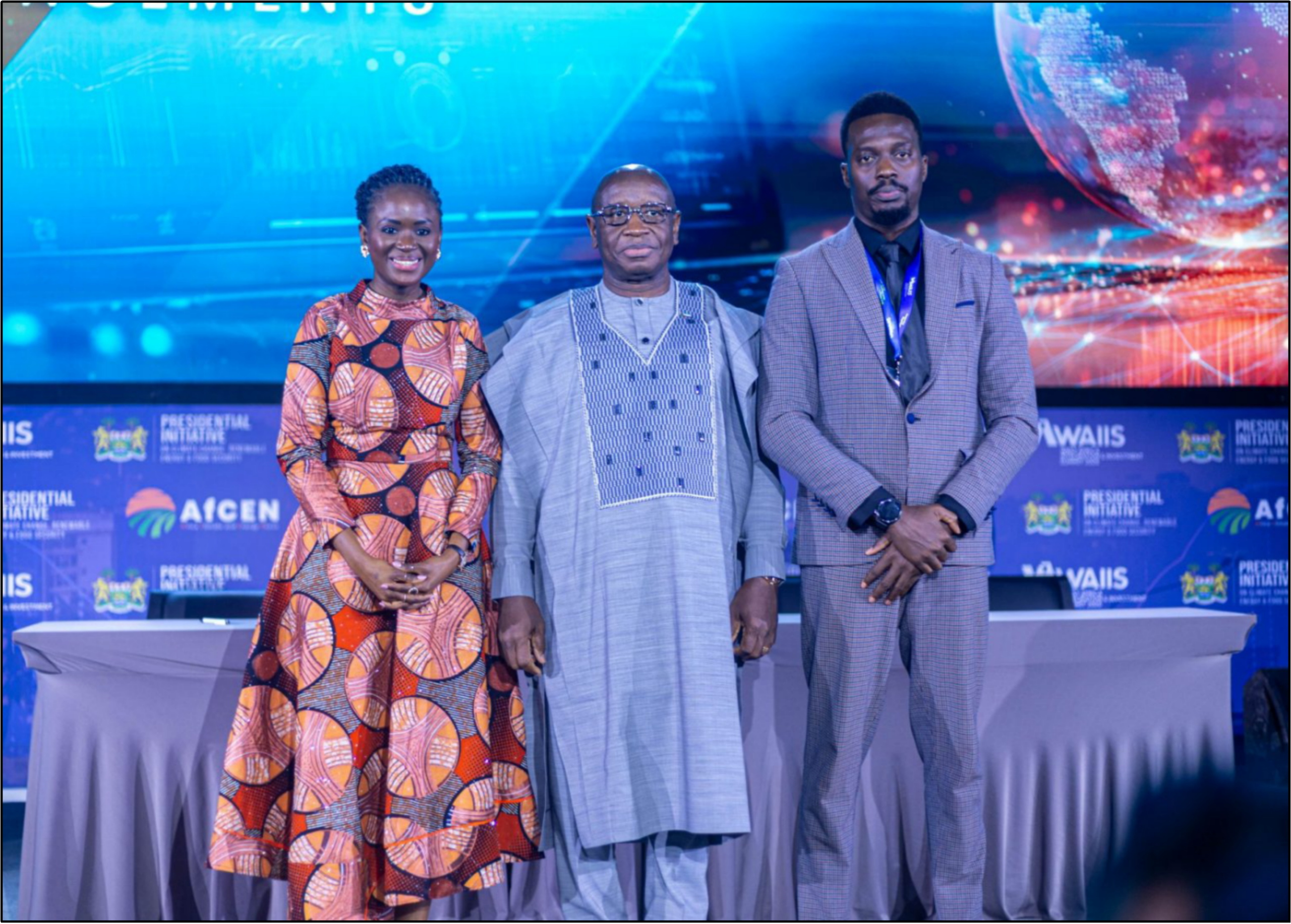
From left: Salima Bah, Minister of Communication, Technology and Innovation | H.E. Julius Maada Bio, President of the Republic of Sierra Leone | Mr Adama Touray, Managing Director of Unique Group.Sierra Leone is considering a local assembly plant for cell phones and electronics to reduce the cost of digital devices and increase access to mobile internet.
The Ministry of Communication, Technology and Innovation (MoCTI) is discussing the proposal with The Gambia’s Unique Group. The estimated cost of the project is $21.9 million, and it would be developed in stages, starting with device assembly and possibly expanding into other activities and regional markets.
According to MoCTI, although mobile network coverage in Sierra Leone has increased, the cost of smartphones is still a major barrier for people who want to use mobile internet. The proposed facility is designed to overcome that barrier, while creating opportunities for local manufacturing, employment and the development of technical skills.
Planned activities include assembling and setting up devices, quality testing, servicing and repairs. There are also plans for a technical training centre, where locals can learn practical skills in electronics maintenance and other digital technologies.
The partners will also explore initiatives beyond device manufacturing, such as digital learning, school connectivity, and solar-powered education infrastructure. Such projects could be part of larger efforts to improve access to technology in schools, but the proposal is still under consideration.
The focus on device affordability comes amid widespread concern about the gap between mobile broadband availability and actual internet usage. The GSMA’s State of Mobile Internet Connectivity (SOMIC) Report 2026 finds that more than 3.4 billion people globally remain offline from the mobile internet. According to the report, more than 90% of these people live within reach of mobile broadband, but network coverage alone has not been enough to bring them online.
The GSMA warns that those without internet access risk being left behind in the benefits of new technologies like artificial intelligence. Affordability and availability of appropriate devices remain important factors in determining people’s ability to use connectivity.
The report also points out that those who do use mobile internet tend to use older devices. Globally, 13% of mobile internet subscribers still access the internet on 3G smartphones or feature phones. In Sub-Saharan Africa, the proportion soars to 50 per cent; in Latin America and the Caribbean, it is 30 per cent; and in the Middle East and North Africa, it is 27 per cent.
The MoCTI proposal is part of a broader digital development agenda. Sierra Leone has also inked a $50-million digital transformation deal with Huawei and is seeking to relaunch state-owned operator Sierratel as a mobile virtual network operator, ITWeb Africa reported earlier.
The government’s proposal to set up an assembly is intended to complement network expansion by addressing the cost of equipment needed to get people online. “Our goal is not only to expand the reach of the mobile network but also to ensure that more Sierra Leoneans have access to the devices needed to access and benefit from connectivity,” said Salima Monorma Bah, Minister of Communication, Technology and Innovation.
Adama Touray, managing director of Unique Group, said the partnership could help the country develop its electronics assembly and technical capacity. “Through this partnership, we aim to bring together investment, technology and practical skills development to improve access to digital devices and create opportunities for Sierra Leoneans,” he said.
It’s still a project proposal, and the phased approach will allow for initial assembly and technical services before potentially expanding into larger regional markets.
