
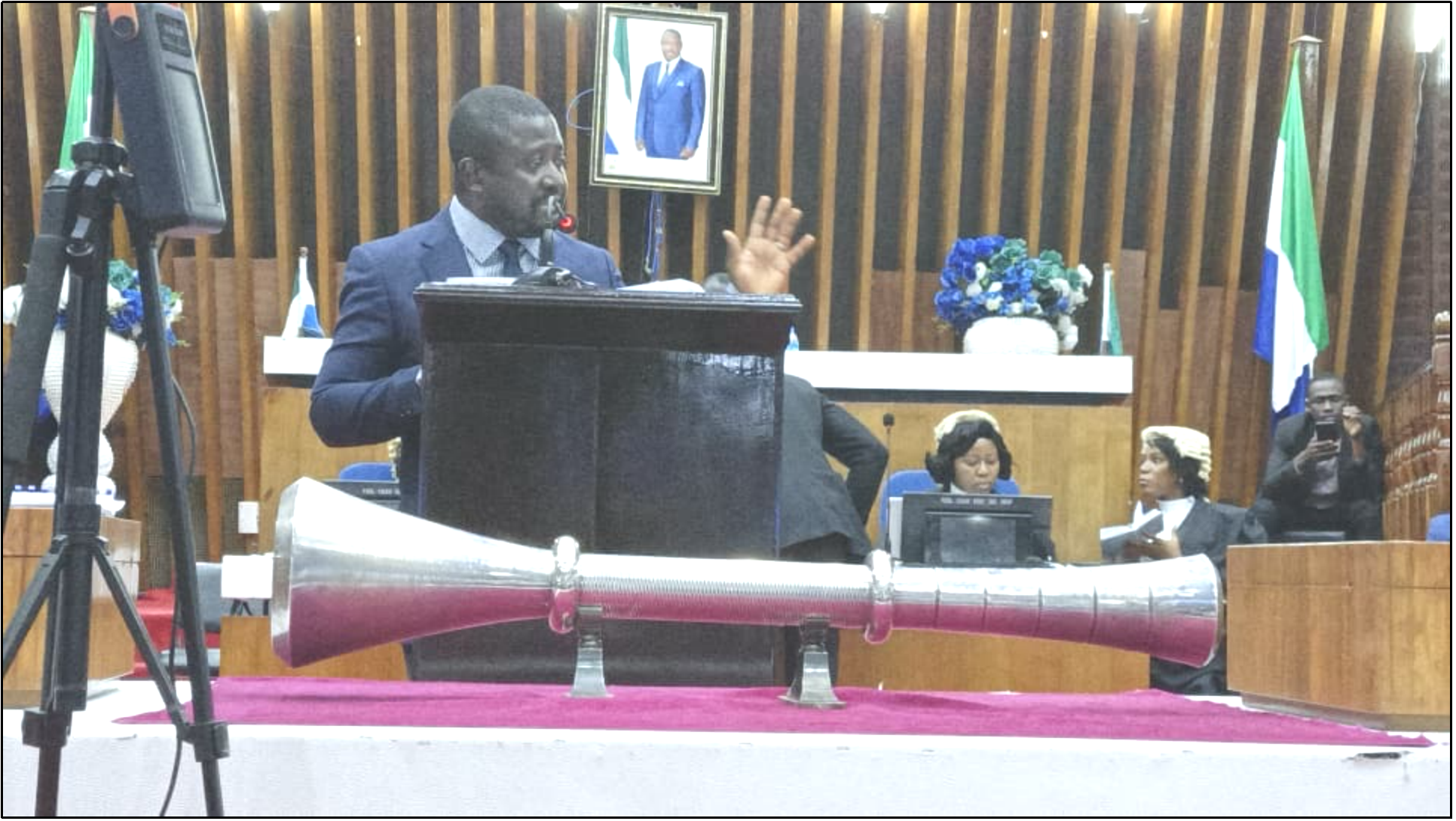
Freetown, 16 July 2026 – The House of Parliament has ratified the Protocol to the African Charter on Human and Peoples’ Rights on the Establishment of the African Court on Human and Peoples’ Rights, after formal presentation to members of Parliament by the Attorney General and Minister of Justice, Alpha Sesay Esq. The ratification completes Sierra Leone’s acceptance of the instrument establishing an independent continental tribunal to interpret and apply the African Charter and other human rights instruments.
Mr Sesay recalled that the Protocol was adopted by the Assembly of Heads of State and Government of the then-Organisation of African Unity (OAU) on June 9, 1998, in Ouagadougou, Burkina Faso and entered into force on January 25, 2004. He said the African Court was an institution established to complement and strengthen the work of the African Commission on Human and Peoples’ Rights by providing a legally binding judicial mechanism capable of interpreting and applying the Charter and other regional human rights instruments.
The Attorney General explained the jurisdiction of the Court, noting that the Court may receive cases filed by the African Commission, States Parties, African intergovernmental organisations and, based on a specific declaration made under Article 34(6) of the Protocol, individuals and non-governmental organisations with observer status before the African Commission. The Court had the power to issue binding judgments, award reparations and compensation to victims of human rights violations and render advisory opinions on questions of law relating to human rights, he said.
“Ratification of the Protocol does not grant any persons or non-governmental organisations the right to petition the Court automatically,” said Mr Sesay. Such access requires a separate declaration under Article 34(6), which a State Party may choose to make if it wishes to allow direct individual and NGO access to the Court’s judicial process.
In setting out the legal and policy basis for ratification, the Attorney General said Sierra Leone’s accession to the Protocol is a reconfirmation of the country’s commitment to the promotion, protection and enforcement of human rights and constitutionalism and the rule of law in conformity with the national Constitution and international obligations. “The Protocol was a watershed in Africa’s human rights architecture,” he said, adding that Sierra Leone’s membership as a State Party would strengthen its position in the African Union and provide increased access to justice for victims of human rights violations through an additional regional judicial mechanism.
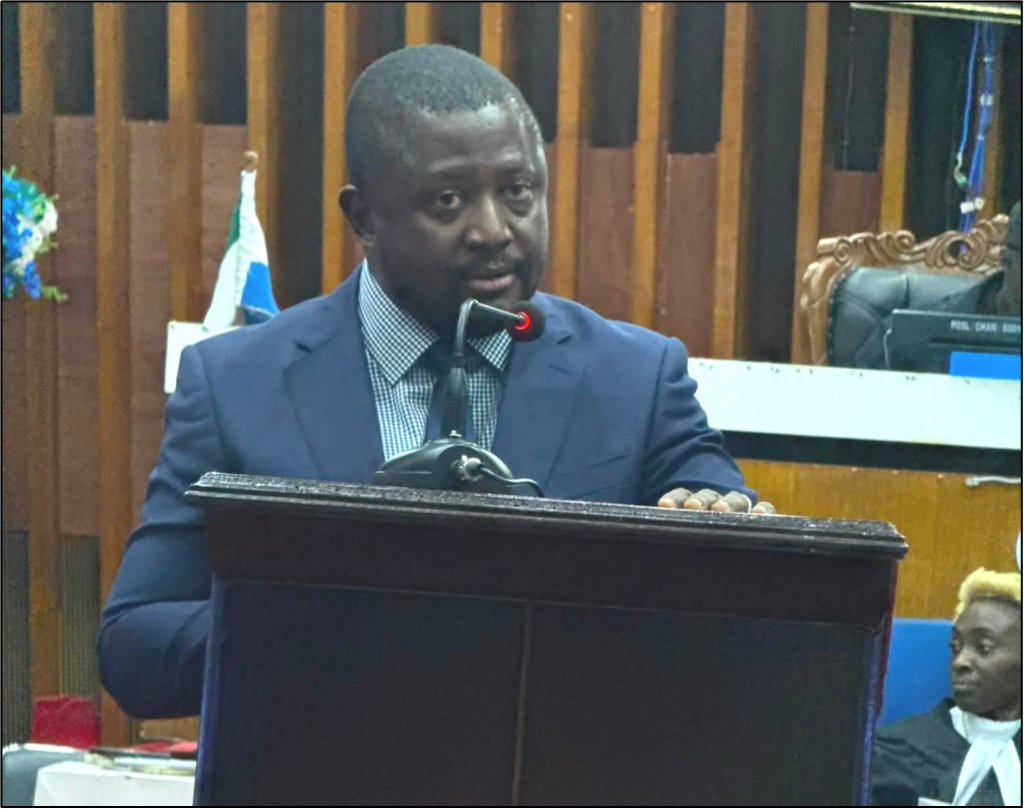
Ratification will help better align national laws with international human rights standards and promote democratic governance and accountability, he said. This will also boost investor confidence by strengthening the country’s commitment to a stable and predictable legal environment. By ratifying the Protocol, they were reaffirming their commitment to the protection of human rights at home and contributing to the development of the continent’s human rights architecture, he said. ” As a State Party to this Protocol, we are strengthening our commitment to the protection of human rights at home while also contributing to the development of Africa’s continental human rights architecture,” he told Parliament.
The Attorney General, in the same speech, said Sierra Leone remains an active participant in international intellectual property systems, adding that the government remains a signatory to important treaties administered by the World Intellectual Property Organisation (WIPO) and the African Regional Intellectual Property Organisation (ARIPO). Mr. Sesay cited several major international treaties to which the country is party or to which it aligns its laws such as the Berne Convention for the Protection of Literary and Artistic Works (1886), the Madrid Agreement Concerning the International Registration of Marks (1891), the Rome Convention for the Protection of Performers, Producers of Phonograms and Broadcasting Organizations (1961), the WIPO Copyright Treaty (1996) and the WIPO Performances and Phonograms Treaty (1996).
“These treaties contain internationally agreed standards for the protection of copyrights, trademarks, patents, industrial designs, geographical indications, performers’ rights and other forms of intellectual property and are meant to promote innovation, creativity, investment, transfer of technology and economic growth,” said Mr Sesay.
Parliament’s ratification of the African Court Protocol is a huge milestone for Sierra Leone’s engagement in continental human rights mechanisms. Sierra Leone has now become a State Party to the legal framework that provides for victims and States to seek judicial redress at the regional level in accordance with the provisions of the Protocol. Lawmakers and legal experts will follow closely any additional moves by the government, including whether Sierra Leone will make the Article 34(6) declaration that would allow individuals and qualified organisations to have direct access to the Court.
