
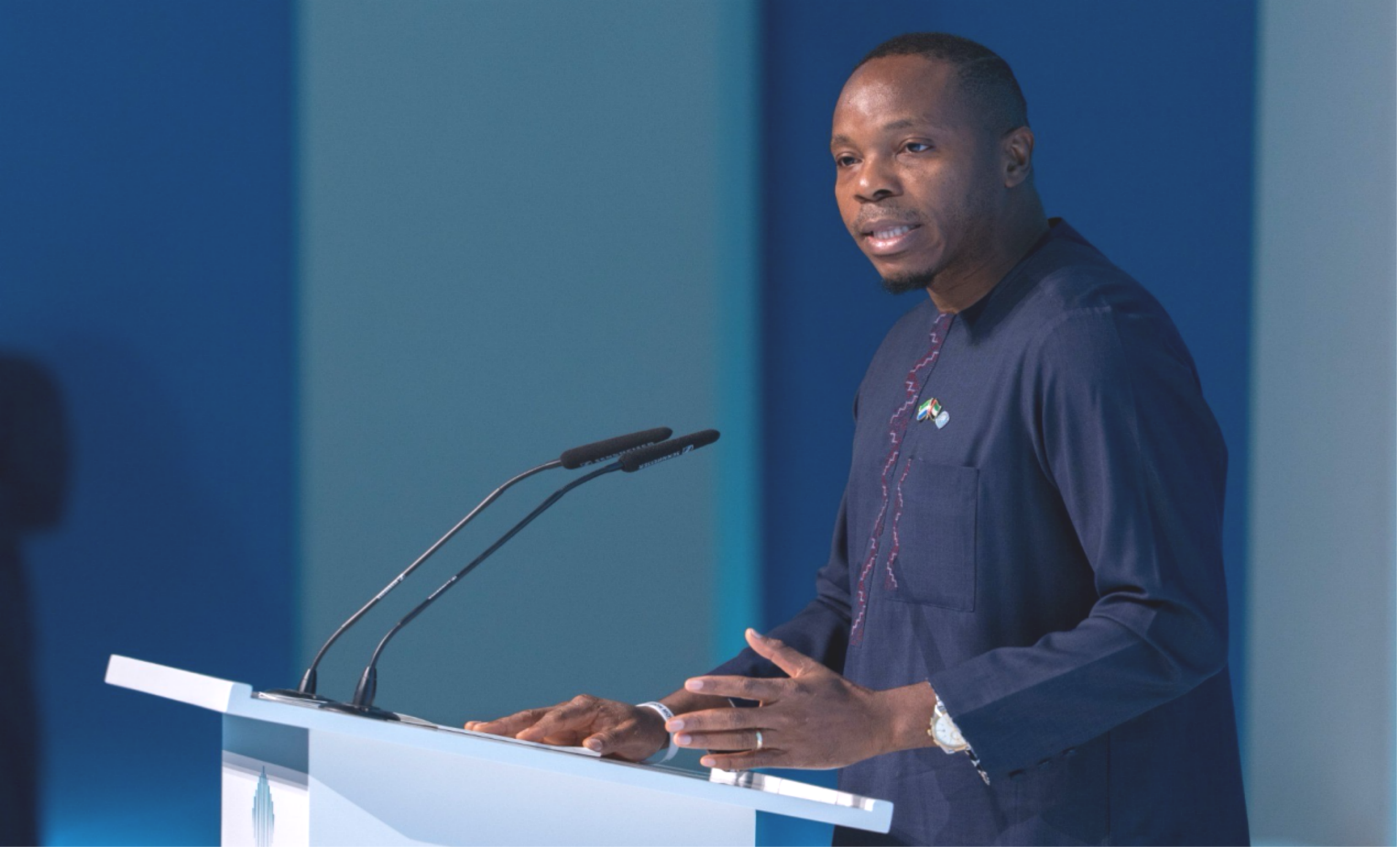
Sierra Leone’s Chief Minister, Dr David Moinina Sengeh, launched the Artificial Intelligence Forum at the World Governments Summit in Dubai in February 2026, using the platform to outline his country’s ambitious digital transformation agenda and advocate for an AI approach that prioritises equity and social justice. Speaking on behalf of a government that has prioritised technology in its development strategy, Dr Sengeh emphasised the importance of leveraging digitisation to improve everyday life for citizens across the country, not only to accelerate growth but also to reduce long-standing inequalities.
Dr Sengeh explained that Sierra Leone’s drive to mainstream technology is rooted in President Dr Julius Maada Bio’s national vision, as reflected in the National Development Plan’s “Big Priorities.” Transformative technology and infrastructure are designated as a core pillar of the administration’s ‘Big 5’ agenda, he said, and the results are visible: the country now has nearly 100% 3G coverage, almost 90% 4G coverage, and 100% fiber connectivity in major urban centres such as Freetown. He argued that these connectivity gains are not an end in themselves, but rather the foundation for widespread social and economic inclusion.
Increased network reach has resulted in tangible improvements in financial inclusion and access to services. Dr Sengeh reported that Sierra Leone has doubled every financial inclusion indicator over the last five years, with more women now having access to financing. He stated that banks are already using AI algorithms to create better financial products, thereby expanding affordable options for citizens who previously lacked access to formal banking.
The Chief Minister told forum attendees that human capital development, including quality education, effective healthcare, and food security, remains central to Sierra Leone’s definition of human security. To that end, the government has implemented digital tools to ensure educational continuity and parental engagement, a strategy that was critical during the COVID-19 pandemic, when schools were closed. He said that digital platforms have allowed teachers to reach out to remote students and given parents more tools to help their children learn.
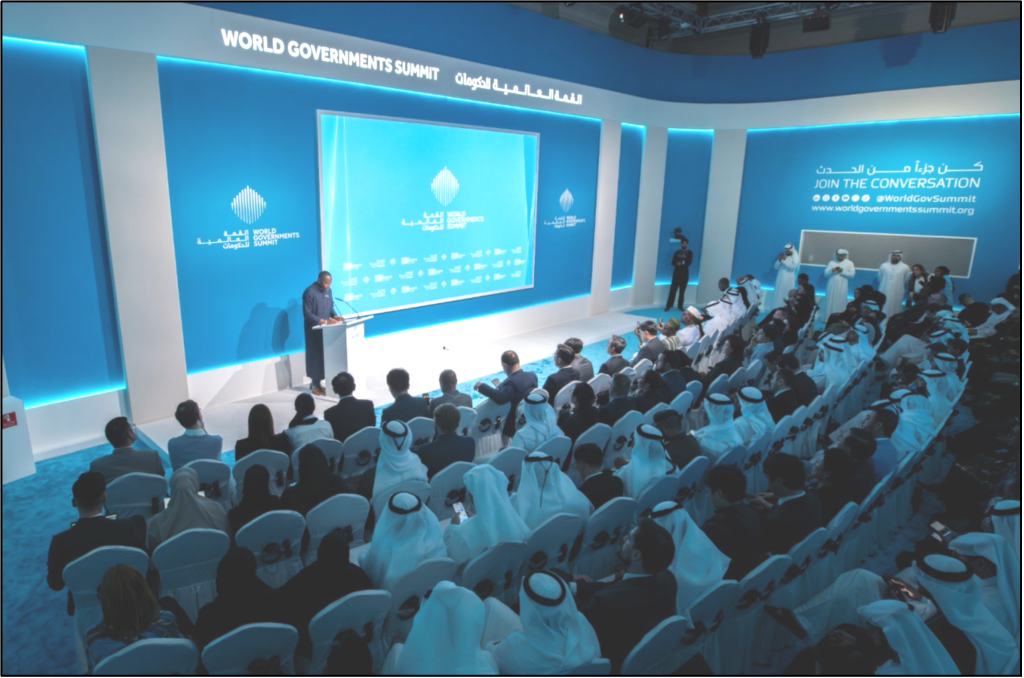
In healthcare, Dr Sengeh emphasised targeted digital interventions for maternal care, claiming that solutions implemented over the last decade have contributed to an 80% reduction in maternal mortality. These gains, he claimed, show the immediate and measurable impact that well-designed digital initiatives can have on human well-being.
Sierra Leone’s technology agenda includes agriculture and environmental protection. The government has experimented with drones for fertiliser application on farms, which is a small but promising step, and it is using satellite imagery to inform policy decisions that protect natural resources and guide sustainable land use. Dr Sengeh argued that such initiatives demonstrate how relatively modest technological investments can yield rapid, practical returns when aligned with national priorities.
Sierra Leone is actively seeking partners to help scale these efforts, he said, emphasising that collaboration must go beyond foreign investors and international organisations. The work necessitates close collaboration among domestic institutions, such as the Ministry of Innovation, the Ministry of Education, and the Directorate of Science, Technology, and Innovation, as well as involvement from private citizens and grassroots innovators. Dr Sengeh cited young leaders such as Mama Yokie of the Kamara Yokie Innovation Centre as examples of the next generation influencing how AI is used not only by governments but also by students in remote communities.
Dr Sengeh, who also serves as Chief Innovation Officer, reiterated a call for “radical inclusion,” arguing that technology should bridge the gap between the haves and have-nots. He argued that AI tools should be designed to help those who need it the most, such as allowing teachers to better support underperforming students, rather than amplifying existing advantages. His message at the Dubai forum portrayed Sierra Leone not only as a recipient of technological aid, but also as an active partner and innovator seeking locally rooted solutions with measurable social impact.
