
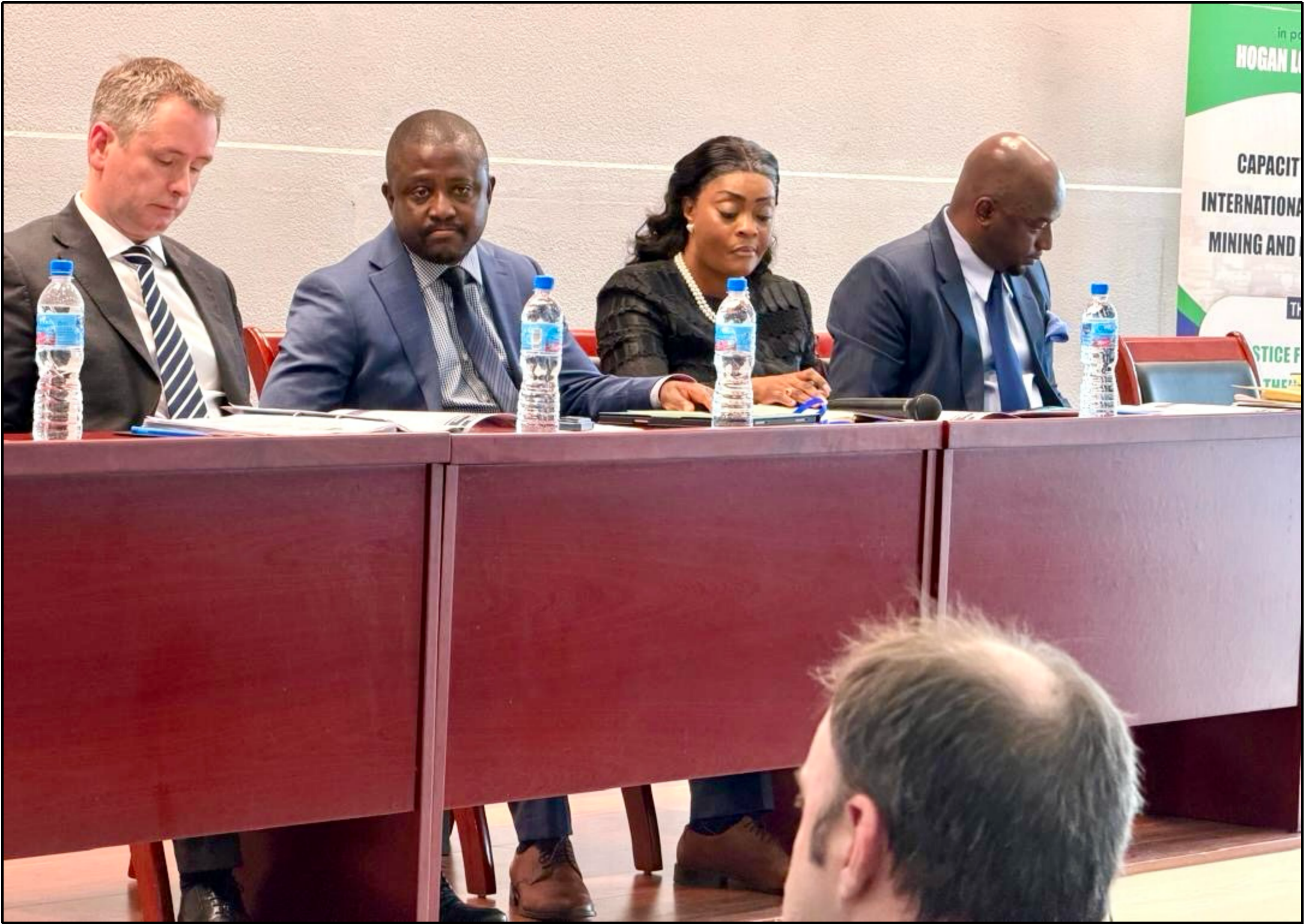
The Office of the Attorney General and Minister of Justice, in collaboration with the Arbitration Steering Committee and international law firm Hogan Lovells London, organised a major capacity-building workshop on international arbitration for the mining and power sectors. The program, held at the Foreign Service Academy Hall under the banner “Justice for Growth: Strengthening Dispute Resolution Framework for Sustainable Investment,” brought together State Counsel, government officials, and private-sector representatives to learn how to handle complex arbitration cases and better protect the State’s interests.
Deputy Minister of Justice and Chairperson Elizabeth Saptieu Saccoh stated that the country has entered a new era of international arbitration, supported by modern legislation that aligns Sierra Leone’s legal framework with global norms. Madam Saccoh stressed the importance of applying arbitration laws consistently and effectively in order to instil investor confidence and support overall economic growth. She described the training as a targeted effort to strengthen the capacity of State Counsel and public officials who manage arbitration cases, urging participants to seek clarification on the Arbitration Act 2022 and to adopt a broader perspective that connects arbitration practice with investment and development goals.
Madam Saccoh also advocated for greater consistency in legal advice issued by government institutions, pointing out that a reliable arbitration framework will be critical in attracting and retaining long-term investment in Sierra Leone.
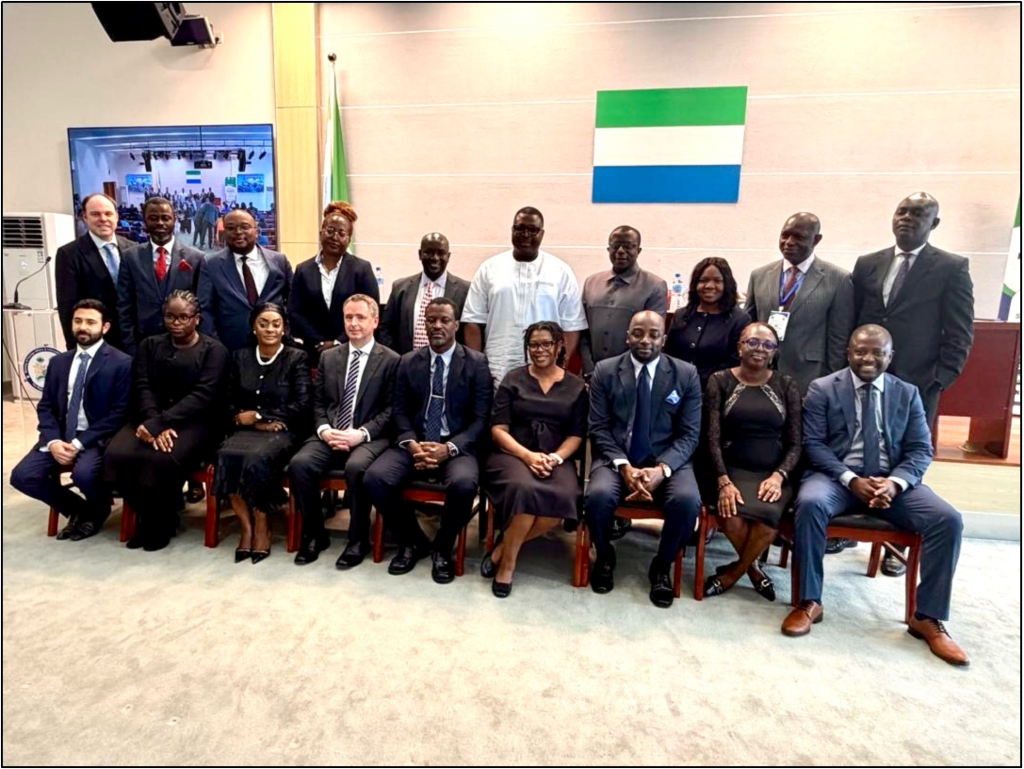
Attorney General and Minister of Justice Alpha Sesay delivered the keynote address, reaffirming the government’s commitment to developing a modern, credible international dispute settlement framework. He praised the country’s 2020 accession to the New York Convention and the recent passage of the Arbitration Act 2022 as critical steps toward aligning Sierra Leone’s arbitration regime with internationally recognised standards. Mr Sesay emphasised that Section 82 of the new Act provides for the establishment of a Sierra Leone International Arbitration Centre, an institutional mechanism aimed at promoting and administering arbitration and other alternative dispute resolution methods.
The Attorney General described the Centre’s establishment as a deliberate policy priority intended to boost investor confidence, increase legal capacity within the state, and position Sierra Leone as a credible destination for neutral dispute resolution. He praised the efforts of key stakeholders involved in the reform process, including Deputy Minister of Mines and Mineral Resources Umaru Napoleon Koroma. He urged continued collaboration with international partners to fully implement the reformed framework.
Deputy Minister of Mining and Mineral Resources Umaru Napoleon Koroma emphasised the importance of arbitration and alternative dispute resolution in the mining sector. He stated that the Arbitration Act of 2022 modernises the country’s legal framework, aligns it with international practice, and establishes neutral, efficient dispute-resolution mechanisms. Minister Koroma stated that mining projects are typically long-term and capital-intensive, requiring regulatory stability, transparent fiscal terms, and credible dispute-resolution mechanisms to protect the legitimate interests of both investors and the state.
He contended that early, neutral resolution of disputes is critical to avoiding project delays, preserving economic value, and maintaining trust between governments and investors. He went on to say that effective dispute resolution is more than just resolving individual conflicts; it is an enabler of long-term investment, a promoter of good governance, and a driver of national economic development.
The training, described by organisers as the first international arbitration conference for government lawyers and officials, is part of a larger effort to strengthen institutional arbitration competence, ensure consistent application of the Arbitration Act 2022 across public bodies, and create the conditions for increased, sustainable investment in Sierra Leone’s strategic sectors.
