
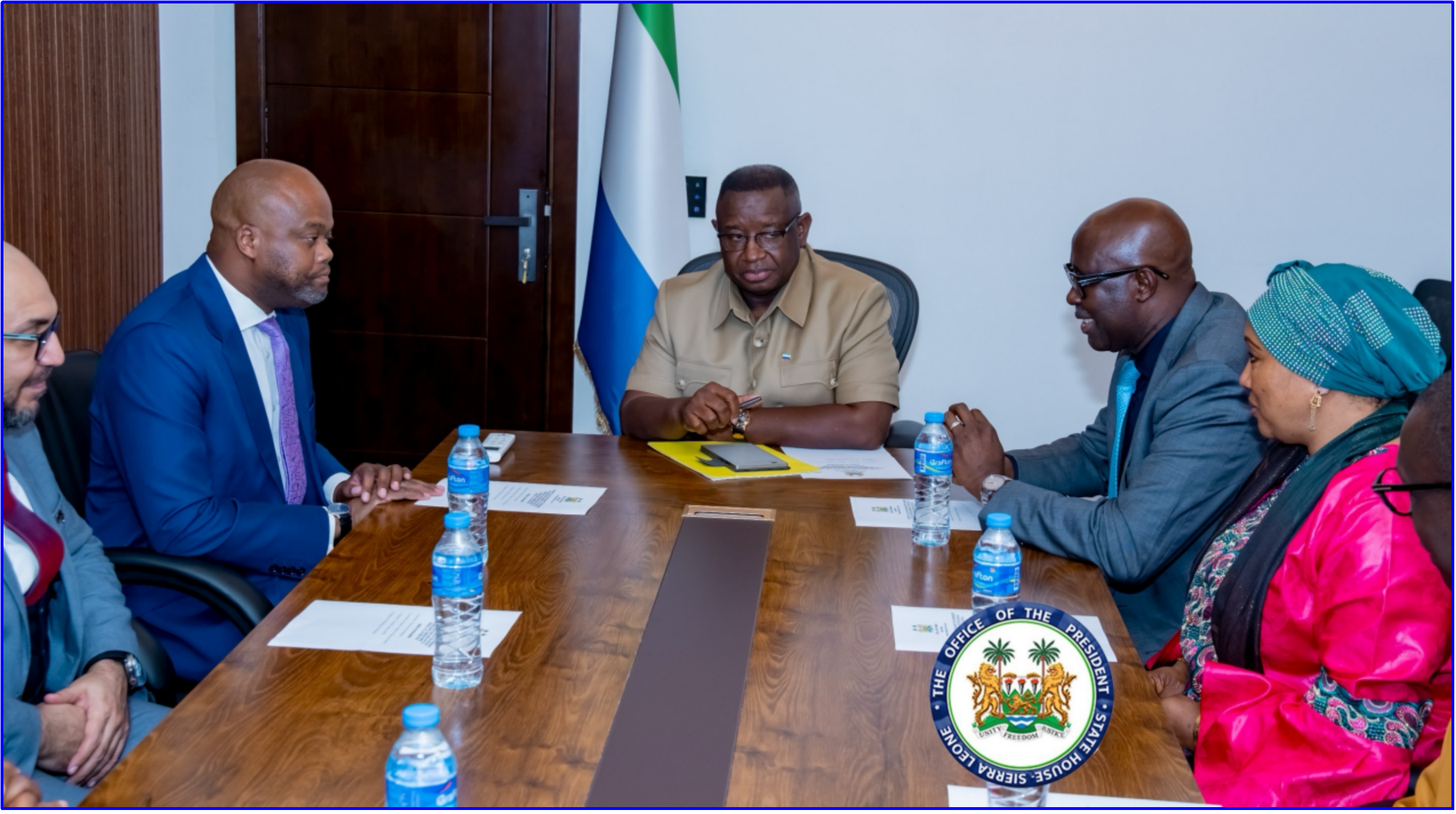
Sierra Leone’s President Dr. Julius Maada Bio welcomed His Excellency Wamkele Mene, Secretary-General of the African Continental Free Trade Area (AfCFTA), to launch the country’s AfCFTA Readiness Assessment Report and Updated National Trade Strategy (2024-2030). Sierra Leone’s efforts to position itself as a proactive participant in Africa’s single market were highlighted by a high-level meeting and associated launches.
Minister of Trade and Industry Ibrahim Alpha Sesay introduced the AfCFTA delegation and thanked President Bio for the opportunity. In remarks that framed the government’s approach to AfCFTA implementation, Minister Sesay reaffirmed the administration’s commitment to the “From Policy to Practice” agenda, which is a practical roadmap designed to move commitments from paper to tangible outcomes for citizens.
The agenda aims to empower women and youth, strengthen regional value chains, and promote private sector growth and cross-border investment. According to Minister Sesay, Sierra Leone has taken several preparatory steps under President Bio’s leadership. Sierra Leone has completed and gazetted its national schedule of commitments on goods trade, as well as finalised its AfCFTA Readiness Assessment Report, making it the first African country to complete this particular readiness evaluation, according to the minister.
The Minister explained that the Secretary-General’s visit would strengthen collaboration with the AfCFTA Secretariat, facilitate Sierra Leone’s participation in the Guided Trade Initiative (GTI), and raise awareness among private sector actors about intra-African trade opportunities.
Secretary-General Wamkele Mene praised Sierra Leone’s political and technical teams for their achievements. He referred to the readiness assessment as “a model of readiness and reform,” crediting the achievement to disciplined policy coordination and a clearly articulated roadmap for inclusive economic growth. Mene emphasised that the AfCFTA aims to shift African economies from primary commodity exports to higher value-added goods and services, rather than just liberalising trade.
Mene praised Sierra Leone’s decision to incorporate AfCFTA priorities into national policy frameworks. The country has incorporated AfCFTA principles into its Medium-Term National Development Plan (2024-2030) and is aligning it with the upcoming National Industrial Policy (2025-2035), according to the speaker. Mene contended that such coherence is required for effective competition in Africa’s $3.4 trillion market. He also stated that 49 African Union member states have ratified the AfCFTA Agreement, and 24 countries are already trading under the Guided Trade Initiative, demonstrating how political will and private sector participation are still required to fully realise the single market’s potential.
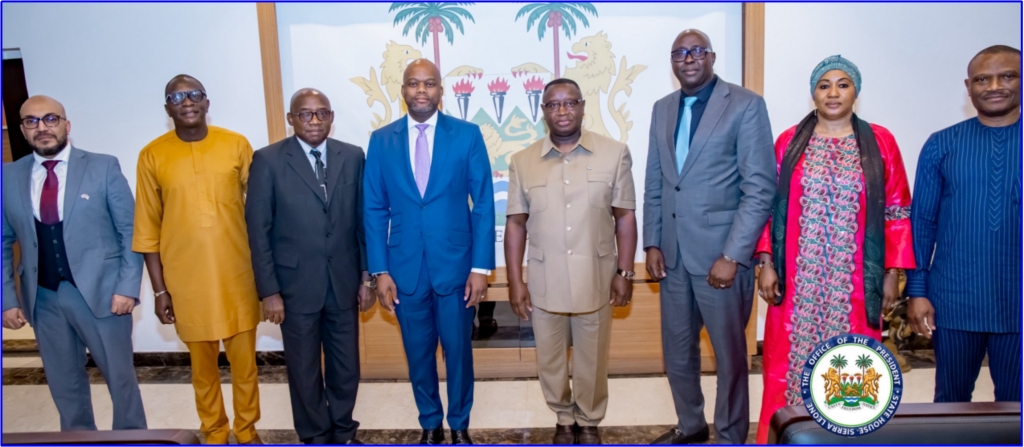
President Bio used the occasion to reaffirm Sierra Leone’s unwavering support for the AfCFTA, calling it “the pathway to sustainable growth, jobs, and shared prosperity.” He acknowledged ongoing infrastructure and logistics challenges, but insisted that recent reforms demonstrate the country’s readiness to participate in AfCFTA trading frameworks. Among these reforms, the President cited initiatives on customs modernisation and capacity building for micro, small, and medium-sized enterprises (MSMEs) as proof that Sierra Leone’s institutions and private sector are ready to seize new opportunities.
“Trade within Africa is the future,” President Bio declared, calling for a concerted effort to create one of the world’s most dynamic economic blocs. He emphasised the government’s emphasis on providing young people with high-quality education, technology, and vocational skills so that they can actively participate in a new era of African commerce and innovation. The President directly linked AfCFTA objectives to his broader development priorities, known as his “Big Five Game Changers,” which include Feed Salone, Human Capital Development, Youth Employment, Public Service Reform, and Technology and Infrastructure for Economic Growth. President Bio believes that aligning AfCFTA implementation with these national priorities will maximise the pact’s development impact.
The President also emphasised the private sector’s critical role in advancing the AfCFTA agenda. The speaker encouraged local entrepreneurs, SMEs, and investors to pursue opportunities in manufacturing, agro-processing, mining-based industrialisation, and digital trade. President Bio highlighted AfCFTA’s potential to boost growth in related services such as banking, insurance, logistics, and creative industries, positioning Sierra Leone as a hub for sustainable and inclusive intra-African trade.
“As a nation, we stand ready to fully engage, empower our youth, and contribute to Africa’s shared economic renaissance,” he said, urging the opening of trade corridors and increased private sector participation so that potential can be translated into measurable prosperity.
President Bio used the courtesy call to publicly thank Minister Sesay and his team for delivering Sierra Leone’s AfCFTA Readiness Assessment report. According to him, the document provides a comprehensive assessment of the country’s readiness to trade under AfCFTA rules, identifying strengths, opportunities, and areas in need of targeted interventions.
Sierra Leone’s engagement with the AfCFTA Secretariat has reached a significant milestone with the Secretary-General’s visit, the launch of a readiness assessment, and an updated trade strategy. The events were described by government officials as concrete steps toward deepening regional trade, attracting investment, and transforming the economy in ways that align with the administration’s development goals. Sierra Leone’s focus on policy coherence, private sector empowerment, and youth inclusion is crucial for achieving broad-based economic gains from AfCFTA membership.
