
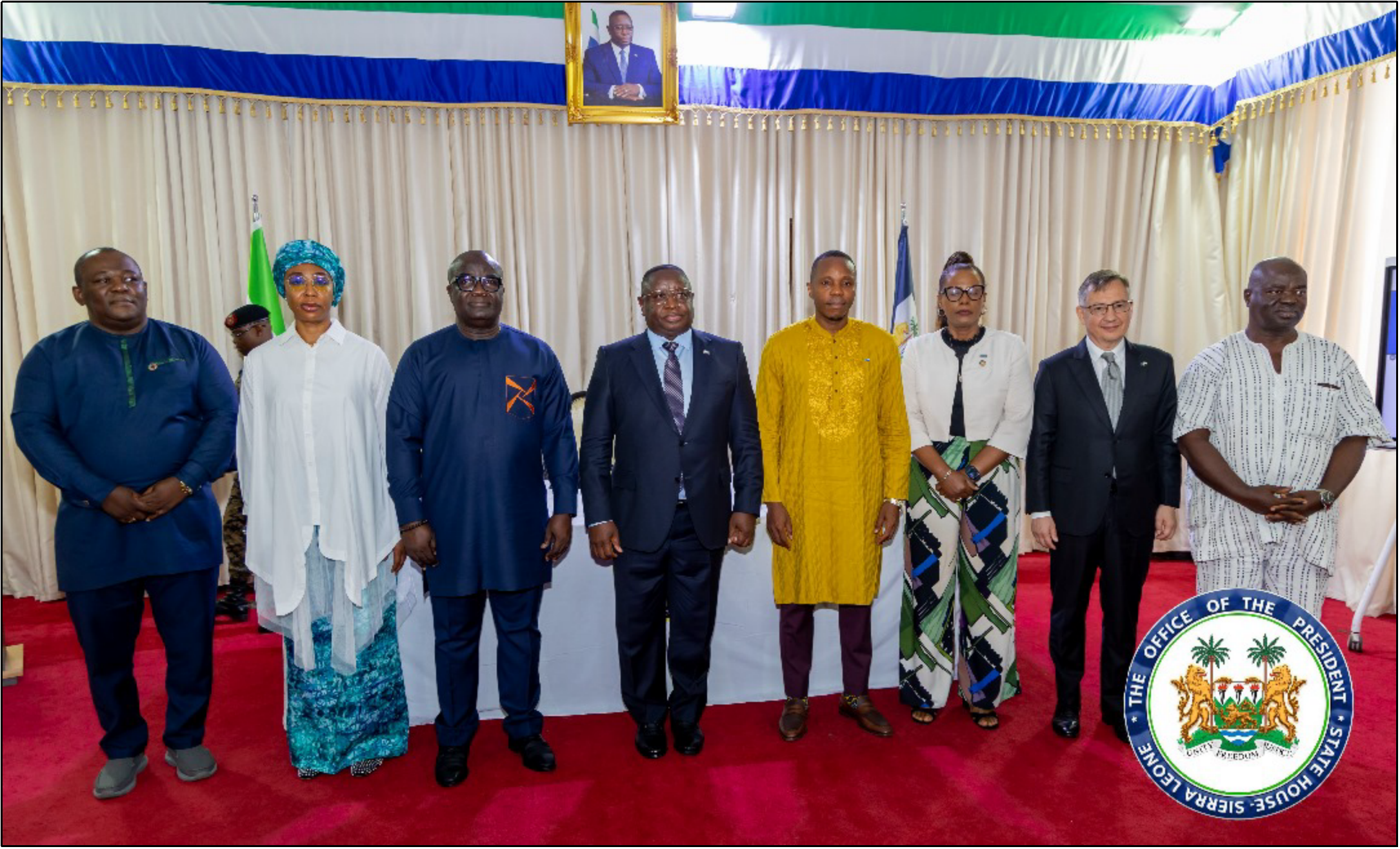
His Excellency, President Dr Julius Maada Bio, has officially received the report on the Independent Management and Functional Review of the Electoral Commission for Sierra Leone (ECSL) and other Election Management Bodies (EMBs). The comprehensive report, produced by the Public Sector Reform Unit (PSRU) in collaboration with the International Foundation for Electoral Systems (IFES), identified key challenges and made 85 actionable recommendations aimed at improving the effectiveness and credibility of the Commission’s operations in future elections.
In his remarks, President Bio expressed deep appreciation to the wide range of stakeholders who participated in the review process, including civil society organisations, the media, youth and women’s groups, EMBs, interreligious leaders, and Paramount Chiefs. He underscored the importance of national dialogue and inclusion, noting that he has always taken ownership of Sierra Leone’s challenges as a shared responsibility. Reflecting on his role in the country’s peace process, he recalled initiating dialogue with rebel leaders during the civil conflict to achieve sustainable peace.
The President emphasised that his experience of contesting two national elections gave him a first-hand understanding of the democratic deficits in Sierra Leone’s electoral system. He highlighted reforms made under his leadership, including the abolition of the death penalty, advancement of gender equality, strengthening of the justice system, and the repeal of Part Five of the Public Order Act, as direct responses to the recommendations of the Truth and Reconciliation Commission (TRC).
President Bio also reminded the audience that the electoral reform process was publicly proposed during the State Opening of the Sixth Parliament on August 3, 2023, where he called for the establishment of an independent mechanism to review Sierra Leone’s electoral framework and the performance of the Electoral Commission of Sierra Leone (ECSL).
“As President, I am not here to merely govern, I am here to resolve the deep-rooted challenges to our peace, democracy, and national cohesion,” he affirmed. “That is why I ensured the inclusion of all, including the opposition All People’s Congress (APC), in this national reform process. I thank every one of you, including the APC, for your time, candour, and commitment.”
The President commended the ECSL for its service under difficult circumstances and acknowledged the unique challenges of conducting elections in Sierra Leone. He extended special thanks to development partners, particularly the United Nations family and the European Union, and urged both citizens and partners to ensure full implementation of the report’s recommendations.
Director of the Public Sector Reform Unit, Sulaiman Phoray Musa, lauded President Bio for his visionary leadership and dedication to public sector reform. He noted that the review is aligned with one of the core pillars of the government’s Big Five Game Changers—specifically, the Revamping of the Public Service Architecture.
Musa explained that the participatory review process identified significant constraints within the ECSL and offered strategic recommendations including the need for comprehensive staff training, review of remuneration and promotions, timely updates of ECSL’s website and social media platforms, strengthened engagement with citizens, and timely submission of observer reports, some of which had not been submitted three months after polling.
Subscribe to Updates
Get the latest creative news from FooBar about art, design and business.
President Bio Receives Report on Independent Review of ECSL and Other Electoral Bodies

gleanernewspaper
Gleaner Newspaper is the Home for exclusive local news, views, and adverts from Sierra Leone. Publisher: Gleaner Communications Sierra Leone.