

His Excellency President Dr Julius Maada Bio of Sierra Leone, in his capacity as Chair of the ECOWAS Authority of Heads of State and Government, has called for an urgent renewal and strengthening of regional cooperation, backed by sustained international support, to address escalating peace and security threats across West Africa. Addressing the ECOWAS High-Level Consultative Conference on Regional Cooperation and Security in Accra, President Bio warned that insecurity, particularly in the Central Sahel, has reached a critical point that can no longer be contained by individual national efforts.
President Bio argued that West Africa is now facing a shared security reality in which one state’s safety is inextricably linked to that of its neighbours. He warned that terrorism and violent extremism have outpaced current responses, with armed groups operating internationally and demonstrating increased coordination and brutality. According to the President, fragmented and reactive approaches have eroded the region’s collective capacity to respond, emphasising the need for a unified and coherent regional strategy led by ECOWAS.
President Bio emphasised the importance of practical measures, stating that intelligence sharing, border management, logistics, and surveillance should be treated as essential pillars of regional security rather than optional add-ons. He urged better alignment, financing, and coordination of existing instruments, such as the Multinational Joint Task Force, the Accra Initiative, and the ECOWAS early warning and conflict-prevention frameworks, so that they can work more effectively together.
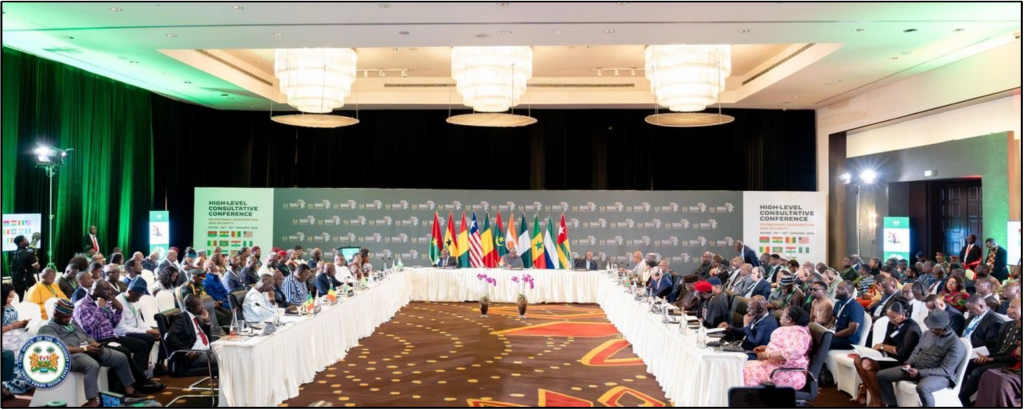
Aside from military and security measures, President Bio emphasised governance, inclusive development, and social cohesion as critical components in preventing radicalisation and maintaining peace. Drawing on Sierra Leone’s post-conflict recovery experience, he emphasised the importance of rebuilding trust between citizens and the state to achieve long-term stability. The President stated that rebuilding requires investments in education, expanded economic opportunities, particularly for young people and women, and the strengthening of accountable institutions capable of addressing grievances and providing services.
President Bio emphasised the critical role of international partners in assisting African-led responses. He praised progress on United Nations Security Council Resolution 2719 and urged its full and timely implementation in ways that complement, rather than duplicate, continental and regional efforts. He urged the United Nations and other partners to provide consistent, coordinated assistance that complements ECOWAS and other African mechanisms.
President Bio identified climate change as a major threat multiplier, linking desertification, food insecurity and displacement to rising regional instability, and urged for climate risks to be fully integrated into regional early warning systems and security plans. He contended that effective prevention and response must consider the complex interactions between environmental stressors and conflict dynamics.
In his closing remarks, President Bio reaffirmed Sierra Leone’s commitment, as current Chair of the ECOWAS Authority, to lead with resolve and inclusiveness. He urged regional leaders and international partners to go beyond declarations and turn promises into concrete, coordinated action, insisting that West Africa must choose to secure itself together or risk further destabilisation apart.
