
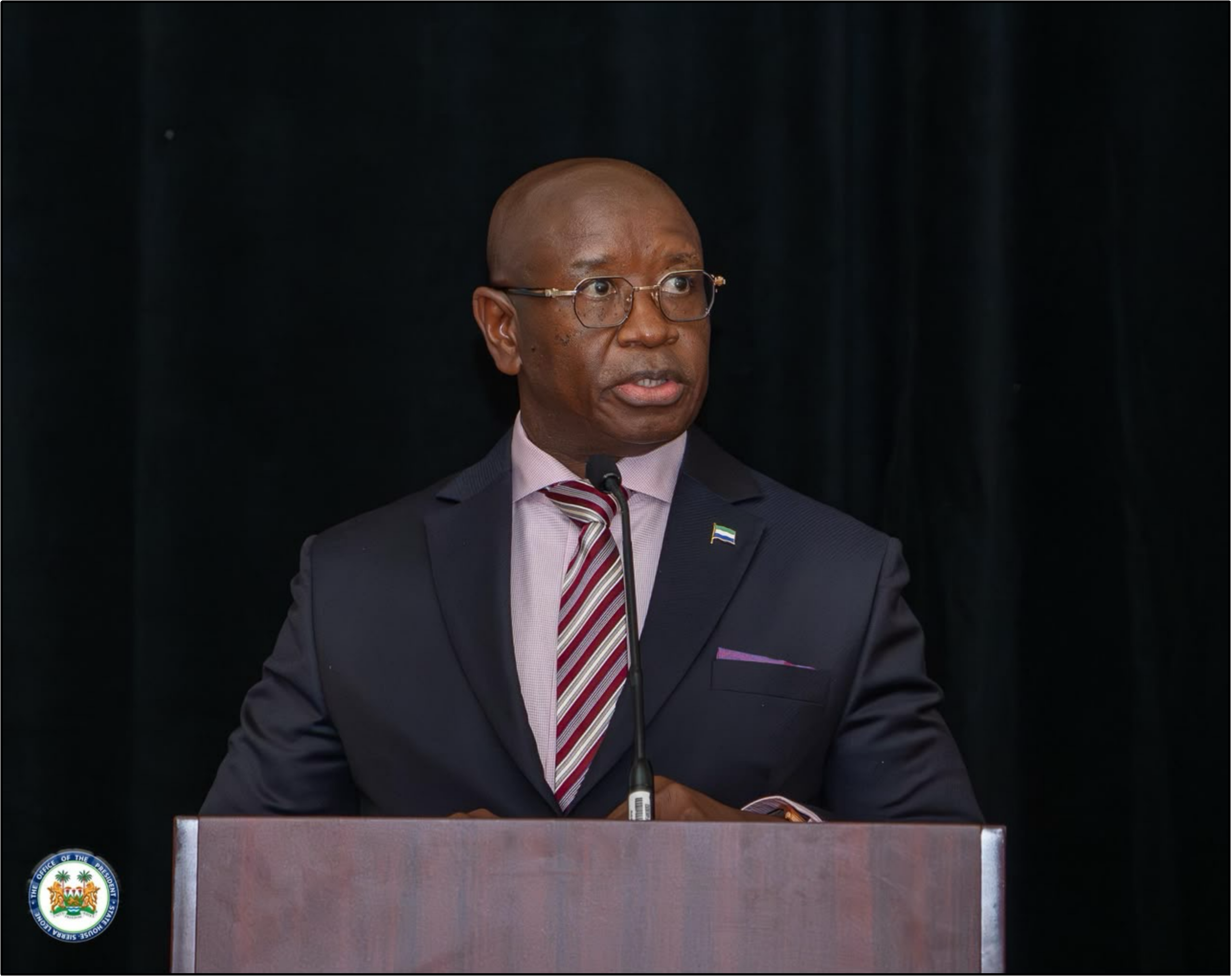
New York – President Julius Maada Bio praised First Lady Fatima Bio for her leadership and tireless advocacy in the global campaign to end child, early, and forced marriage at a high-level United Nations event, and announced three further national commitments to strengthen Sierra Leone’s efforts to protect girls.
President Bio, speaking on the sidelines of the 81st session of the United Nations General Assembly, welcomed the unanimous adoption, on 4 September 2026, of a Sierra Leone-led resolution designating 27 November as the International Day for the Elimination of Child, Early and Forced Marriage. The resolution, sponsored by Sierra Leone and co-sponsored by 84 other countries, was a “historic achievement for girls around the world” and a “historic milestone in Sierra Leone’s global leadership on the issue,” the President said.
The New York gathering attracted regional and international dignitaries including the President of Senegal and current Chair of the ECOWAS Authority, Bassirou Diomaye Faye, and First Lady Marie Khone Faye, among other first ladies, government representatives, UN officials and civil society leaders. President Bio thanked Zambia and Canada for leading the initiative and acknowledged the African Union Champion on Ending Child Marriage, President Hakainde Hichilema, the UN system, civil society organisations, and survivors and advocates who have supported the campaign.
Addressing a time of deep global division, President Bio said that every Member State agreed that no girl should lose her childhood, education or future through marriage. He commended First Lady Fatima Bio for her leadership in promoting the issue and bringing international attention to the need for stronger action to protect girls.
To make her point, the President cited startling global statistics: More than 640 million girls and women alive today were married as children, and millions more marry before they reach adulthood every year. These statistics, he said, mean disrupted lives, with education cut short, health endangered and fundamental freedoms removed before girls are old enough to make informed choices.
President Bio described child marriage as a breach of rights with long-term consequences on national development. “[A country that marries off its daughters too young] pays the price for generations,” he said, adding that the issue is more than a private matter and calling for public policy, resources, and community engagement.
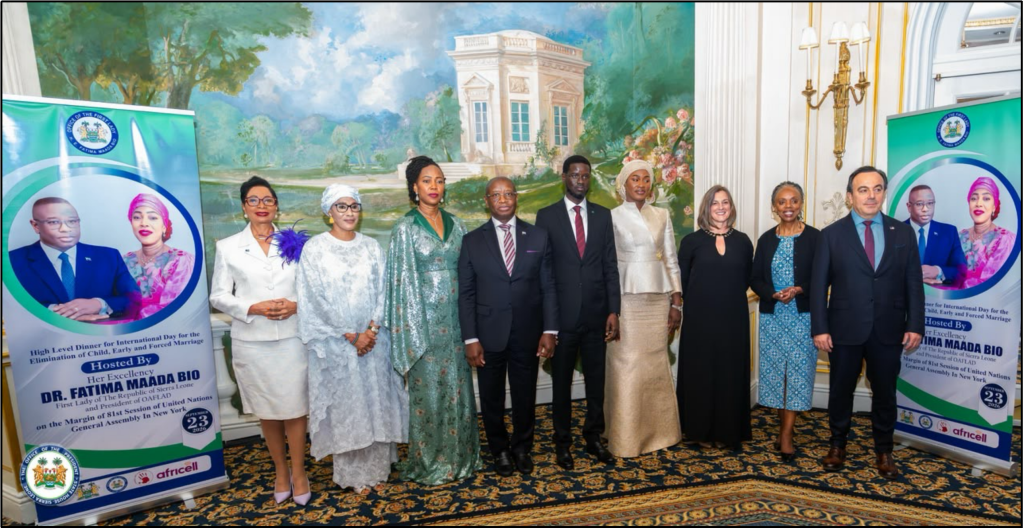
He added that domestic reforms undergird Sierra Leone’s international advocacy. President Bio referred to the Prohibition of Child Marriage Act, which he signed into law in July 2024. The law sets the age for marriage at 18 years without exception and holds to account anyone who facilitates child marriage. He also listed three other national interventions aimed at giving girls the chance to remain in school and build independent careers: the Free Quality School Education program, the Radical Inclusion Policy, which allows pregnant girls and young mothers to continue their education and the Gender Equality and Women’s Empowerment Act 2022.
At the same time, the President recognised that legislation is not enough. He said Sierra Leone needs to strengthen enforcement and improve birth and marriage registration, raise public awareness, and deepen community engagement, particularly in vulnerable and hard-to-reach areas. He addressed traditional and religious leaders, parents, teachers, civil society organisations, and men and boys, calling on them to respect the law and protect girls’ rights.
President Bio announced Sierra Leone’s three concrete commitments to build on the momentum nationally and globally. To begin with, the government will create a comprehensive National Action Plan to end child, early and forced marriage. Second, it will strengthen the Prohibition of Child Marriage Act by enhancing enforcement, registration systems, education and community engagement. Third, beginning with the first International Day on 27 November 2026, Sierra Leone will promote its achievements and exchange lessons learnt with other Member States of the United Nations.
President Bio called on the international community and development partners to back their political will with sustained funding for girls’ education, protection and law enforcement. “If we are serious about delivering on Sustainable Development Goal Target 5.3, our resources must match our declarations,” he said. He said success should be measured by concrete improvements in the lives of girls – fewer girls forced into early marriage, more girls staying in school and more freedom to choose their own futures.
First Lady Fatima Bio gave a vote of thanks to close the event, thanking guests, partner organisations, and advocates who worked to secure the new International Day. Her remarks highlighted the shared responsibility to turn the November 27 designation into real, sustained action and tangible progress for girls everywhere.
