
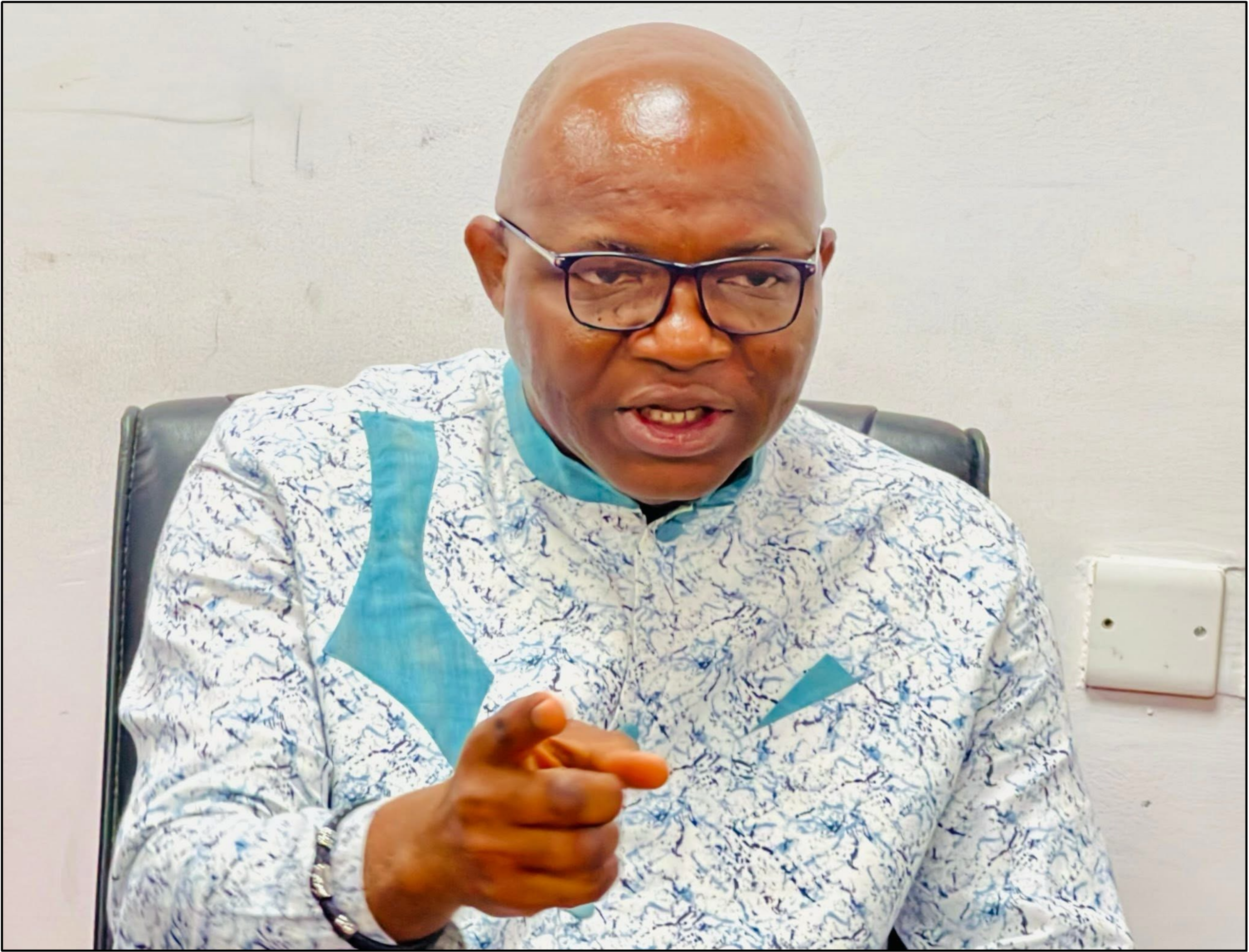
Hon. Mathew Sahr Nyuma, the Leader of Government Business in Sierra Leone’s Parliament, presided over a broad debate on the proposed National Security and Central Intelligence Bill, urging his colleagues to give the measure careful consideration before it is passed.
The Bill, which seeks to repeal and replace the National Security and Central Intelligence Act 2023 (Act No. 2 of 2023), is described by its supporters as a way to strengthen the legal framework governing national security and intelligence in order to support state development. Speaking in the House, Hon. Nyuma emphasised that the State’s primary responsibility is to provide security for its citizens, and that peace is necessary for attracting investment and advancing development.
He believes the Bill should be crafted to strengthen the country’s security services and improve their operational effectiveness. He argued that executive protection is critical to the State’s smooth operation, and the Bill proposes that the President oversee the State Protective Service’s operations and activities.
“A responsible government would always ensure the safety and security of the state,” Hon. Nyuma told Parliament, adding that Sierra Leone’s security architecture needs to be improved further. He expressed hope that the Bill would be consistent with the National Security Policy and that Members of Parliament should focus on preventing duplication of roles and functions among the country’s security agencies.
Throughout his remarks, the Majority Leader highlighted sections of the draft legislation that needed special attention. He cited a number of clauses, including clauses 3, 6, and 52, as examples of provisions whose implications should be carefully considered, given the sensitivity of national security law. “We should be consistent in terms of the law,” he said, urging colleagues to thoroughly review the documents. While acknowledging the need for stronger security legislation, Hon. Nyuma expressed several substantive concerns.
He warned that imposing a fixed term limit on the SPS Director could lead to politicisation of the service. He argued that fixed terms could incentivise political loyalty over professional competence, and he advocated for SPS appointments to be strictly merit-based and professional. Hon. Nyuma also criticised the draft Bill’s lack of innovation. “I wonder why the Chief Innovator is presenting a Bill without innovation,” he said, directing his remark to the Chief Minister’s office.
He also objected to what he perceived as an attempt by that office to repeal Section 61 of the 1991 Constitution, stating that laws should not be crafted in ways that discriminate against any group. The Majority Leader’s criticism went beyond SPS governance arrangements, questioning Bill proposals that would impose financial fines for certain national security violations.
He claimed that such violations are too serious to be resolved with monetary penalties and suggested that those provisions be reconsidered. Given the sensitivity and significance of the legislation, Hon. Nyuma invoked Standing Order 51(1) and moved that the Bill be referred to the Legislative Committee for further review.
The Bill was then referred to the committee, where members are expected to conduct a thorough review of its structure, language, and potential overlaps with other security statutes before returning to the full House for a final vote. As the Bill is still in committee, Hon. Nyuma emphasised the importance of measured deliberation, adherence to constitutional principles, and a focus on professional, merit-based leadership in the country’s security services.
He stated that the National Security and Central Intelligence Act, 2025, intends to replace the 2023 law but must be refined to ensure that it strengthens the country’s security architecture while not undermining constitutional safeguards or creating unintended incentives for politicisation.
