
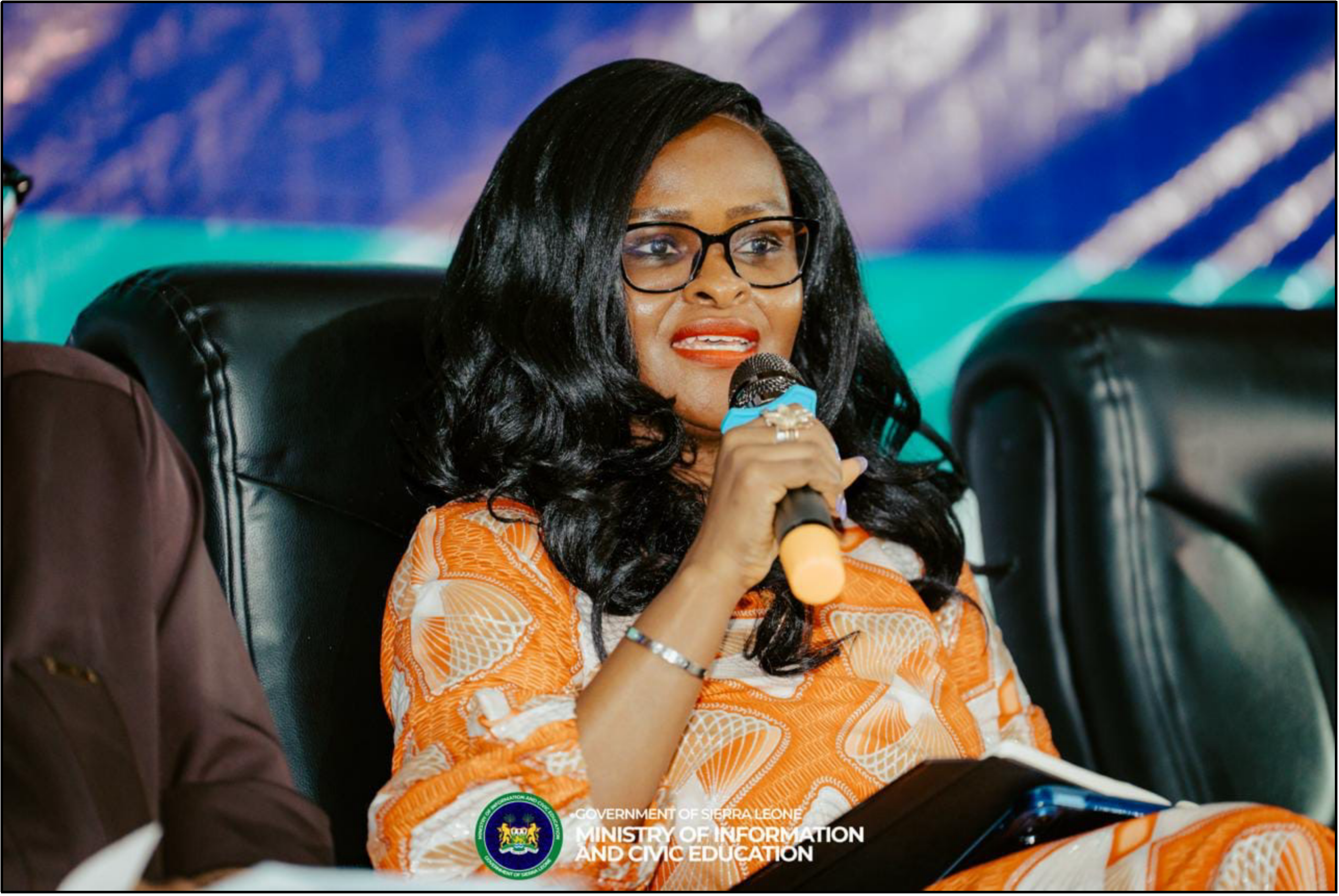
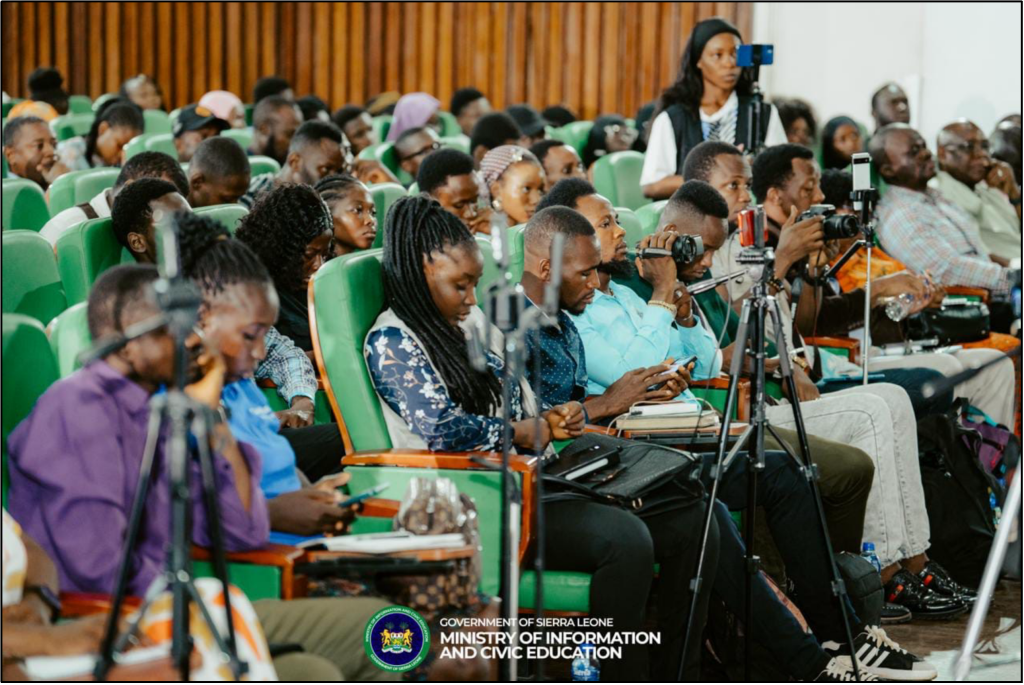
Higher Education Minister Hon. Dr. Haja Ramatulai Wurie, speaking at a Special Edition Civic Town Hall in Freetown, Wednesday, August 26, 2026, said the integrity and quality of Sierra Leone’s higher education system must be actively defended. Dr Wurie, speaking to the audience at the Miatta Civic Center during an event organized by the Minister of Information and Civic Education, Chernor Bah, strongly called for more stringent verification of academic qualifications, increased use of online resources, and stronger institutional controls to curb emerging threats to quality education.
The theme was “How Do We Address the Threats to Quality Education in Sierra Leone? “. Issues discussed included examination malpractice, weak institutional accountability, the misuse of qualifications and opportunities and the potential for technology to strengthen systems. Minister Wurie, who has years of experience in academia as a lecturer, head of department and dean, stated that if these challenges are not tackled, there will be a lot of loss of confidence in the country’s universities and colleges.
“We cannot allow examination malpractice to become the norm,” she said, adding that students in higher education are the professionals and civic leaders of tomorrow. She argued that if dishonesty is allowed while students are still learning, it could be passed on to professional life. Dr Wurie, also an educator, took an uncompromising stance, she said, and had a zero-tolerance policy for cheating and misconduct, urging other institutions to adopt similar rigorous standards and enforcement measures.
A key part of the minister’s approach is to strengthen internal controls in higher education institutions. Many universities and colleges already have policies and sanctions, she added, although enforcement is often lax. “Policies need to be supported by consistent implementation and accountability,” she said, calling on institutional leaders to ensure that disciplinary mechanisms are used fairly and transparently.
The chances of malpractice, said Minister Wurie, have to be reduced with the help of very important technology. She spoke of pilot projects and plans to expand the multifunctional ICT examination centres where they could take tests electronically. With randomised question banks and digital delivery, each student could be given a unique set of questions or sequences, reducing the possibility of collusion and copying. She also stressed the potential of Artificial Intelligence to help grade objective and short answer questions while still maintaining faculty control through systematic quality checks by lecturers and department heads.
Dr Wurie also raised the issue of fake academic credentials, as well as cheating on exams. She added that fake degrees and forged certificates posed another threat to the institution’s reputation and public safety, and stressed the need for rigorous verification processes. Employers, regulatory bodies and public institutions need to have the ability to verify the authenticity of applicants’ qualifications. The minister urged relevant authorities to enforce tougher verification procedures and to make it clear that the use or acquisition of false credentials will not be tolerated.
In her speech, Dr Wurie cast reform as a shared responsibility, one that included university administrators, faculty, students and the general public. She said that to maintain academic standards, there needed to be both a cultural change, changing attitudes so that academic dishonesty is seen as unacceptable and practical reforms in systems and procedures.
The minister cautioned that Sierra Leone could not afford to compromise on the quality of its graduates who are soon to take up critical professional and leadership roles across society. Her call to action was for sustained effort: prevent examination malpractice, tighten qualification verification and use digital solutions to make the education system transparent, accountable and credible. Only coordinated measures could protect the integrity of the country’s higher education and maintain trust in the credentials of its citizens, she said.
