
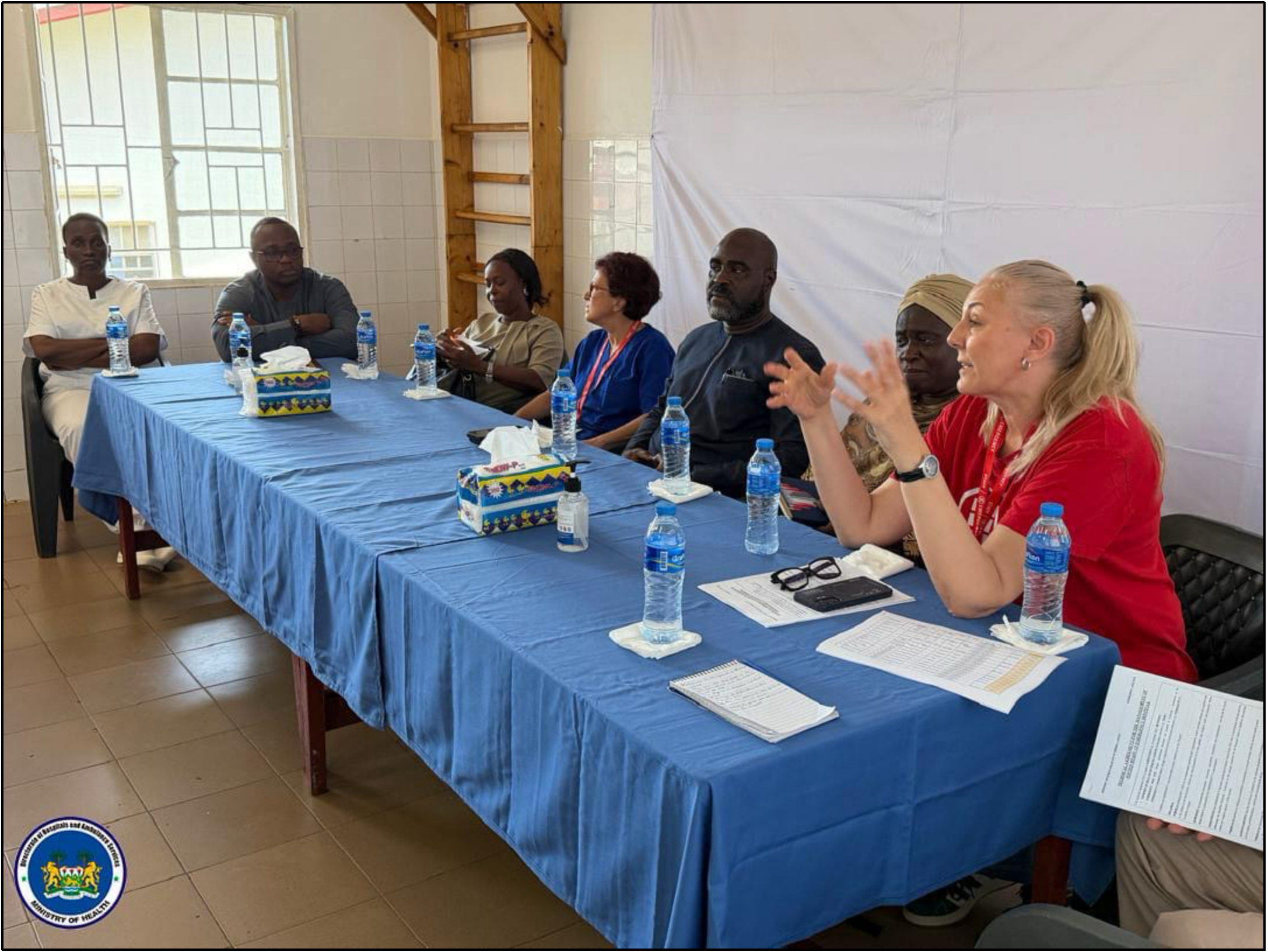
Senior Ministry of Health (MoH) leadership held an interactive engagement with Emergency Hospital staff in Goderich’s conference hall to discuss welfare, professionalism, and operational issues affecting service delivery. The delegation was led by Dr Mustapha S. Kabba, Deputy Chief Medical Officer-Clinical Services, Matron Haja, Director of Hospital and Ambulance Services, Ibrahim Foday-Musa, and the National Coordinator for NEMS, along with other senior Ministry officials.
The meeting was called to strengthen collaboration between the Ministry and Emergency Hospital management, to review the implementation of the technical agreement that governs staff operations, and to provide a forum for employees to express concerns about their welfare, workload, training, and other operational issues affecting patient care.
The Hospital Manager welcomed the Ministry team and recalled the long partnership between the Ministry and the Emergency Hospital, noting that both institutions had worked together for more than 25 years to provide healthcare services to Sierra Leoneans. She stated that ongoing discussions regarding the technical agreement and the Memorandum of Understanding (MOU) are aimed at ensuring that staff fully understand the hospital’s regulations and their responsibilities as Ministry-affiliated employees.
Matron Haja urged staff to be open and realistic throughout the engagement, emphasising the importance of aligning with institutional goals while remaining professional, disciplined, and committed to patient care. She thanked staff for their dedication and stated that the Ministry was present to hear firsthand about issues impacting productivity, welfare, and mental wellbeing.
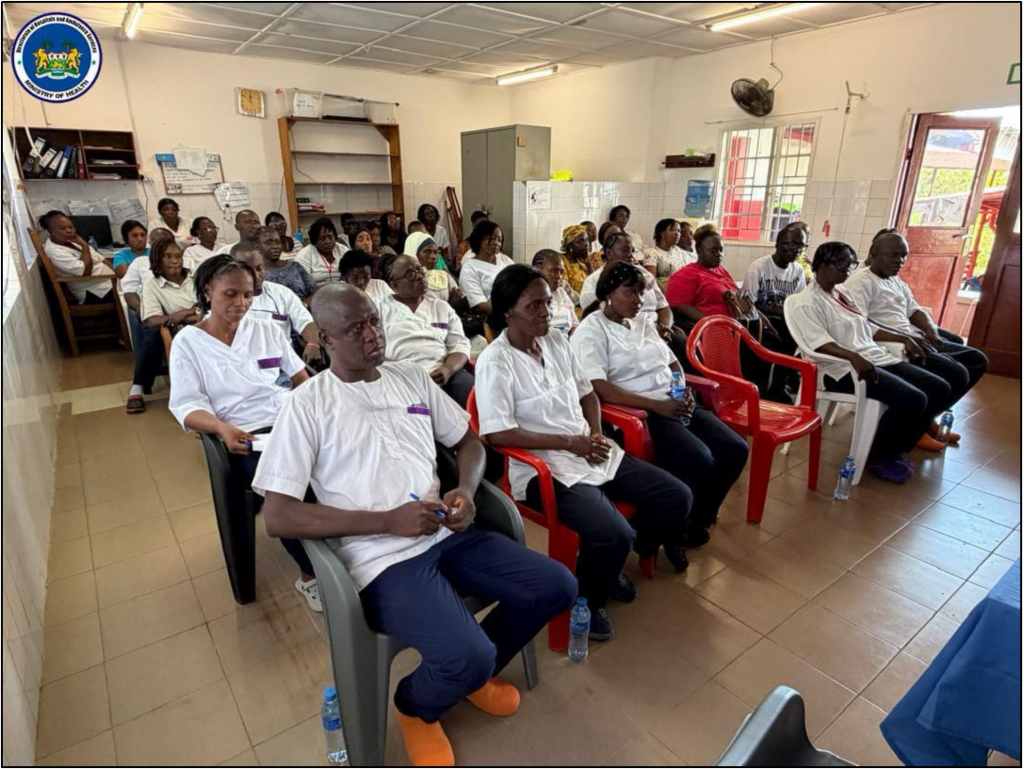
Director Ibrahim Foday Musa explained that the Ministry reviewed and amended clauses in the initial MOU to address gaps and inconsistencies that affected staff posted to the Emergency Hospital. He stated that the amended agreement aims to align arrangements with existing civil service regulations and ensure fairness for all employees, inviting staff representatives to present concerns so that practical and legal solutions can be found.
In his keynote address, Dr. med Mustapha S. Kabba thanked Emergency Hospital and the Italian government for their ongoing support of Sierra Leone’s health sector. He emphasised the critical role that healthcare workers play in saving lives and maintaining public trust, as well as the value of discipline, punctuality, teamwork, and ethical behaviour. Dr Kabba recognised the challenges that employees face and praised them for their sacrifices and dedication, while emphasising the Ministry’s commitment to improving welfare, training opportunities, working conditions, and professional development.
Several staff members expressed their concerns during an open discussion. Seray Sheriff, a Public Health Superintendent with over eleven years of experience at the Emergency Hospital, claims that despite their long service, employees are frequently excluded from Ministry trainings. Anonette N. Turay, Head of ICU, expressed concern about the lack of recognition for hospital-based trainers, noting that training contributions to nurses from other facilities go unacknowledged. Memunatu A. Kamara, Shift Leader at the AB Ward, has called for a review of bereavement policies that impact employee welfare. Esther Kamara, a nurse anaesthetist, highlighted anaesthesia staffing shortages, while Lamin Kamara, a scrub nurse, advocated for more specialised training opportunities.
Responding, Matron Haja and the Hospital Manager stated that concerns had been noted and would be discussed further with management. The Hospital Manager clarified that some absenteeism and bereavement policies are based on agreements signed by staff when they are posted, while acknowledging that some areas may need to be reviewed. Dr Kabba assured staff that the Ministry values their contributions and is committed to fair integration of Emergency Hospital personnel into the Ministry’s systems. The meeting concluded with a vote of thanks from the Hospital Matron, who emphasised the importance of revisiting MOU elements regarding absenteeism, bereavement, and lateness, as well as encouraging staff to remain committed to patient care.
