
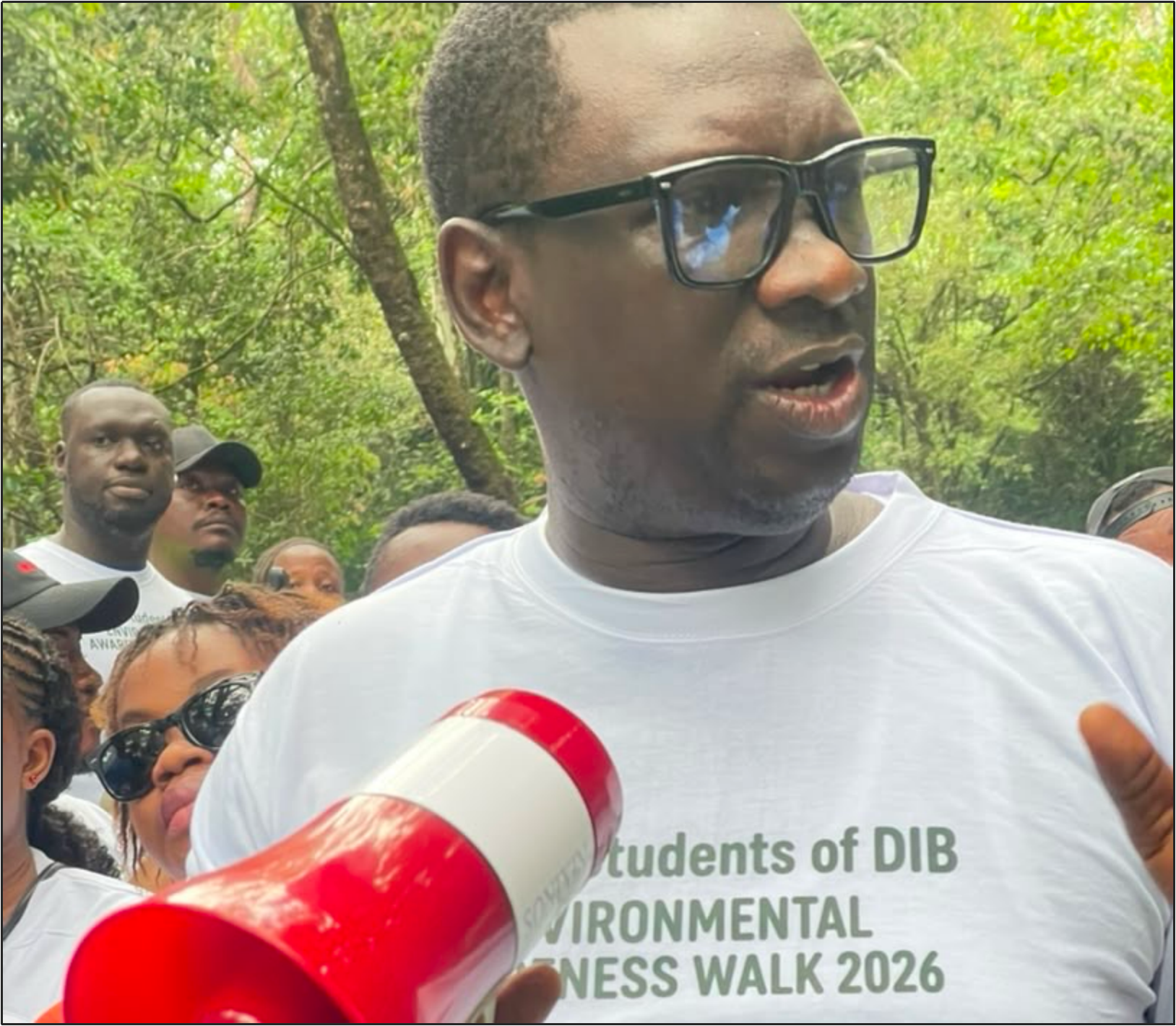
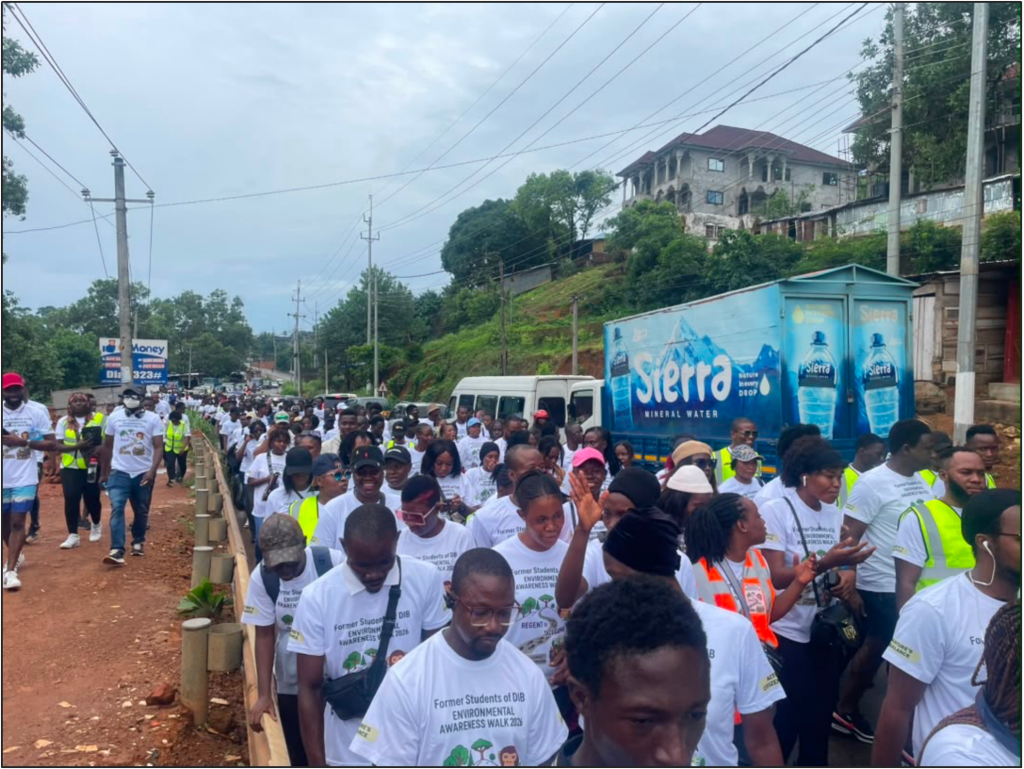
Hundreds of Sierra Leoneans led by the DIB Movement’s leader and APC flagbearer aspirant Dr Ibrahim Bangura participated in the high-profile Environmental Awareness Walk 2026 from the Regent Car Park to the Tacugama Chimpanzee Sanctuary. The walk, organised by former DIB students, was a relaxed, healthy and environmentally friendly forum for citizens to interact with Dr Bangura and show visible support for stronger environmental stewardship. The event concluded with the planting of carefully chosen tree species and the unveiling of a commemorative plaque to honour all participants, underscoring the symbolic and practical commitments made on that day.
Speaking to the audience, Dr Bangura framed environmental protection as an urgent collective responsibility, warning that “when we destroy our forests, we destroy our flood shield.” When we pollute our rivers, we endanger the future of our children. Nature’s protection is not an issue. “It’s what we do.”
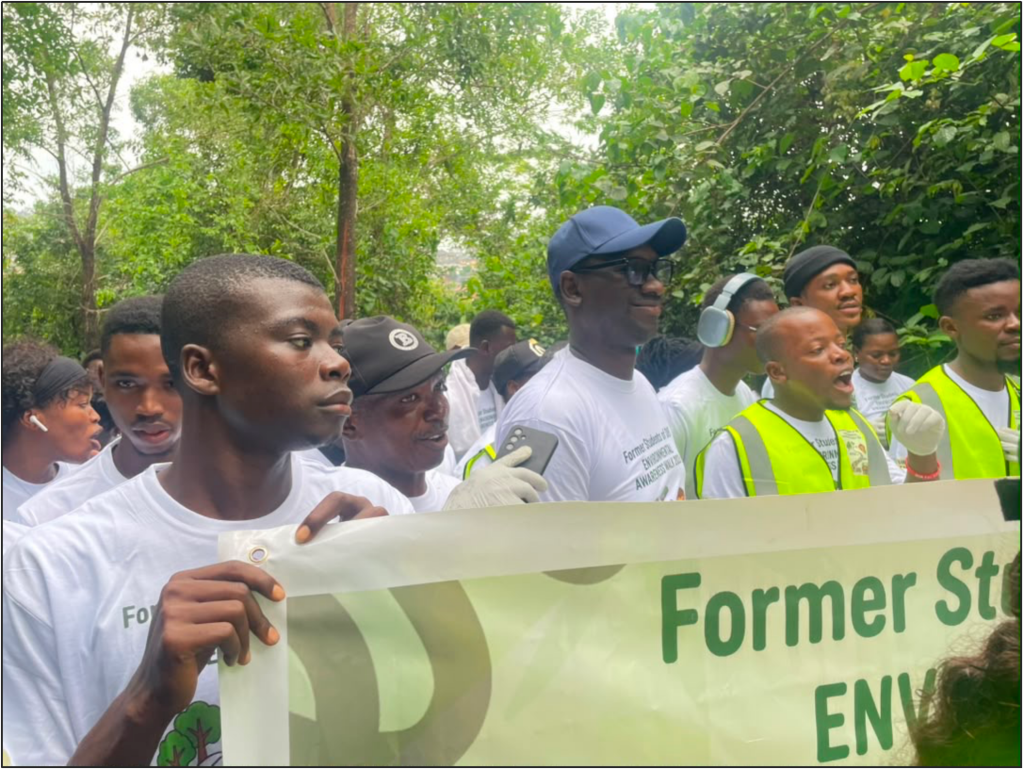
He directly connected environmental degradation to public health, pointing out that “every tree planted today is a hospital bed saved tomorrow” and that a cleaner environment meant less malaria, cholera and respiratory illnesses. He talked about the immediate human costs of environmental neglect and the long-term benefits of restoration.
Dr Bangura tied the DIB campaign to the theme of World Environment Day 2026, “Inspired by Nature.” For climate. For Our Future” and outlined three pillars of Sierra Leone’s environmental response. In “Inspired by Nature,” he called for saving forests and wetlands, which he called the country’s “natural air conditioners” and “the cheapest climate solution we have.” He appealed to all Sierra Leoneans to plant, protect and preserve under the banner “For Climate” to help keep global warming below 1.5°C. “Our children won’t inherit our politics.
They will inherit our environment.” This is his intergenerational appeal under “For Our Future.” Let us be green with them, and not wither.”
In his speech, he said environmental protection and national prosperity were interlinked, saying a degraded environment results in poor harvests, water scarcity and high health costs, while a restored environment supports food security, clean water and economic growth. He concluded by calling on individuals, businesses and government to make sustainable choices in energy, food production and industry as part of a broader effort to build a greener and more climate-resilient Sierra Leone.
