
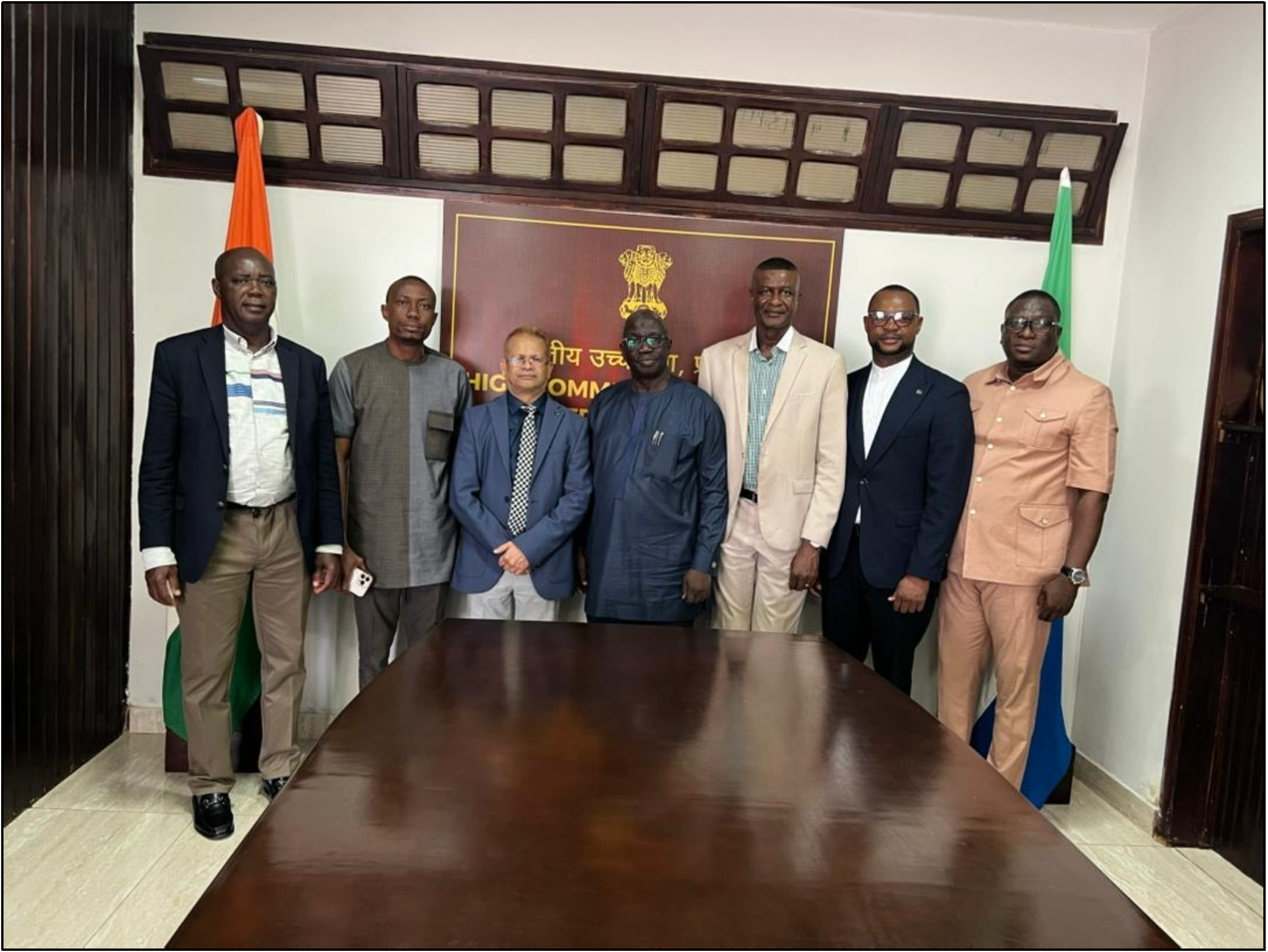
In a pivotal meeting aimed at enhancing disaster preparedness in Sierra Leone, the National Disaster Management Agency (NDMA) engaged with the Indian High Commissioner, H.E. B. C. Pradhan, to discuss the development of an advanced Early Warning System (EWS). This strategic dialogue took place at the Indian High Commission located at 32B Wilkinson Road, Freetown, and underscores the commitment of both nations to bolster disaster risk management capabilities.
The meeting was prompted by a formal proposal submitted by the Indian Commission two weeks prior, which outlined the Indian Government’s intention to provide technical expertise and institutional support to the NDMA. This collaboration seeks to strengthen the NDMA’s disaster risk management infrastructure, particularly through the implementation of a state-of-the-art early warning system that can significantly enhance the country’s response to natural disasters.
Commissioner Pradhan welcomed the NDMA delegation and commended the agency’s proactive leadership in managing disasters across Sierra Leone. Drawing from India’s own experiences as a nation frequently affected by natural calamities, he remarked, “Coming from a disaster-prone country like India, I know firsthand how critical a robust early warning system can be in saving lives and property. The Government of India is committed to supporting Sierra Leone with a model system that could serve as a benchmark in the sub-region.”
Responding to this commitment, NDMA Director General, Lt. Gen. (Rtd) Brima Sesay, expressed profound gratitude for India’s willingness to assist in enhancing the agency’s operational capabilities. He highlighted the NDMA’s achievements since its inception in 2020, which include the formation of regional, district, and chiefdom disaster management committees, as well as establishing regional offices in key locations such as Bo, Kenema, Port Loko, Makeni, and Freetown. The agency has also successfully responded to the needs of over 50,000 disaster victims and has engaged in numerous risk reduction activities.
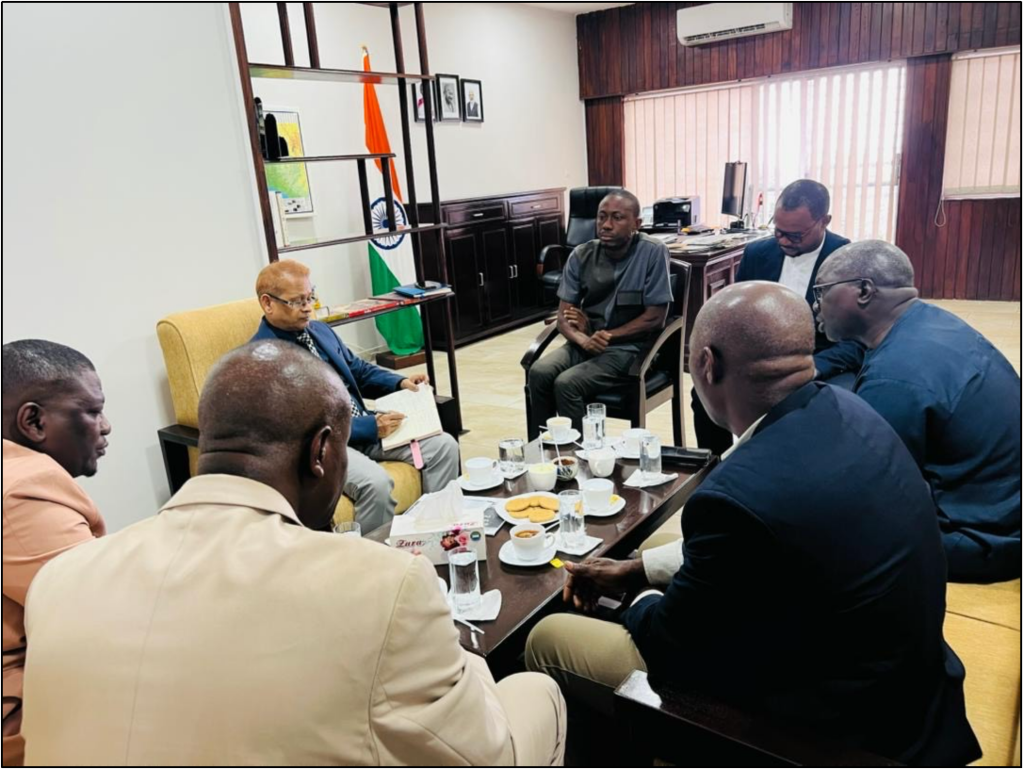
However, the Director General acknowledged the considerable challenges the agency faces, including inadequate early warning infrastructure, limited storage facilities, a shortage of relief supplies, and insufficient operational vehicles. He stressed, “This initiative comes at a time when the Agency is facing several challenges. We are deeply grateful for India’s support, which aligns with our capacity-building priorities.”
Commissioner Pradhan further revealed that the Indian Government has already contracted a specialized company to spearhead the EWS project. The forthcoming steps include selecting key government institutions to facilitate the project’s implementation, conducting a virtual coordination meeting with the Indian service provider, and finalizing a Memorandum of Understanding (MoU) between the two nations. Following the signing of the MoU, the project is expected to span between seven to fifteen months, during which comprehensive training will be provided to NDMA staff in both Sierra Leone and India.
This collaboration not only signifies a strengthening of bilateral relations between Sierra Leone and India but also represents a proactive approach to disaster preparedness, ultimately aiming to protect lives and property in the face of natural calamities. The establishment of an effective early warning system is expected to serve as a crucial tool in mitigating the impacts of disasters in the region, setting a precedent for future disaster management initiatives.
