

The recent release of the National Primary School Examination (NPSE) results has raised concerns among educators, parents, and school administrators. Many stakeholders, particularly those involved in private primary schools, have expressed concerns about how accurately these results reflect the students’ true capabilities and potential. Administrators from long-established and reputable private schools, as well as discerning parents, have discovered a significant disparity between published NPSE results and their students’ consistent academic performance throughout the academic year.
Given these disparities, Grade A secondary schools should consider implementing entrance exams. Such assessments would be a more reliable indicator of a student’s true academic abilities, ensuring that admissions are made on merit rather than potentially misleading standardized test scores. Notably, some students from government schools who score higher on the NPSE frequently struggle to perform at the same level when faced with secondary school assessment requirements. This inconsistency raises questions about whether NPSE results accurately represent a student’s potential.
Furthermore, entrance exams may assist in identifying academically capable students who are underperforming on the NPSE for a variety of reasons. The scoring system (T score), exam-related anxiety, or external influences can all influence a student’s performance, concealing their true academic journey and intelligence. Secondary schools can better assess prospective students’ actual skills and knowledge by incorporating entrance exams, ensuring that qualified students are not overlooked based on NPSE results.
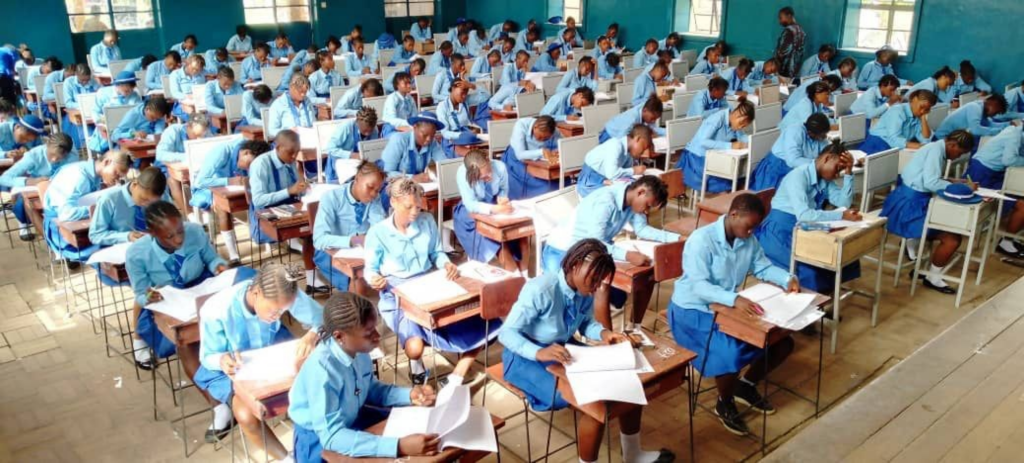
In previous years, several private primary schools questioned the accuracy of NPSE results. This ongoing skepticism highlights systemic flaws in the current grading and assessment framework, emphasizing the critical need for those in charge of overseeing these exams to address concerns transparently and rigorously.
“We anticipate that reputable private school administrators will continue to advocate for these critical reforms“. According to one senior primary school teacher, if the current trend of declining perceived pupil performance is not addressed, these institutions’ reputations will suffer.
“We strongly encourage Grade A secondary schools, including well-known schools like Prince of Wales, Bo School, The Sierra Leone Grammar School, Albert Academy, Methodist Boys High School, Saint Edward’s Secondary School, Saint Joseph’s Convent, and Annie Walsh, to include entrance exams in their admissions process. Failure to implement these assessments risks excluding students with genuine academic potential, who may be unfairly judged based solely on NPSE scores,” she said.
Entrance exams will ensure that admissions are truly merit-based, fostering an environment in which capable students are given the resources they need to succeed and thrive in their educational endeavors.
