
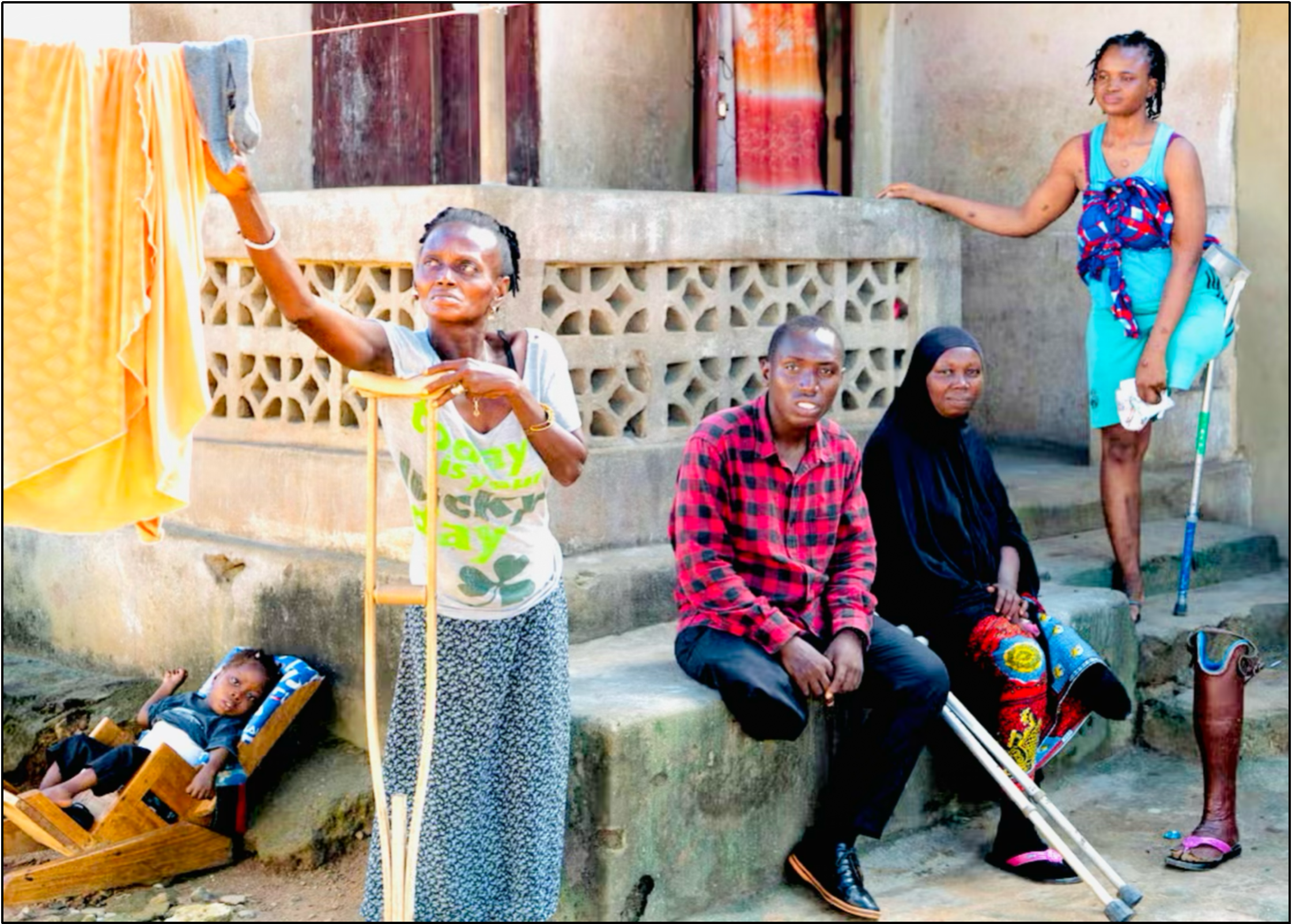
President Julius Maada Bio has called for a review and strengthening of the country’s reparations program for civil war victims, saying that remembrance and an apology do not meet survivors’ needs. Bio made the appeal on Monday, October 26, when the two-day National Unity and Social Cohesion Conference opened in Freetown.
He directed the National Commission for Social Action and other relevant bodies to enhance the program proposed by the country’s Truth and Reconciliation Commission (TRC). “Remembrance or apology is not what they need,” Bio said.
“I instruct the National Commission for Social Action and the relevant institutions to evaluate and reinforce the reparation program proposed by the Truth and Reconciliation Commission.”
The president also took on the state’s responsibility to protect citizens whose rights were violated during the conflict. He said he did not mean to judge individuals, political parties, or generations, but to recognise the state’s duty to those left unprotected.
“I’m not here to judge anyone, any political party, any generation. But as president, I accept responsibility on behalf of the state for the protection of those who have been denied,” he said.
At a conference on Oct. 26-27, government and opposition figures met to discuss the country’s divisions that have remained since the civil war of 1991-2002.
The meeting also discussed ways of enhancing peace and social cohesion. The meeting followed a national unity pact signed in October 2023 between the government and the opposition All People’s Congress. The agreement, reached after disputed elections, set out a framework for political dialogue and electoral reform.
Bio proposed six steps to promote peace and national unity. These included establishing a national peace fund, increasing dialogue between political parties, and a code of conduct to help ensure peaceful elections.
Former President Ernest Bai Koroma also called on Sierra Leoneans to use the conference to bridge the war’s divisions and wounds. The country should have been talking about development for decades, not about peace, unity and consolidation, he said.
Koroma said, “It is time for us in Sierra Leone to take advantage of this opportunity; now is a great time to heal our wounds and grow.” “We cannot speak of peace and consolidation and unity for 30 years. “This is the time when China reinvented itself.”
The civil war in Sierra Leone left tens of thousands dead. Survivors reported widespread abuse, including amputation, sexual violence and recruitment of children into armed groups.
More than two decades after the war ended, many survivors are still seeking adequate compensation, health care and rehabilitation. A United Nations-backed reparations program started in 2008 to offer some financial help to victims, but it fell far short of the full support recommended by the TRC.
The commission’s recommendations remain at the heart of discussions on how to address the conflict’s long-term consequences. The unity conference organisers said a report on implementing those recommendations was due by the end of 2026.
The question that Bio’s call begs is whether existing arrangements best meet survivors’ needs.
