
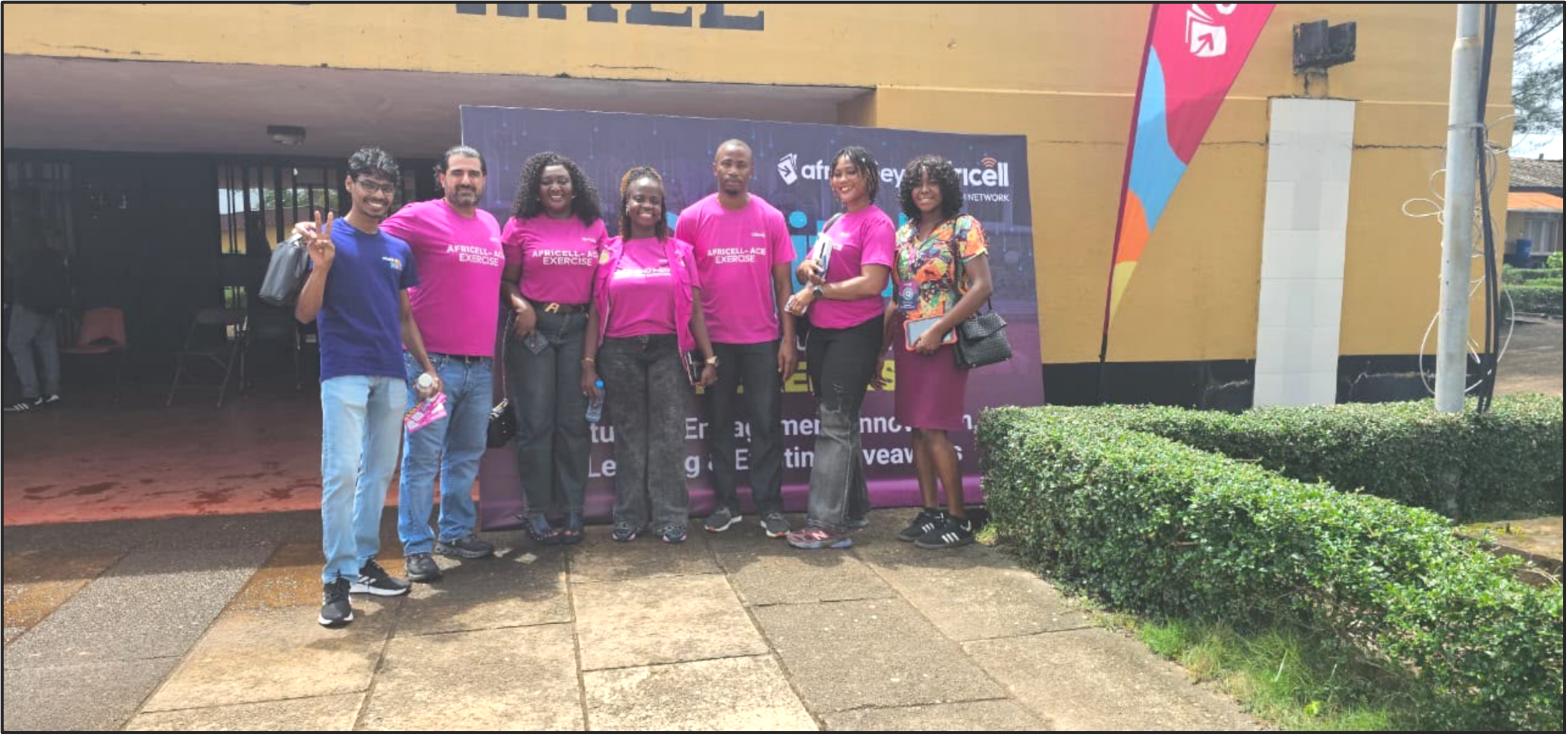
Africell Sierra Leone reinforced its customer-first strategy this month, with the latest stop of its Africell Customer Engagement (ACE) Exercise on Thursday, June 18, 2026, at Fourah Bay College (FBC), University of Sierra Leone. The visit is part of a larger monthly outreach programme aimed at gathering subscriber feedback, resolving service issues, and introducing new products to users directly.
The ACE Exercise brings Africell teams to campuses to engage in dialogue with students who make extensive use of mobile and data services. Students were invited to raise concerns, make suggestions, and learn about Africell’s evolving suite of services, including the recently promoted AFRIGPT platform, at the FBC engagement. The exercise is currently being carried out across five Freetown universities, with FBC serving as a key engagement point.
Chief Executive Officer Shadi Gerjawi, who spoke to participants at FBC, described the visits as exemplifying Africell’s customer-centric philosophy. Gerjawi, who mentioned his personal connection to the institution as a former student, stated that the company places customers “at the heart of everything we do” and strives to ensure that new products and services meet real subscriber needs rather than being developed in isolation.
“We do not want to introduce products and services that our customers will not like. We want to provide solutions that customers can use and benefit from, and every Africell product should be appropriate for all customers,” he stated. He emphasised that the ACE sessions are more than just outreach events: feedback is documented, reviewed by management, and, if possible, translated into tangible changes in network performance, pricing, and product features.
Gerjawi explained that the ACE initiative is much broader than higher education. Earlier phases targeted market women, traders, and sales agents, and the company intends to engage the media community in the following round. He argued that regular, structured engagement is critical for businesses to remain responsive to changing customer needs.
“We don’t want to sit in our offices and believe we know everything. We want to go out there, talk to our customers, engage them, and get feedback that will help us improve,” Gerjawi said, emphasising the importance of ongoing research and direct interaction in shaping service delivery.
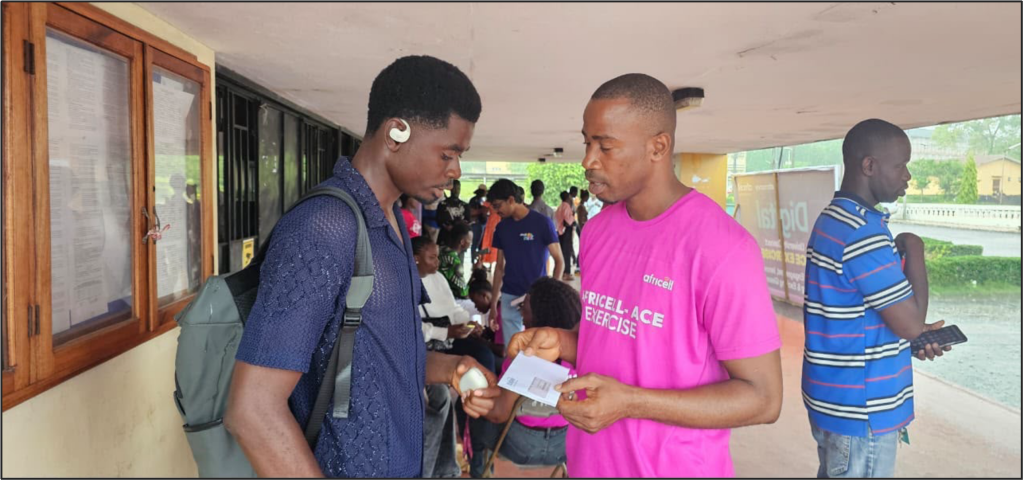
Students who attended FBC appreciated the chance to interact with senior company representatives. Jeremiah Amadu Parker praised the initiative for providing a valuable forum for identifying improvements and recognising the network’s strengths. He described Africell as “fast and reliable,” which he believes is critical for students who rely on connectivity for their studies. Parker urged the company to continue outreach to potential users who have not yet joined the network, giving Africell a personal “ten out of ten.”
Zainab Bundu, another student, emphasised the engagement’s informational value. She stated that many students were previously unaware of several Africell offerings, including AFRIGPT, and that learning about data packages and other student-friendly options was beneficial. Bundu also mentioned that she won a one-month StarTimes voucher after registering on AFRIGPT during the event, emphasising the incentives and rewards that are often associated with ACE sessions.
During the conversation, students expressed practical concerns about network services and data affordability—issues Africell declares that it takes seriously. The company’s process entails collecting feedback from such engagements, escalating recurring or serious issues to management, and implementing corrective measures as needed. According to Gerjawi, this cycle of listening and responding has played an important role in shaping product and service improvements over the years.
The ACE Exercise represents a larger shift in Sierra Leone’s telecommunications sector toward customer-driven product development. Africell aims to align its offerings with everyday user realities by meeting users where they are physically and demographically, ranging from students and market traders to urban professionals and rural subscribers.
Africell sees campus visits as both troubleshooting and relationship building. They enable the operator to collect granular, on-the-ground user experience data while also raising awareness of new platforms, value-added services, and promotional incentives. According to company officials, this direct approach is intended to increase trust, reduce churn, and persuade non-subscribers to join.
As the ACE Exercise spreads across the country, Africell hopes to maintain the momentum of feedback-driven improvement. The company’s leaders say regular engagement, combined with responsive management action, will remain central to its strategy as it seeks to provide more reliable, affordable, and relevant telecommunications services to Sierra Leoneans.
