
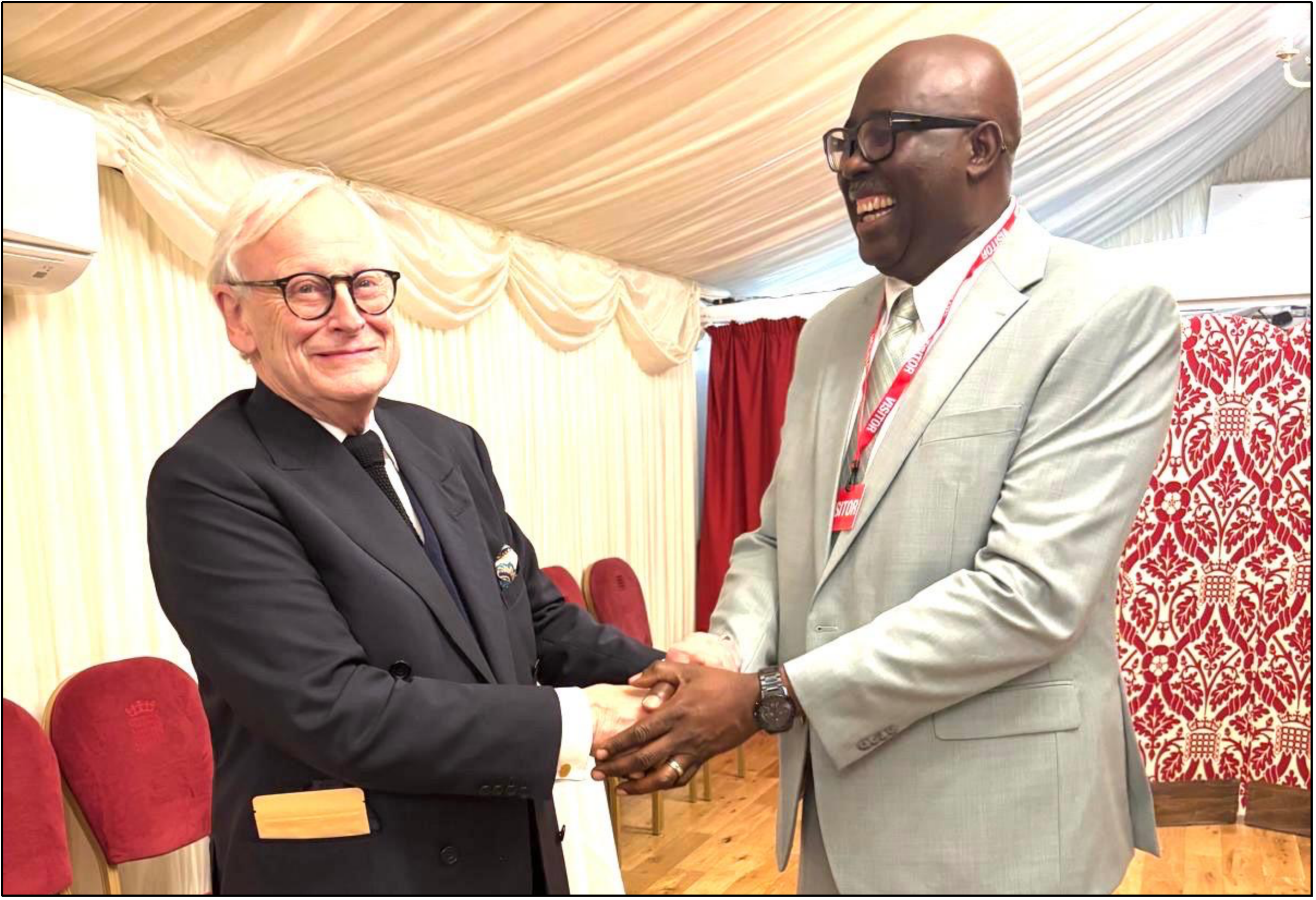
Sierra Leone’s Minister of Trade and Industry, Hon. Alpha Ibrahim Sesstronger, called for a new global partnership to link climate action, agricultural finance, and stronger supply chains, saying producing countries should be seen as partners in value creation, not just sources of raw commodities.
Minister Sesay made the call on Wednesday evening at the British House of Lords, where he was the keynote speaker at a high-level World Coffee Alliance Networking Soirée. The event was hosted by The Rt. Hon. Lord Deben following day one of the World Coffee Innovation Summit (WCIS26) in London.
The Minister told government representatives, investors, producers, traders and development partners that increasing pressures on global coffee and cocoa production require coordinated, long-term responses. He said that isolated projects and short-term interventions would not be sufficient to address the interlinked challenges facing the sectors.
“Resilience is a system not a project,” Minister Sesay said.
“The global markets are linked through coffee and cocoa for millions of farm families,” he said, “but production is increasingly challenged by climate volatility, low yields, changing market demands and unequal access to capital and technology.”
He said the response needs to be structured to attract investment, scale up, and deliver benefits fairly across the production and value chains.
“Our job is not just to describe those risks anymore,” he said. “It’s to organise a response that is investable, scalable, fair, and benefits all players along the production and value chains equally.”
The minister pinpointed three closely linked areas where more co-operation is required: climate, capital and supply chains.
He called for action beyond seedling distribution on climate action. He said resilience for coffee and cocoa also depended on rehabilitating farms, improving soil and water management, supporting regenerative agriculture, providing climate information and strengthening agricultural extension services. He added that forests, soils, water and biodiversity should be seen as productive economic assets.
On finance, Minister Sesay called for stronger links between agricultural financing and climate finance. He cited blended finance, guarantees, risk-sharing instruments and patient private investment as possible ways to direct more capital to the sector. The measure of success, he said, should be whether financing builds productive capacity.
He also called for transparent, commercially inclusive supply chains. Traceability and reliable data should facilitate producers’ access to markets and enable sound investment decisions, not become additional requirements to add further burdens on farmers, he said.
Speaking to the international industry in the historic House of Lords, Minister Sesay urged stakeholders to move “from fragmented interventions to connected national systems; from short term transactions to long term productive partnerships”. He said producer countries should be included as partners in efforts to secure the future of global coffee and cocoa supply.
In the case of Sierra Leone, he said the sectors provided an opportunity to attract productive investment, increase value addition and exports and improve commercial returns for farmers. “These measures could allow the country to capture a larger part of the value created by its agricultural commodities,” he said.
He said: “Sierra Leone is ready not as a passive supplier but as a committed partner in building a more resilient, inclusive and competitive global coffee and cocoa economy.
Minister Sesay is leading Sierra Leone’s participation at WCIS26, with Day One ending with an engagement at the House of Lords. The visit also provides an opportunity to deepen the country’s engagement with international investors, buyers, and development partners.
